
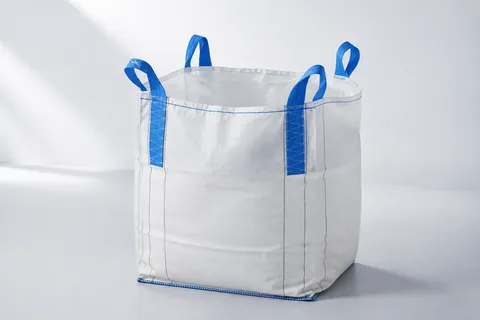
Lined Bulk Bags for Concrete Collection
If you are collecting concrete residue, describe what enters the bag and how it is supported before choosing a model. Relia’s catalog includes a concrete bag with a woven PP shell and polyethylene liner. A dry cement bag can help compare outer geometry, while wet residue needs a separate review of liner fit, retention, dwell and the approved removal method.
- Material state
- Station fit
- Removal
Material Condition Sets the Trial
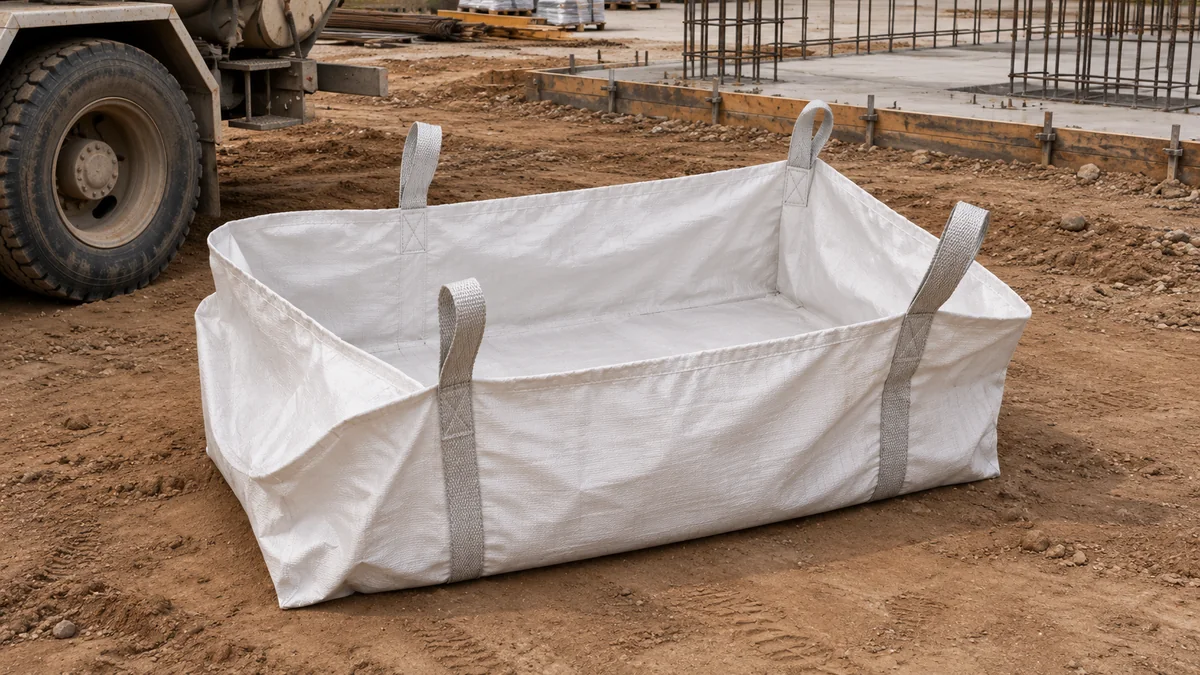
Describe the material when it enters the bag. Wet residue, dry cement and hardened fragments call for different checks on leakage, compatibility and contact points.
Manufacturing checks for this specification
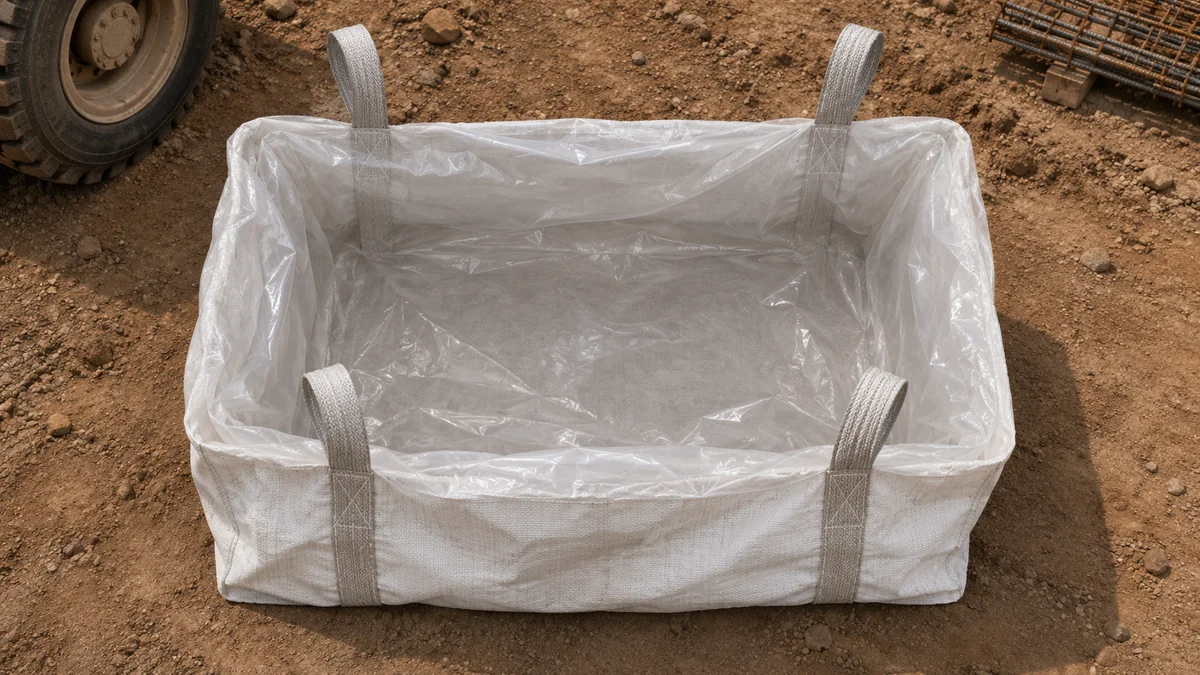
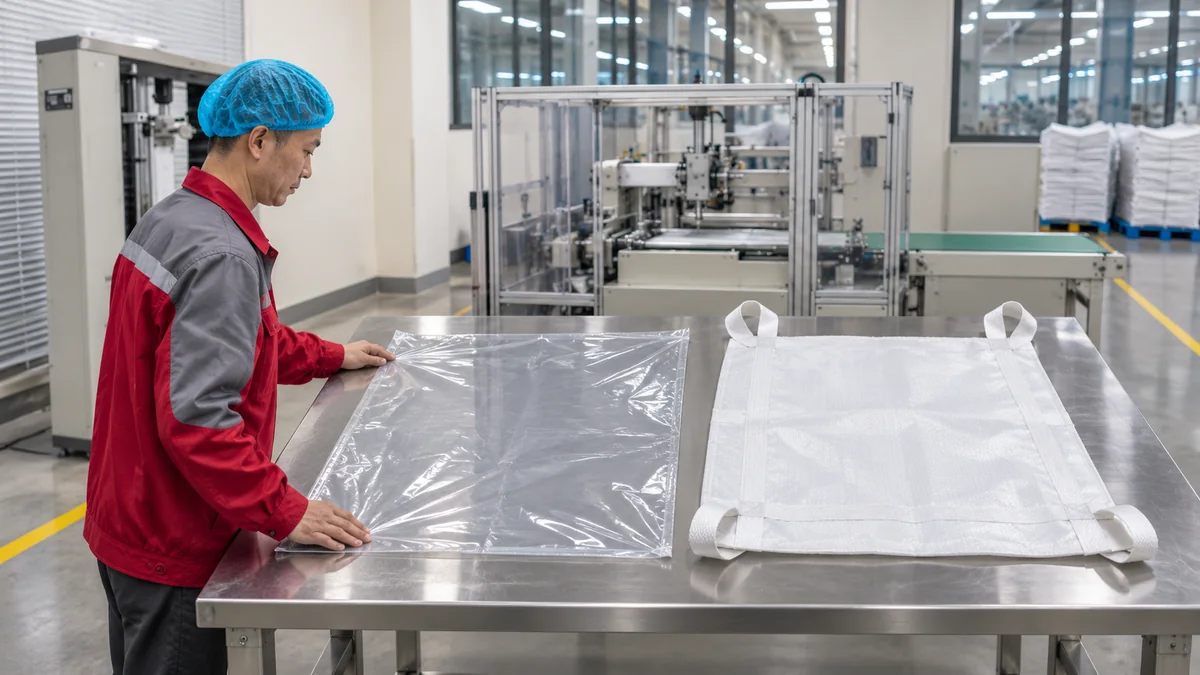
The woven shell and the PE liner serve different roles. The cut-and-sewn shell provides the proposed shape and load path. The liner construction addresses liquid or paste contact at folds and seams. Relia’s catalog lists PE-lined concrete bags. Request a liner drawing, attachment method and supported footprint for the exact offer.
- 01Cut outer shell
- 02Fit liner and inlet
- 03Check supported collection
Supply a representative sample of the residue condition, including whether free liquid is present. Agree a site-approved hold period, then inspect shell and liner position, visible seepage and contact at the support edges. Document the removal method before the trial. A dry-material product listing does not establish wet-residue suitability.
Filling Space and Supported Footprint
Measure the receiving area below the equipment and show how the bag is supported there. Identify any corner or edge that could pinch the outer bag or liner.
The concrete listing is an outer-bag reference
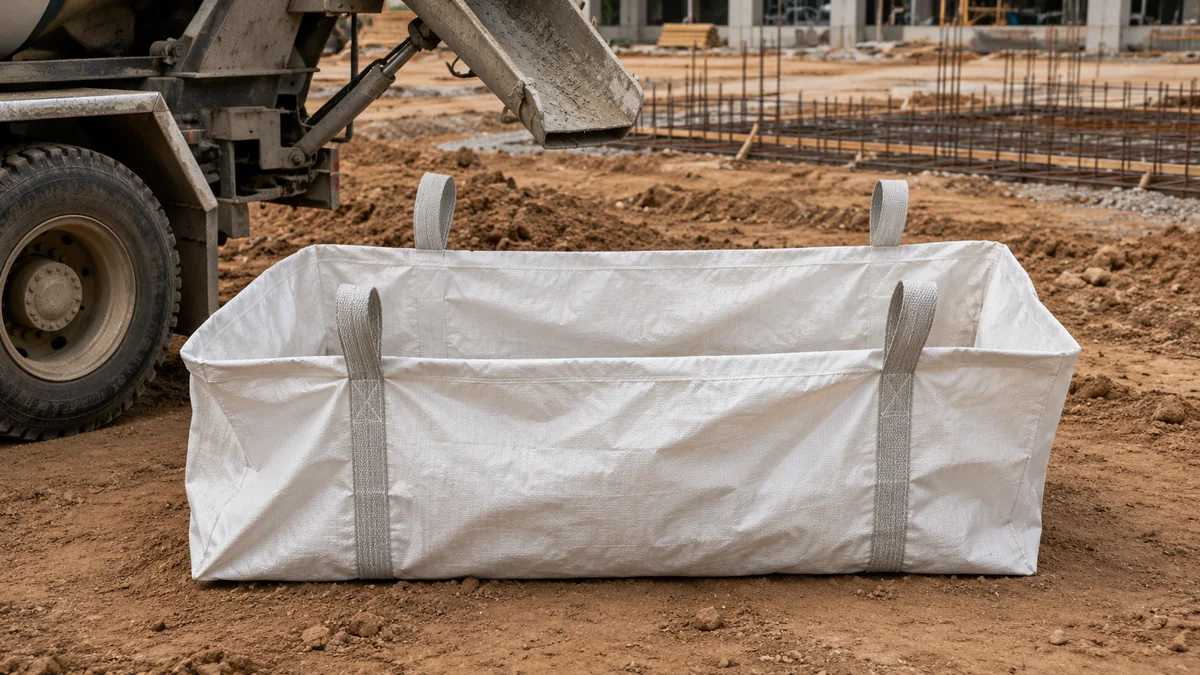
The listed tubular concrete bag is 80 × 80 × 70 cm, 800 kg SWL and 5:1, with a full-open top, flat bottom and side-seam loops. Those fields describe the listed woven shell. A wet collection enquiry needs a separate liner and supported-station review.
Set the trial around the actual mix consistency, maximum hold time, inlet height and removal condition. Inspect the liner at folds and seams after collection and record visible leakage on the support surface. Ask for the proposed liner material and attachment on the drawing.
A Concrete Bag Reference
Our open-top tubular concrete materials listing gives you a starting point for the outer bag shape. Discuss the specific liner and collection conditions separately with your quote.
Liner Position During Filling
A liner can shift as material enters or as the bag settles. Give us the location of the inlet and supports so the sample can be assessed for bunching and trapped folds.
Removal and Changeover
Document when you remove a full bag, where it goes and how you position the next one. Record your process separately if the material changes condition before removal.
Observation of Leaks and Wear
Agree where to look for migration or leaks and how to document liner position after your trial. Use the findings to decide whether to revise the closure or attachment.
A leak check that covers edges and seams
Mark the places where the liner contacts a corner or an edge in the supported station. Compare those locations before and after the agreed dwell. Include the liner seam and bottom folds in the inspection, and record where any visible seepage appears. A leak observation at one location may point to a fit or contact issue that a thicker film alone would leave unresolved.
Approval of the Trial Configuration
Keep the outer bag drawing, liner details and sample observations together. This gives the receiving and site teams a specific configuration to check against the order.
Evidence to keep with the order
Use the offered liner and shell together for trial release. Record residue state, dwell and any seam seepage, then agree who signs off the removal method. The load label and trial record should identify the same assembly that will be ordered.
Related Site Procurement
If the job includes demolition rubble, quote that stream separately. The handling guide gives the team an additional reference for preparing its review.
Send the Collection Station Layout
Agree when and how the site can remove the collected load.
Contact the Relia Team
Send collection-station photos, material state, estimated wet filled mass, support dimensions, dwell time and the proposed removal sequence.
Qingdao, Shandong, China