

Construction Debris Bulk Bags for Truck Collection
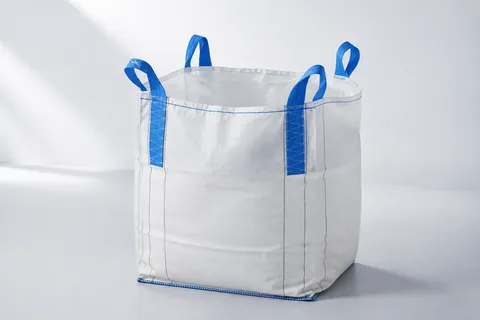
For renovation debris, choose the closure and lifting interface around the collection truck and the material entering the bag. A skirt-top flat-base FIBC can suit a route that needs a covered opening after filling, while a wide opening can be easier for bulky debris. Relia’s published skirt-top waste bag provides a 1,000 kg construction reference. Confirm truck pickup, dense rubble weight and sharp pieces before you approve an order.
- Bulky dry debris
- Dense rubble
- Covered collection
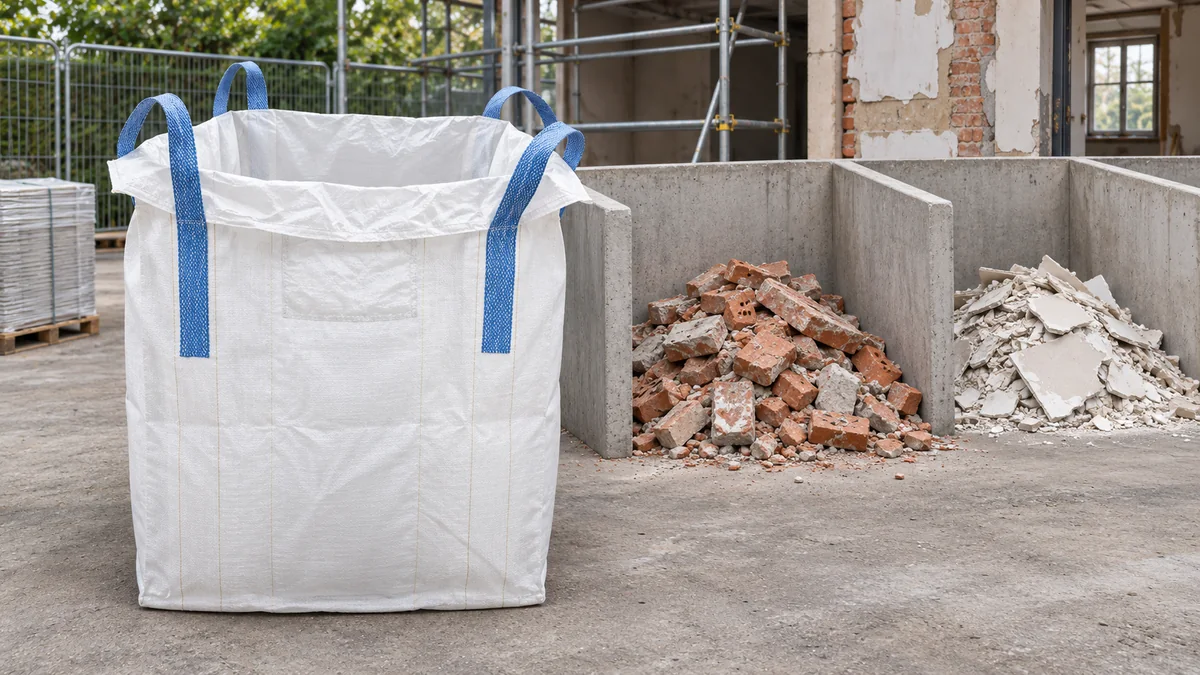
Two Waste Streams
A bag that looks manageable with foam or timber can reach its weight limit much earlier with brick and mortar. A separate waste profile lets us quote the right opening and load target for each stream.
Manufacturing checks for this specification
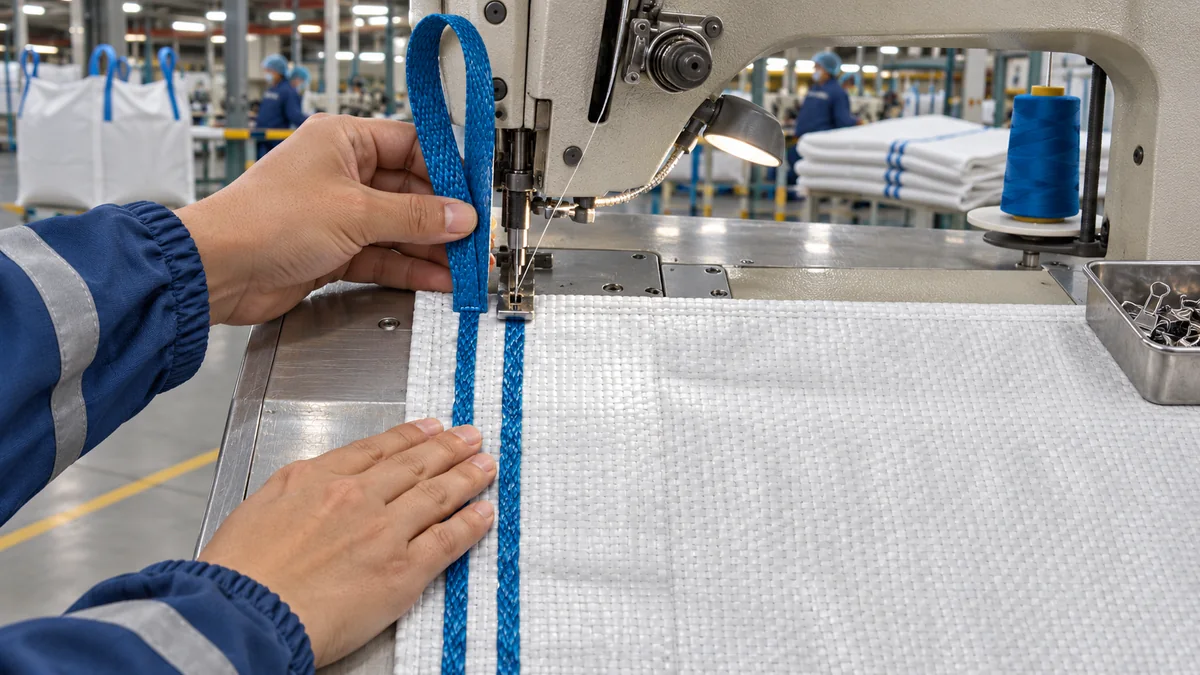
Relia’s catalog shows woven PP production, automatic cutting and sewing. On a skirt-top design we review the size of the opening, how the skirt is joined, the base seam and the load path from the lifting loops. A shorter spouted bag uses a different loading and discharge method, so its dimensions alone are a poor match for bulky rubble.
- 01Cut body and base
- 02Set opening and loops
- 03Check truck fit
For dense rubble, record loaded weight at a representative fill level. Record the planned truck attachment and the narrowest pickup zone. During the approved trial, review opening access, closure condition and abrasion after collection. Separate wet or sharp materials that require a different containment decision.
Truck Interface and Staging
Work back from the pickup equipment. Share the hook or lifting attachment, reach and deck layout so the bag design and collection method can be reviewed together.
Two waste references with different bottoms
The skirt-top product lists a flat bottom, cross-corner loops and 1,000 kg SWL. The 85 × 85 × 60 cm U-panel product also lists 1,000 kg SWL, but has a fill spout, discharge spout and side-seam loops. For shovel-loaded rubble and a closed-base collection workflow, the skirt-top and flat-base geometry is the closer reference.
Split the RFQ into dense brick, mixed sharp rubble and bulky lightweight material. Record actual filled weights for each and identify how the truck engages the lifting points. Recheck the operator’s approved lifting arrangement if the loop design changes.
FIBCA safe handling guidelines
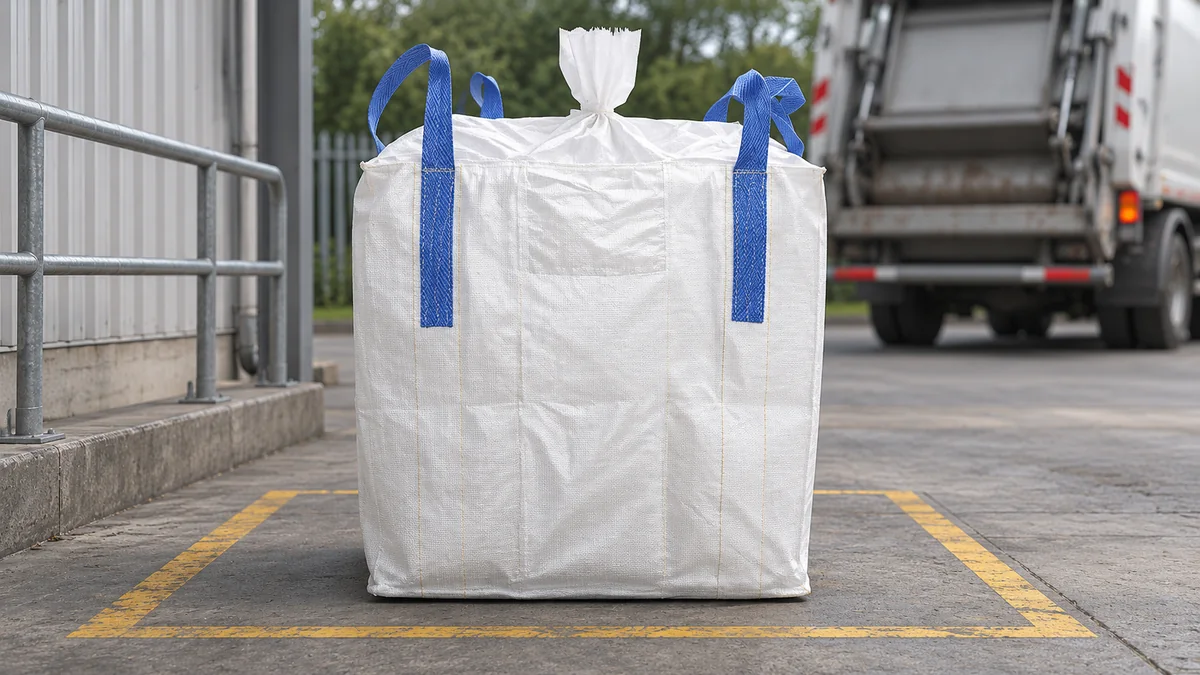
Product References for Your Brief
Our skirt-top waste bag and short U-panel waste bag are useful references for opening style and footprint. The dimensions and load ratings of an offered model must be confirmed against your truck and waste stream.
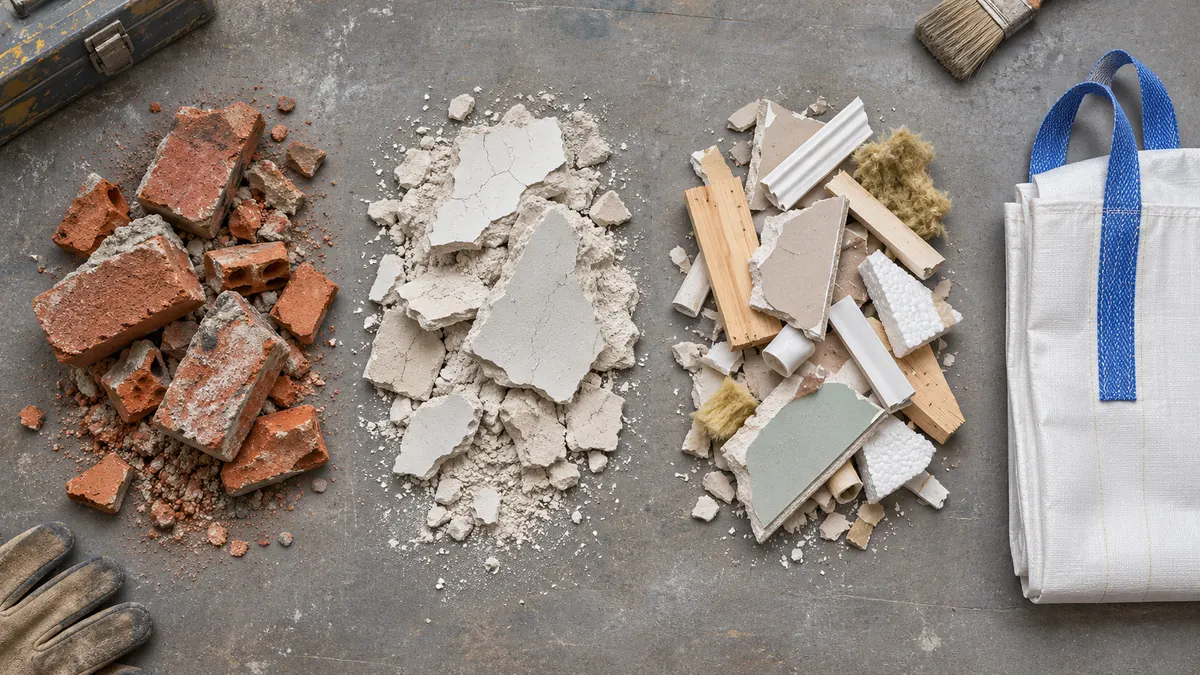
Debris Samples Before Spec Selection
A photo of the worst piece is more useful than a description of the average load. Include a scale next to fragments and identify material you can separate before loading.
Bag Dimensions and Loading Access
Measure the narrowest place the empty bag passes through and the area available once it is filled. Include doorway width, the filling method and any clearance around the pickup point.
A measured fill limit for mixed debris
Nominal bag volume is a starting point for planning truck space. Build the loading check from a weighed representative fill, because the same volume of broken masonry and dry timber can have very different mass. Mark the planned maximum fill on the operating record only after agreeing how the contents will be checked. Include awkward items and the effect of rain if bags wait outdoors. The published skirt-top flat-base model lists virgin PP and cross-corner loops. The shorter 85 × 85 × 60 cm waste reference has a fill spout and discharge spout. Compare them as different operating layouts.
Sample Construction Review
At sample stage, record the opening, seam construction and lift interface from the approved drawing. Use a controlled evaluation to agree acceptance criteria before ordering a full lot.
Evidence to keep with the order
Build a trial record around your actual collection route. Keep the waste description, measured filled mass, attachment used and result of the post-route inspection together. Record which materials the trial covered so a crew cannot substitute a denser or sharper load on the next run.
Collection Trial Acceptance
Agree a sample trial with the operator before the recurring route starts. Record the filled mass, any snagging, sample condition and handling observations under the agreed method.
Related Purchasing References
Use the metal-scrap route when pointed pieces dominate. Keep the inspection guide with the field trial plan so the site team can review the proposed handling method.
Quote Pack for a Collection Route
Confirm skirt closure and fit before dispatch.
Contact the Relia Team
Send representative waste photos, maximum filled mass, truck or lifting attachment photos, staged footprint and collection route. Ask for one approved construction per materially different waste stream.
Qingdao, Shandong, China