

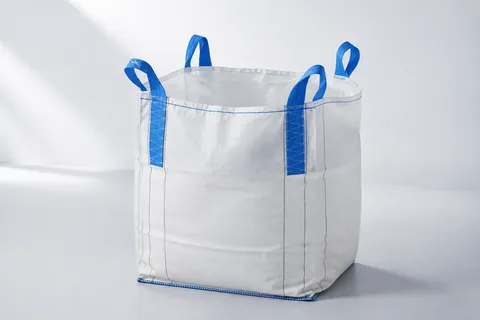
Woven PP Fabric Rolls for FIBC Converters
If you convert your own bulk bags, order the roll in the format your cutting line uses. Relia’s catalog lists tubular and flat woven PP. State whether width is flat sheet, tube lay-flat or developed circumference. Compare base cloth and coating GSM separately, then approve a trial roll for feed, cutting and the intended seam.
- Format
- Materials
- Converter approval
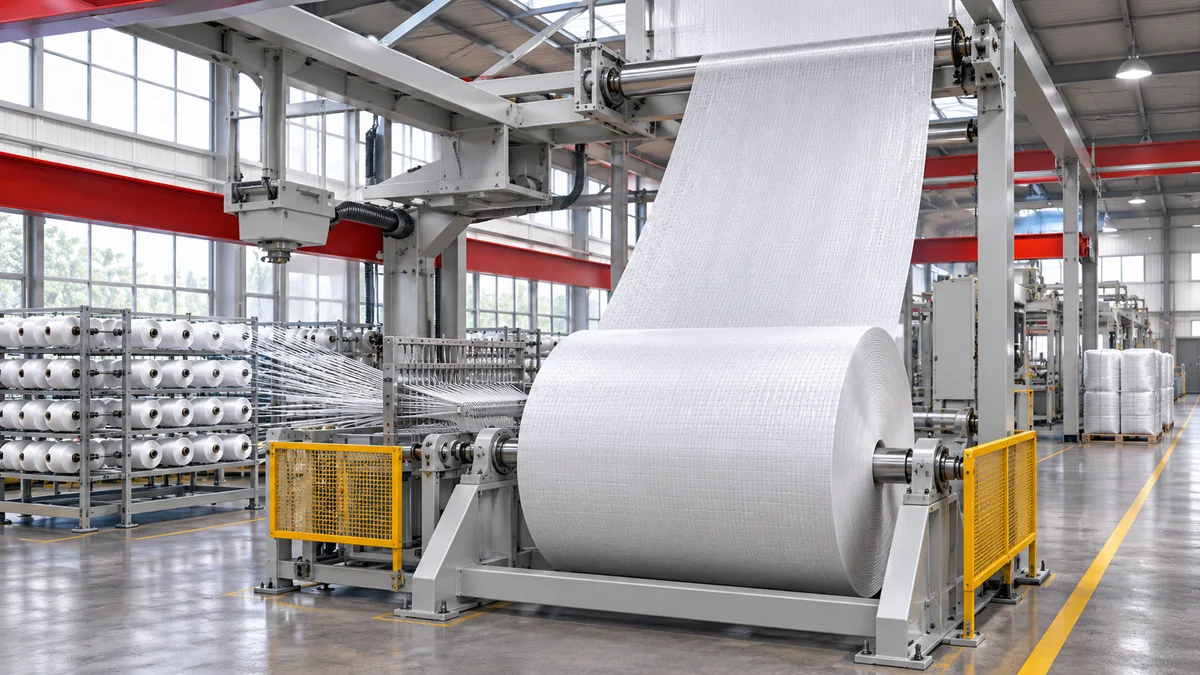
Tube and Flat Fabric Formats
Specify tubular or flat fabric and define where you measure width. Give the usable width and any fold or edge allowances needed for your pattern.
Manufacturing checks for this specification
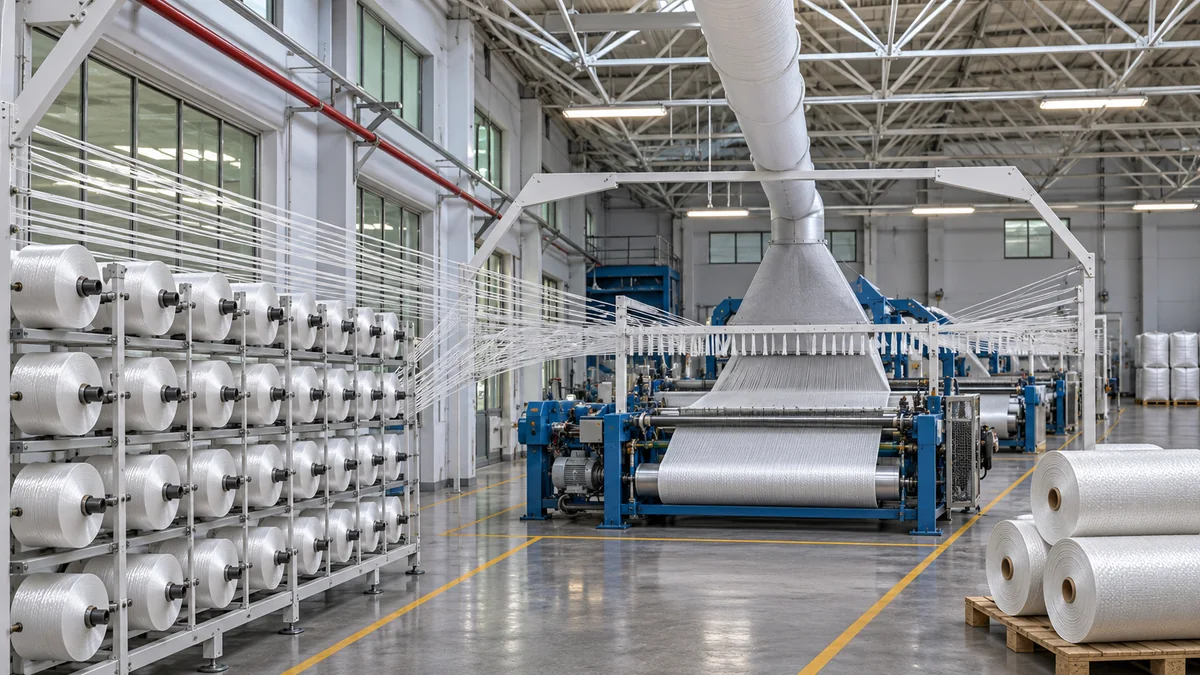
Relia’s catalog describes PP tape drawing, circular weaving and lamination. It lists nominal fabric widths from 30 to 260 cm and describes typical coating add-ons of 10–30 g/m². Confirm the usable width, weave convention and tolerance for the quoted combination. Identify the coating face and winding direction so the roll can be fed correctly.
- 01Prepare PP tape
- 02Weave and coat to brief
- 03Check the trial roll
Calculate nominal cloth mass from developed width × roll length × GSM ÷ 1,000 for dimensions in metres and GSM in g/m². A flat 1.50 m × 100 m roll at 180 g/m² contains 27 kg of nominal cloth before the core and packaging. Inspect net width, edge condition, splice count and cutting feed on the trial roll.
Relia factory process and quality checks · Tape extrusion process reference
Calculate mass using the correct fabric width
For flat fabric, multiply usable width in metres by length and grams per square metre. At 1.50 m × 100 m × 180 g/m², the nominal cloth mass is 27 kg, before core and packaging. For tubular fabric, confirm whether the quoted width is the lay-flat width or the developed circumference.
Ask whether GSM includes the coating. Record loom direction, usable width, roll length, splice allowance and the approved fabric face. Compare feed, cut edge and seam appearance on a trial roll before approving recurring lots.
GSM and Weave in the Quote
Specify fabric mass per area, weave targets and test conditions. Separate the weight of an applied coating from the base fabric when comparing offers.
Coating on the Correct Face
Mark the side to be coated, the surface expected by sewing and whether print or adhesion follows. Review the cloth and finished surface on the same sample.
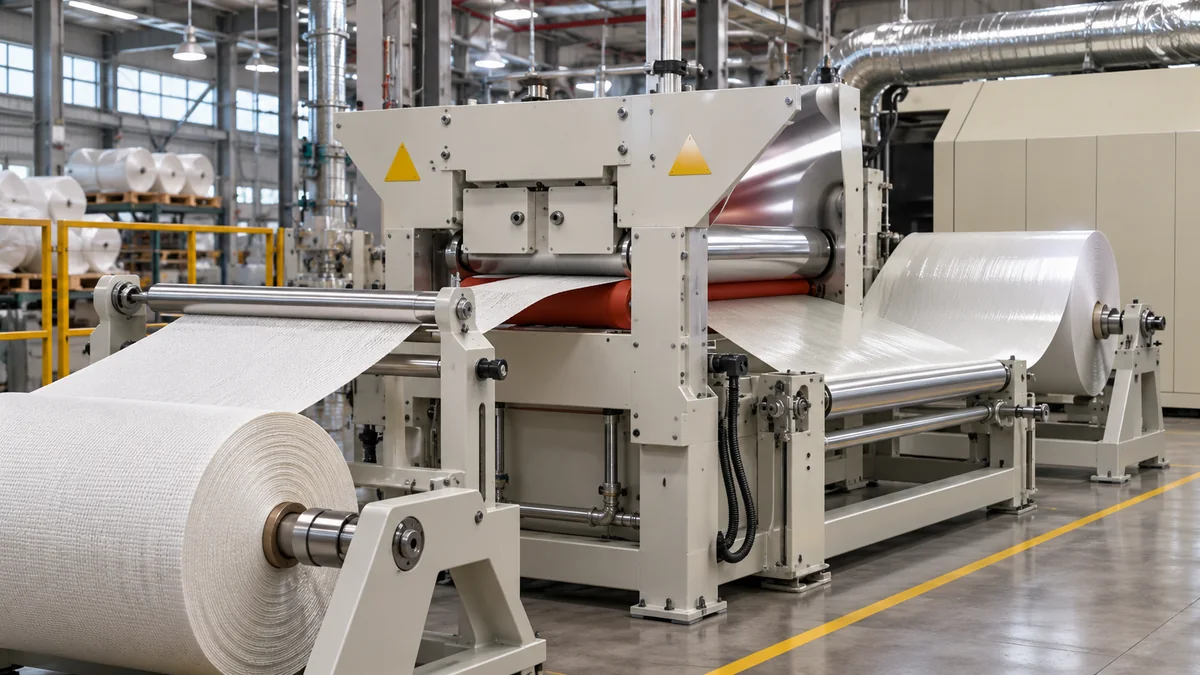
The Reference Swatch and the Trial Roll
Send a swatch from the material you want to match. Choose the trial quantity based on how much your line needs to expose cut, feed and seam differences.
Feed, Cutting and Sewing
Run the offered trial roll through your actual process. Note edge distortion, roll feed, cut behavior and changes needed for stitching.
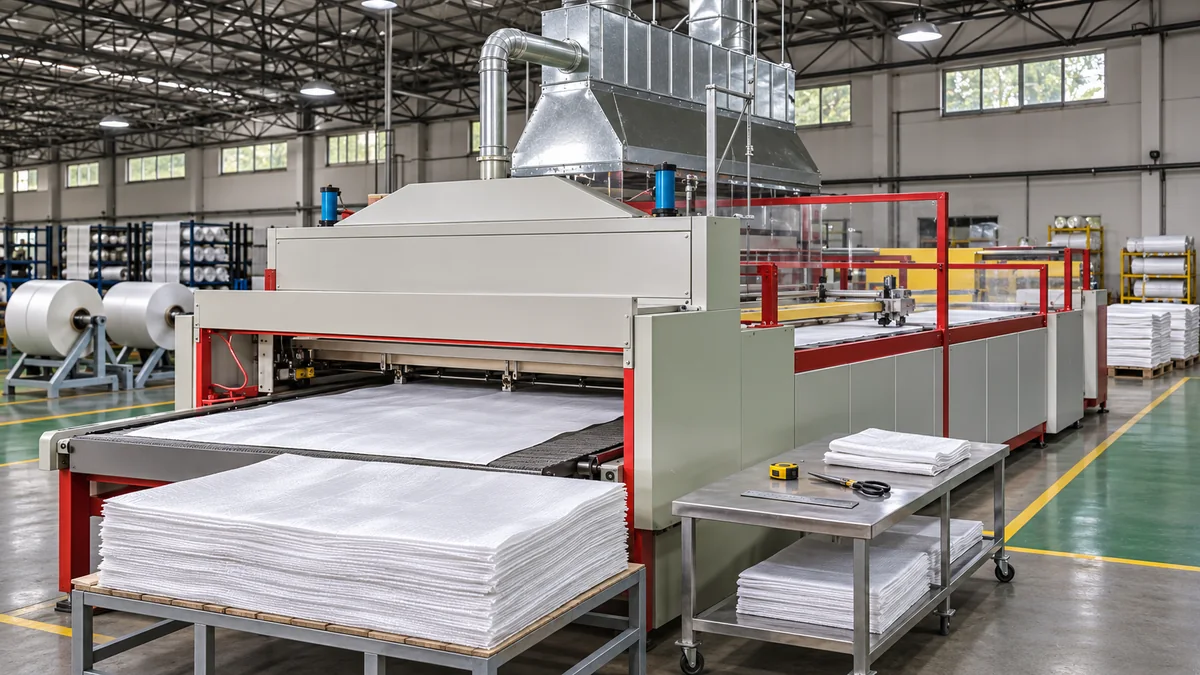
Roll Packing and Identification
Request roll length, core dimensions, winding direction and external labels. Set the damage and splice rules your receiving team can check.
A converter’s acceptance record for each roll
Put the measured net width, nominal GSM, coating face, roll length and winding direction on the same trial sheet. Record where any splice appears and whether it affects the cutter or the panel pattern. If you buy tubular fabric, agree how developed circumference is calculated for material yield and use the same width convention when comparing prices.
Production Consistency Across Lots
Retain the approved roll specification and agree how later lots will be checked. Ask for batch records tied to the actual shipped rolls.
Evidence to keep with the order
Tie the trial swatch and roll to a reference code. At receiving, compare roll identity, face direction, net width and usable length. Agree a splice allowance with the converter and ask for notification if cloth, coating or winding changes on a later lot.
Related Material Procurement
Use the fabric performance guide to define material requests. Component testing and whole-bag acceptance should be specified at their respective levels.
Send Your Fabric Schedule
Use the actual cutting and sewing line.
Contact the Relia Team
Send your swatch, width convention, width tolerance, weave, GSM, coating face, core and winding specification. Include trial-roll length and planned recurring volume.
Qingdao, Shandong, China