

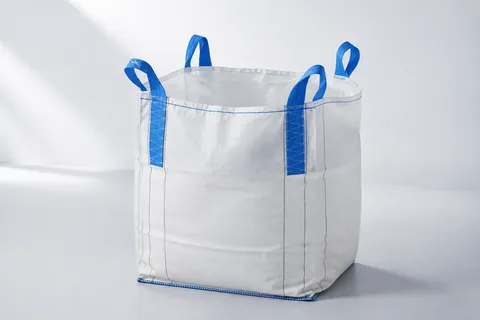
Bulk Bag Fitment for Steel Racks and Filling Frames
If a bag has to sit inside or sleeve over a steel frame, measure the usable opening and removal path before ordering. The nominal rack width rarely describes the full fit. Relia can compare your drawing with the bag’s intended support points, filling opening and filled shape. For example, a 1,100 mm opening with a 1,060 mm filled bag leaves 40 mm total before tolerance or additional bulge.
- Empty placement
- Supported filling
- Full removal
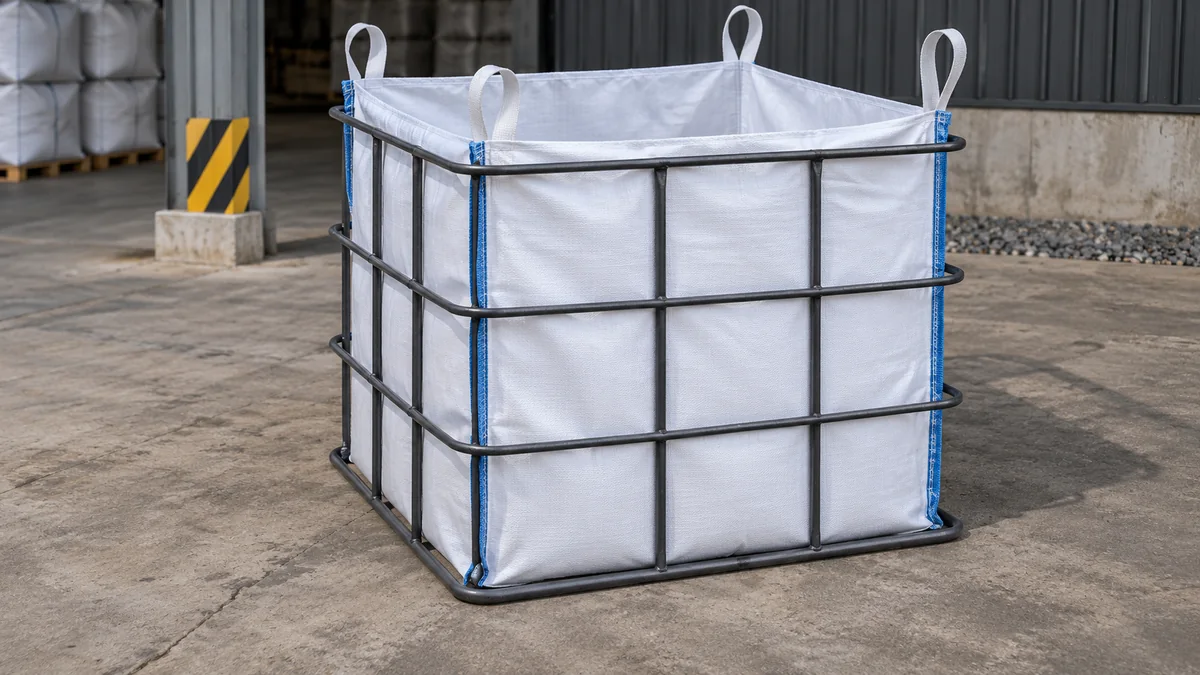
Two Different Frame Uses
A bag kept inside a rack needs the required support throughout its stay. A bag removed from a filling frame also needs the exit and release sequence reviewed.
Manufacturing checks for this specification
Relia’s catalog shows automatic cutting and sewn assembly. To quote frame fitment, turn the steel drawing into controlled bag dimensions. Include any cuff, loop position, body width and seam location. The design brief should identify where the steel supports the bag and which parts could rub or snag during removal.
- 01Measure the narrowest frame opening
- 02Locate bag features
- 03Verify supported removal
Measure at welds, plates, brackets and any transition on the removal route. Check the empty fit, supported filling and approved full-bag removal separately. In a controlled trial, record clearance, hang-ups and contact marks, and capture the approved drawing revision. Your site team should verify the frame and equipment for the intended load.
Relia factory process and quality checks
Use the smallest clearance in the rack
An example 1,100 mm clear frame opening around a supported bag measured at 1,060 mm leaves 40 mm total clearance before bulge, tolerance and projections. Record the narrowest width at bracing and the height at the release point rather than the outer rack dimensions.
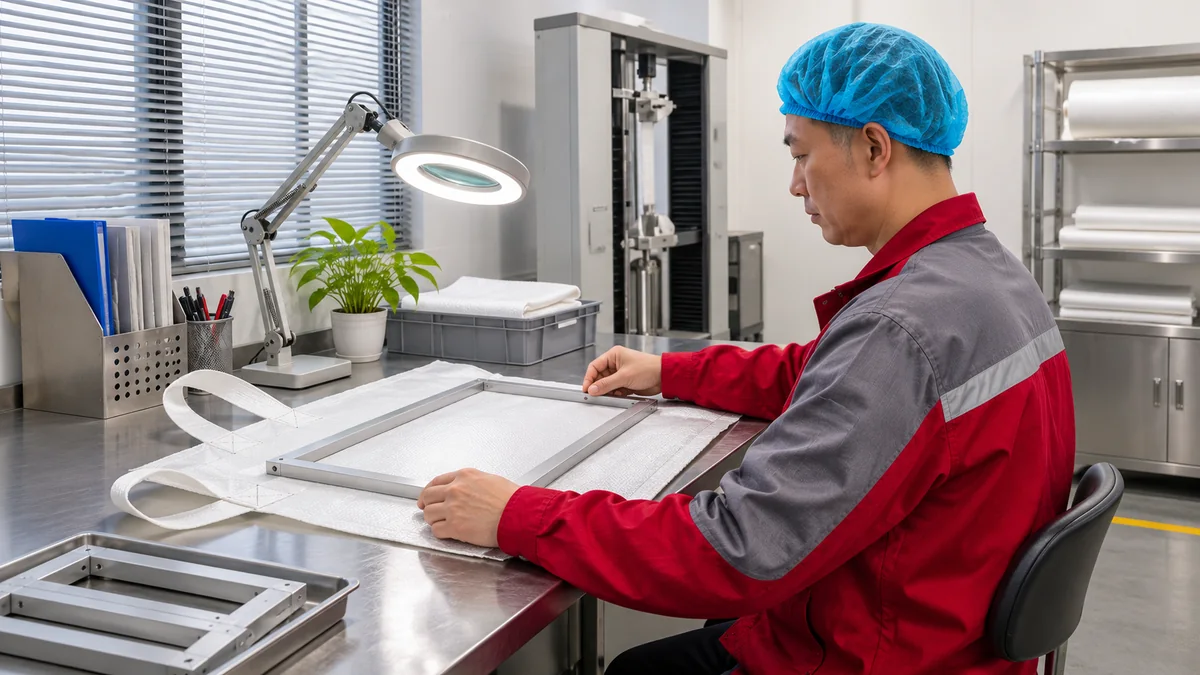
Separate base-supported storage from filling and release. Mark which surfaces are load-bearing, which are merely guides, and the full-bag removal sequence. A workshop photo illustrates shape, while the rack drawing and approved fit trial establish compatibility.
The Frame’s Usable Dimensions
Measure clear widths at corners, bracing and doors. Include base height, hook positions and any parts that move when the bag is released.
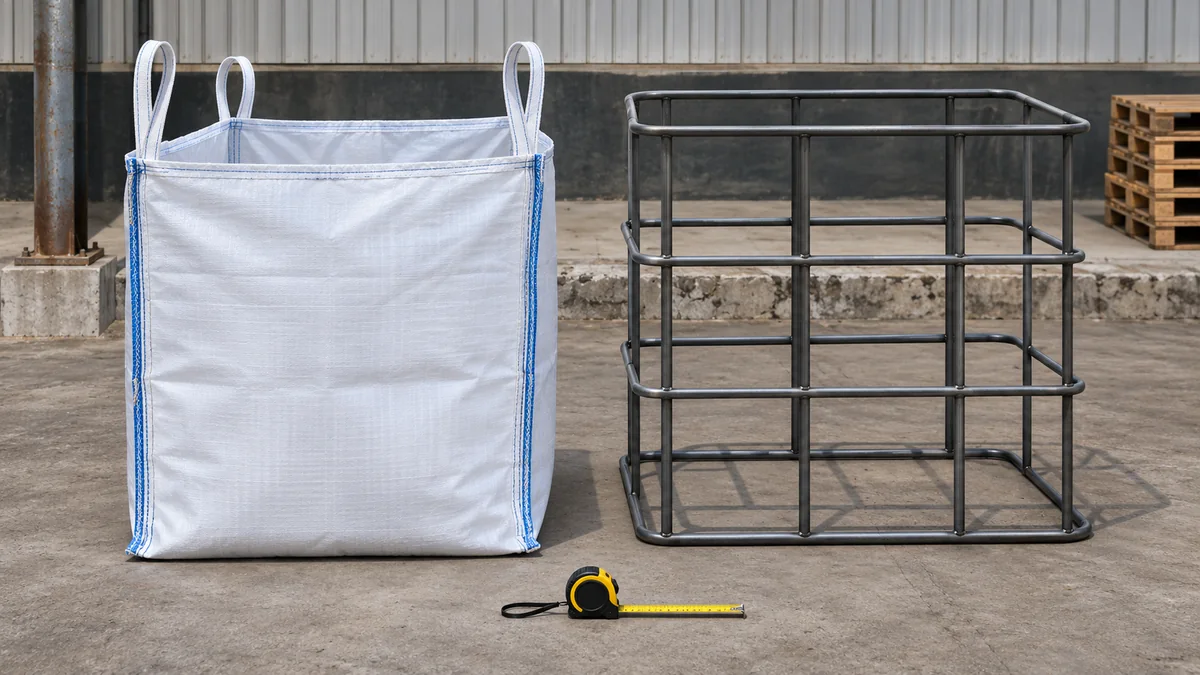
Support Points and Contact Edges
Show which parts of the frame support or touch the bag. Mark any sharp edge, pinch location or protrusion that may contact the fabric.
Bag Shape Through the Filling Sequence
Review the empty insertion, fill growth and access to closure. Capture the largest envelope and the space needed for equipment and hands.
Clearance and support belong on separate drawing layers
On the frame drawing, mark fixed clear openings, hard contact points and the intended support surfaces. On a second layer, mark the bag position when empty, when filled and just before removal. Ask the site to confirm which supports are load-bearing. This makes it easier to diagnose whether a snag comes from bag geometry, a protrusion on the frame or the handling sequence.
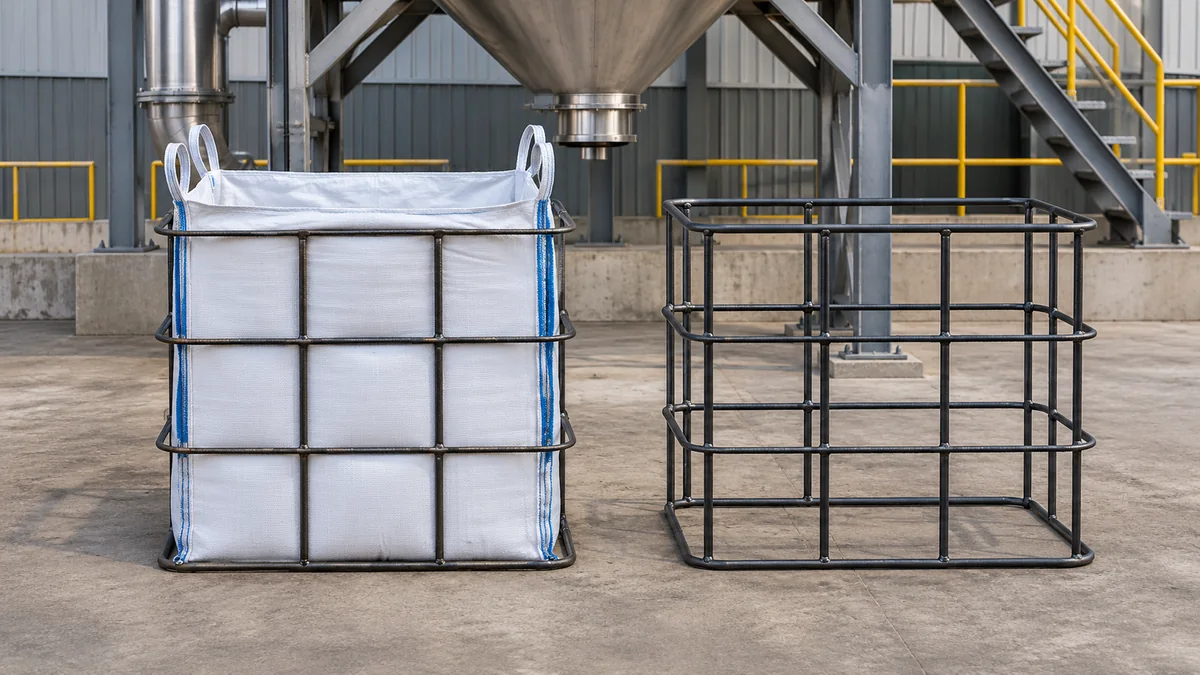
A Release Sequence for a Full Bag
Document which attachments release first and where the full bag is supported. Agree the approved withdrawal method with the team responsible for the equipment.
Fitment Sample Observations
Check side bulge, seam clearance and attachment position with a sample under the agreed review method. Record the bag and rack revisions together.
Approved Revisions for Repeat Orders
Keep the equipment dimensions and drawing with the accepted sample. Bring frame changes or a changed payload back to the review.
Evidence to keep with the order
Record the frame revision, the tested bag drawing and where the bag made contact during insertion and removal. If a rack is altered or the support method changes, recheck its fit and operating procedure before using the previous purchase drawing.
Related Equipment and Lifting Guide
Use the filling and lifting guide when documenting machine geometry. Discuss a separate handling sample if the bag must move to a different truck or forklift interface.
Send the Frame Drawing
Check the release sequence and turning or fork clearance.
Contact the Relia Team
Send the frame drawing and photos with a scale, attachment geometry, filling head position, maximum supported load and intended removal sequence.
Qingdao, Shandong, China