
Closed-Discharge FIBCs for Food Production Lines
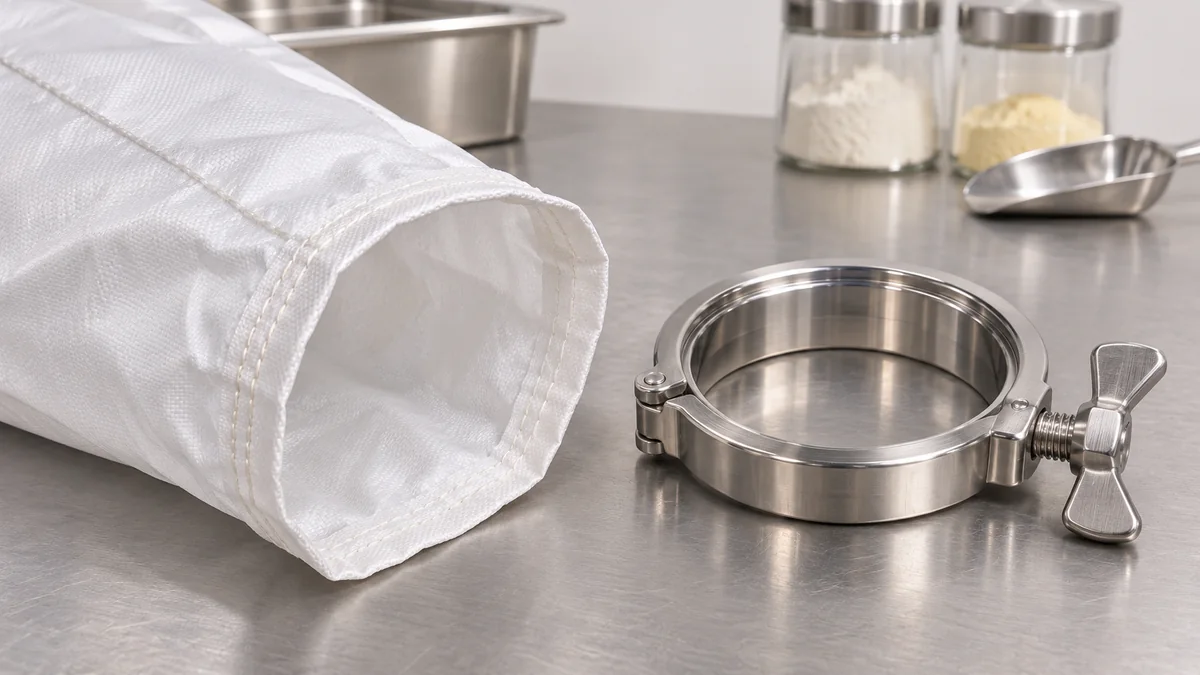
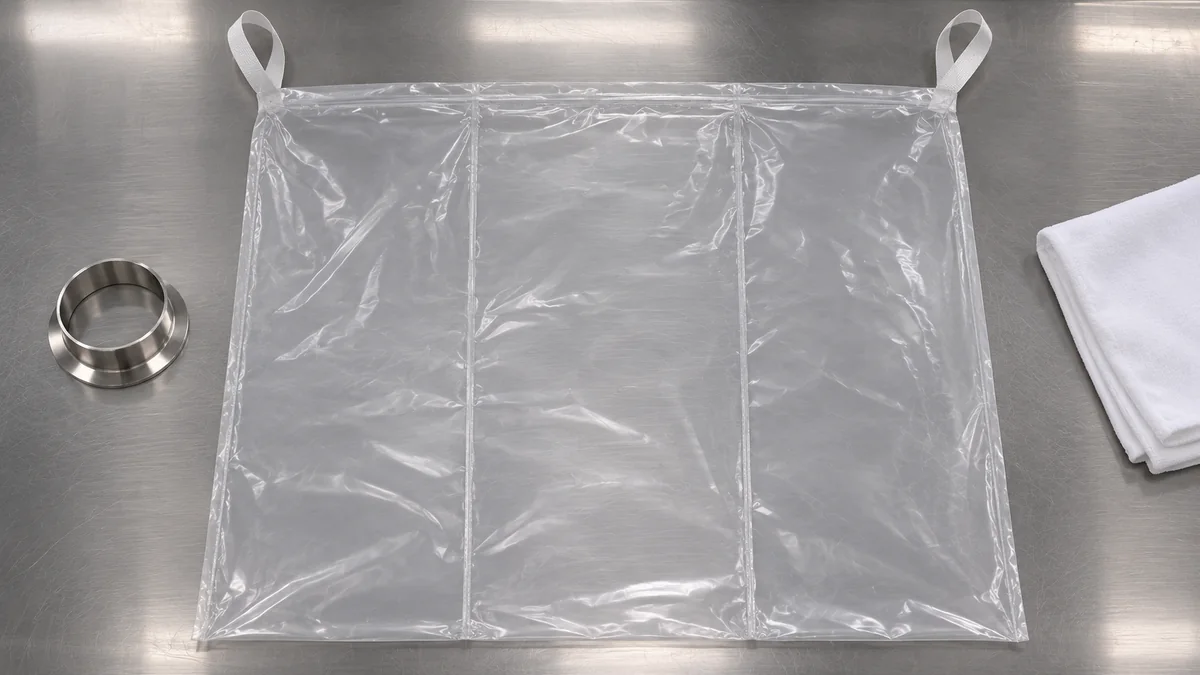
For a food line that needs controlled, enclosed transfer, start with the path from the bag liner to the receiving hopper. Relia’s published form-fit PE-lined, dual-spout FIBC is a geometry reference. The exact bag, outlet and clamp must work together with the site’s cleaning and changeover routine. Review the contact evidence for each ingredient and use condition.
- Mechanical fit
- Two ingredients
- Line approval
The Bag-to-Line Boundary
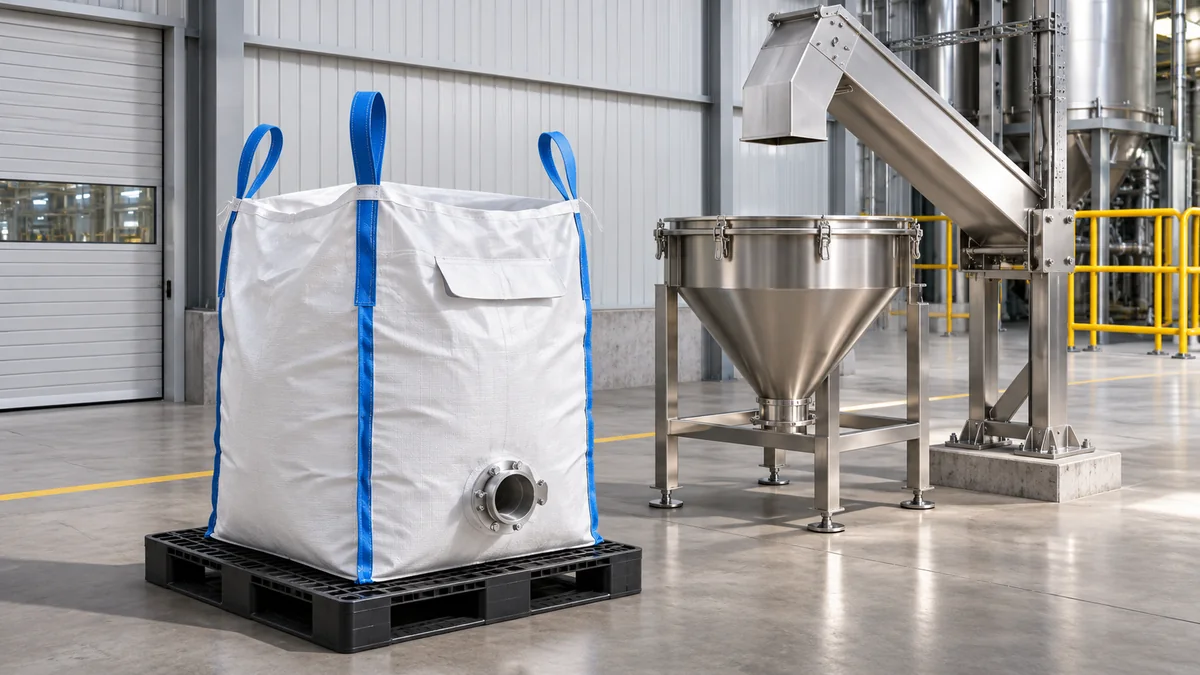
Mark which parts belong to your equipment and which parts the bag or liner must supply. Identify product contact from the liner through the connection.
Manufacturing checks for this specification
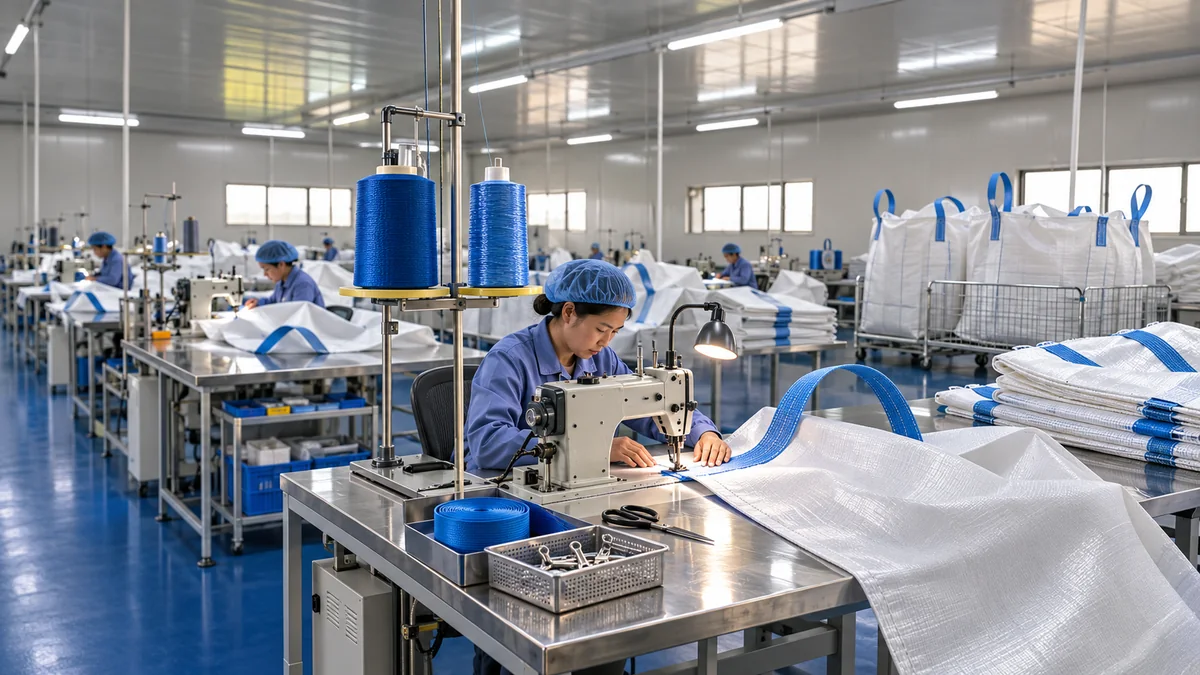
Relia’s catalog describes sewn assembly, an internal cleaning step and finished-bag inspection. For a closed-discharge proposal, the base opening, liner neck, support and clamp engagement are separate drawing items. Specify who supplies the hardware and where the food powder contacts each component during release.
- 01Measure the plant interface
- 02Specify outlet and liner
- 03Check residue and cleanability
Check the supported bag and hopper connection in an approved run. Record containment at startup and release, residue in folds and the changeover surfaces the operator must clean. Keep mechanical fit, ingredient-specific food-contact documentation and line hygiene acceptance on separate signoff lines.
Connection Dimensions at the Hopper
Measure the outside and inside dimensions of the fitting and the available access for clamps or ties. Include outlet length with the bag supported.
Put the connection and cleaning boundary on the drawing
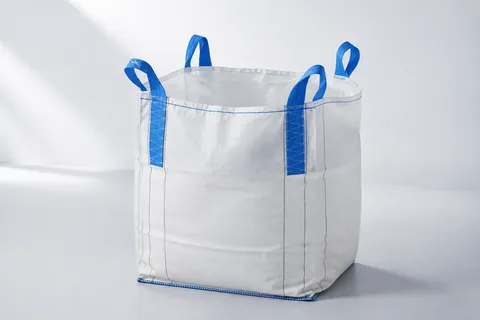
The flour baffle listing offers a fill spout, discharge spout and side-seam loops. The IMPQ04503 listing adds a fitted PE liner reference. Neither listing defines the receiving plant’s clamp or hopper interface, which belongs on the project drawing.
Record the mating diameter, usable spout length, clamp engagement and surfaces exposed when disconnected. Set residue and cleaning criteria by ingredient, then match contact-layer evidence to the destination and the offered assembly.
European Commission food-contact materials guidance
Two Ingredients and Two Evidence Checks
Review the intended ingredients separately when their contact, residue or cleaning requirements differ. Match each review to the offered materials and lot records.
Changeover and Residual Powder
Ask the line team to define an acceptable result at disconnect and after cleaning. Use a representative sample to observe powder retention and access.
An Observation Plan for the Trial
Agree the attachment and release sequence and document flow, interruption and residue. Review the proposed assembly with the plant team before running it.
A Document Pack for the Offered Components
Put the liner, closure and any contacting fabric on the same revision as the drawings and requested evidence. Retain a lot record for the approved sample.
An ingredient-level changeover record
Capture what powder remains in the liner folds, on the clamp interface or around the hopper entry after the agreed run. Keep this separate from the food-contact material review. Relia has food-contact files available and can identify the documentation relevant to the offered components. Your line team can use the mechanical trial to decide whether access and cleanout meet its release procedure.
Bag References for Mechanical Layout
Our flour baffle and form-fit liner listings illustrate spout and liner geometry. Review the specific closed connection and contact evidence with the configuration you intend to order.
Evidence to keep with the order
Record the bag and hopper revisions, tested ingredient and changeover routine with the agreed residue and cleaning observations. The mechanical trial and QA evidence have different purposes. Capture both approvals and set a review requirement for changes to any powder-contact component.
FDA food-contact component guidance
Related Line and QA Guides
Use the filling guide to describe the mechanical interface and the requirements guide to scope the applicable documentation.
Send the Two Ingredient Briefs
Record interface condition, residual powder and changeover access.
Contact the Relia Team
Send the hopper and clamp dimensions, two ingredient briefs, contact conditions, required supporting documents and the changeover routine.
Qingdao, Shandong, China