
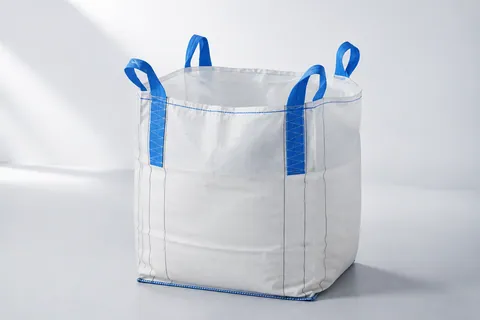
Top opening
Choose broad access, a skirt top or a defined filling spout.
Specify the filling opening, bottom discharge and lifting loops as three separate connections. A spout-top bag can have a flat base or a discharge spout, so the top style alone does not tell you how the bag will be emptied.
Choose broad access, a skirt top or a defined filling spout.
Specify flat base, discharge spout or the required shaped-bottom arrangement.
Locate side-seam or cross-corner loops and dimension the clear opening.
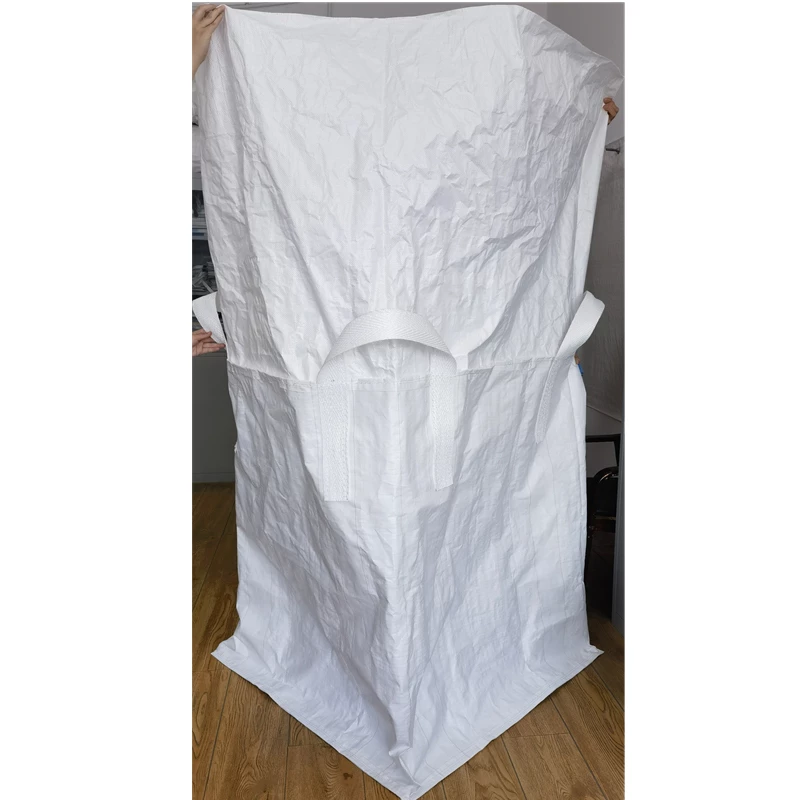
The top connects the bag to the filling process. The bottom defines its discharge arrangement. The lifting loops connect the package to the handling equipment. Record the required geometry of each interface with measurement units and clear reference points.
If your equipment already exists, send a drawing or measured photographs of the connection points. Compare the proposed bag and any liner against those same measurements before deciding which configuration to quote.
| Interface | Options in the catalog | Measurements to provide |
|---|---|---|
| Filling | Open top, skirt / duffle top, filling spout | Access dimensions; for a spout, diameter or lay-flat convention and length. |
| Discharge | Flat base, discharge spout, conical-bottom references | Outlet size, length, closure details and clearance below the bag. |
| Lifting | Cross-corner and side-seam arrangements | Loop position, clear height, width and equipment connection dimensions. |
| Liner | Separate and form-fit liner references | How the liner openings align with the bag, including closure and attachment details. |
These are specification questions, not operating instructions. Handling and unloading must follow the instructions and ratings for the actual equipment and approved bag.
Choose broad access, a skirt top or a defined filling spout.
Specify flat base, discharge spout or the required shaped-bottom arrangement.
Locate side-seam or cross-corner loops and dimension the clear opening.
Include liner openings and closures where a liner is part of the design.
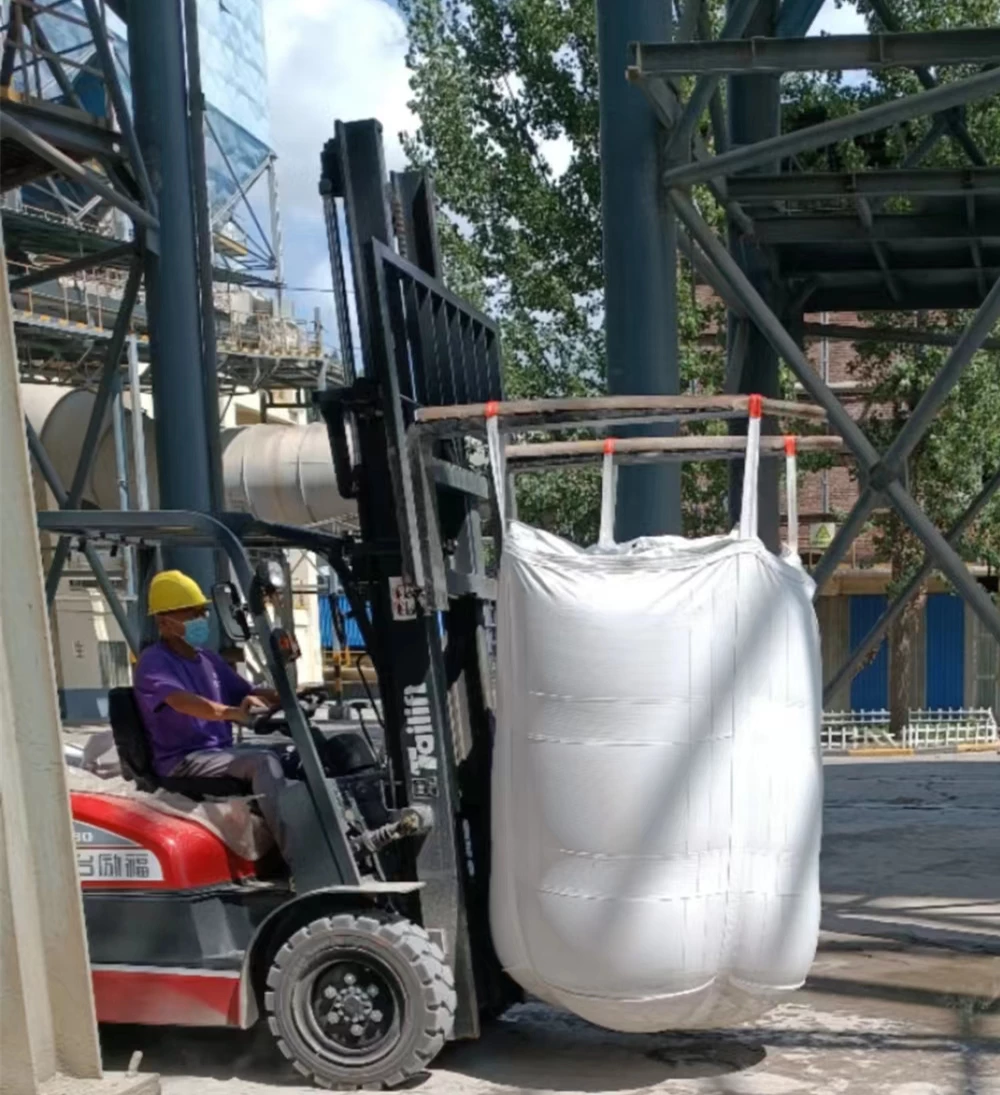
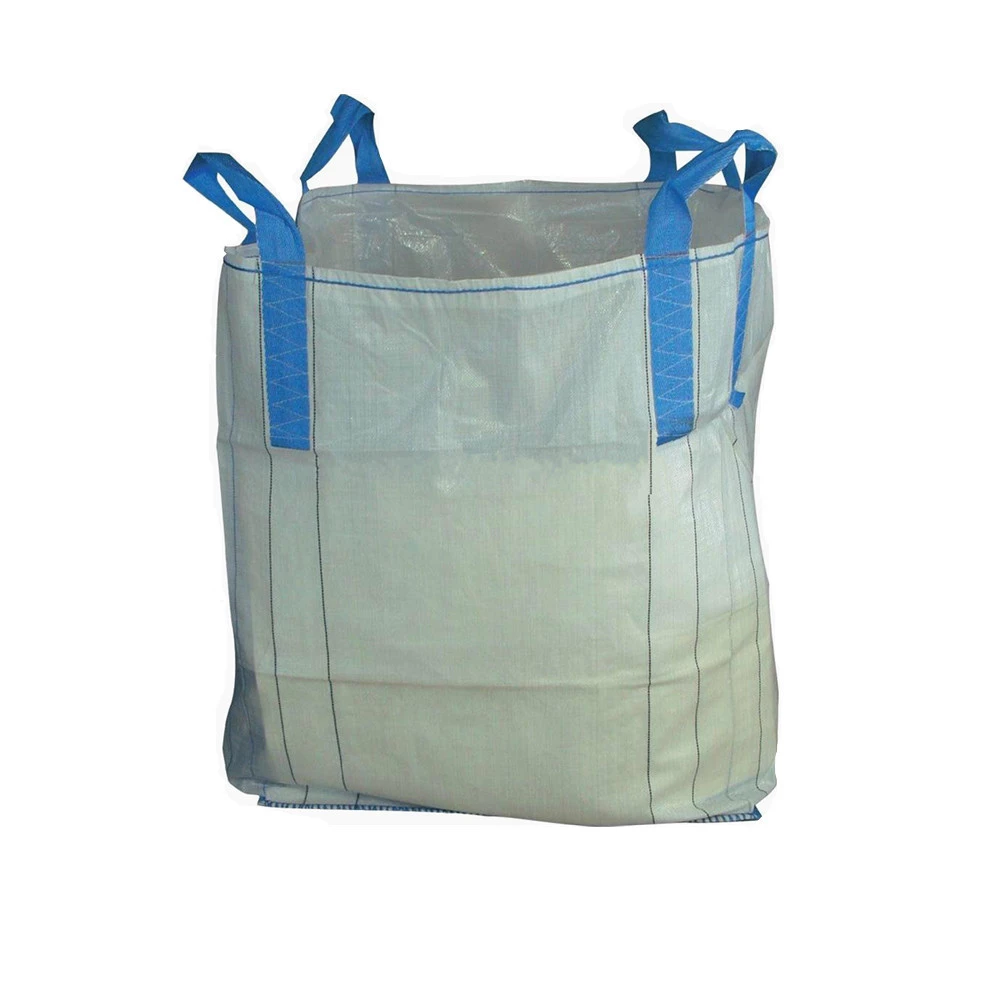
Do not infer the bottom arrangement from the top. The catalog includes discharge-spout, flat-base and conical-bottom references. Write down the requested bottom configuration even when it seems obvious from a familiar bag name. This prevents quotations from being compared as equivalent when they describe different ways of emptying or retaining the contents.
A discharge-spout discussion should identify the equipment connection, opening dimensions, length references and the requested closure arrangement. Where a liner is specified, distinguish the outer bag opening from the liner connection. Ask which component each drawing label describes. The word lined does not explain how the components connect during emptying.
The open-top tubular sand bag reference illustrates why top and bottom should be listed independently in the enquiry. Its recorded flat base should not be silently replaced with a discharge spout because another reference has one. If a change is needed, describe it as a requested change requiring review.
A conical-bottom designation can identify another configuration for discussion. It does not provide a discharge rate, establish complete emptying or confirm performance with a particular material. Describe the contents and the receiving equipment, then ask which details and supporting information are needed to assess the proposed combination.
Product 21833 is a conical-bottom tubular potato-bag reference with a skirt top. Its numeric size reference does not have an explicit unit in the available evidence, so this guide does not turn that reference into a measured dimension. The same discipline applies to every shortlist: preserve uncertain source values and request clarification before using them in an interface drawing.
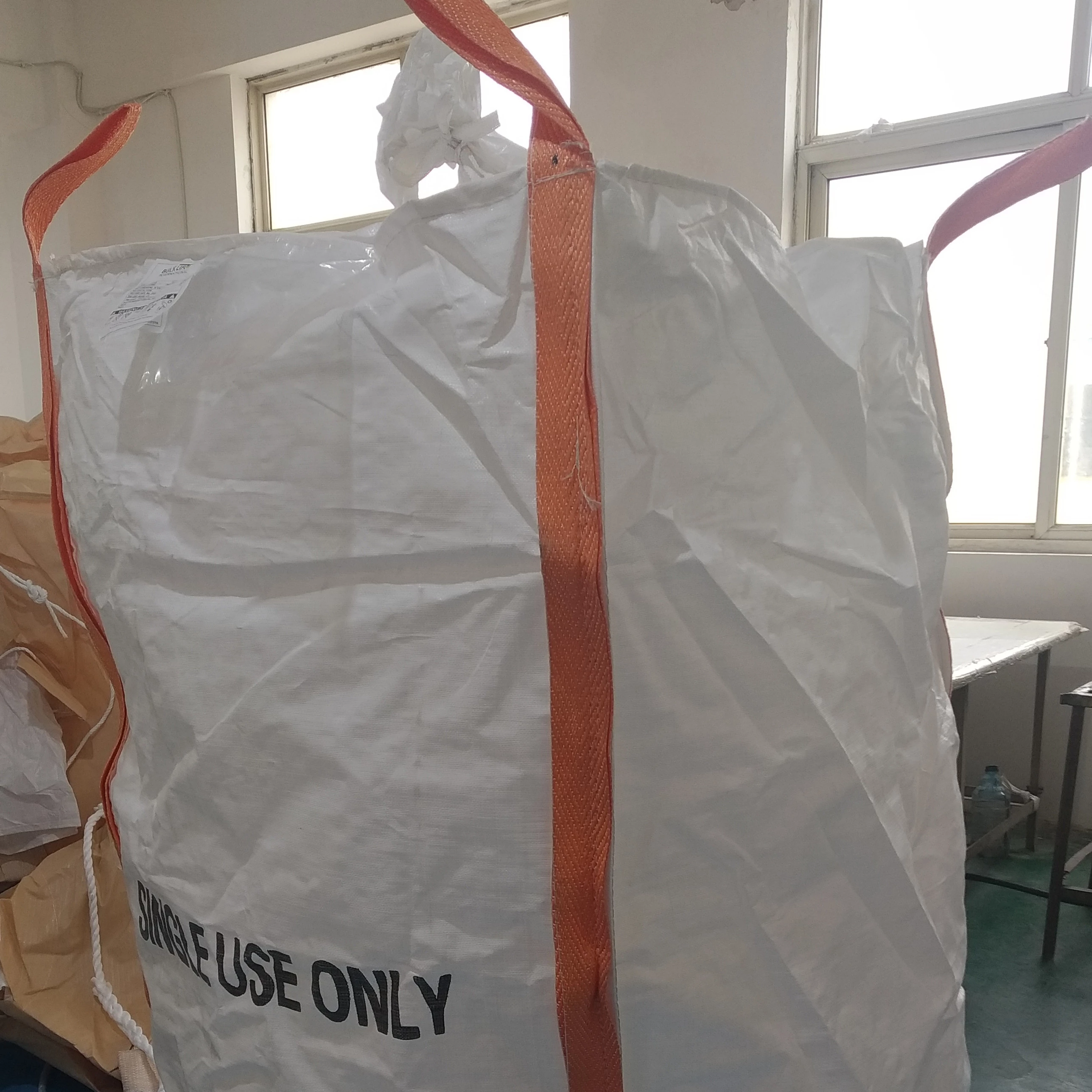
The catalog contains side-seam and cross-corner loop descriptions. Loop names identify arrangements, while a usable specification also needs the position and the measurement references relevant to your equipment. Separate loop width, available loop height and attachment information instead of placing one unexplained number beside the word loop.
Ask the responsible equipment team which dimensions and clearances they need to review. Record whether a stated loop dimension refers to the webbing itself, the free portion or another defined reference. Use labeled drawings or requested detail photographs to resolve the description. Do not treat an overall product photograph as a scale drawing.
The U-panel peanut FIBC reference offers a specific arrangement to discuss alongside tubular references. The peanut application is a catalog context, not a food-contact approval. Likewise, the number, color or position of loops does not establish a working load, safety factor or suitability for particular lifting equipment.
Keep equipment dimensions and product evidence in separate but connected parts of the review. A drawing may describe a requested arrangement without proving performance. If a load-related or application-specific requirement applies, ask for the relevant documents and check that they correspond to the complete proposed bag and its revision.
Do not transfer a rating from a similar-looking product or assume that changing a loop leaves every other approval unchanged. Identify the proposed change and ask how it affects the documentation to be supplied. The quality and documentation guide explains how to organize that request without treating general statements as product-specific evidence.
Bring the three interfaces into a single review table. This helps different people work from the same requirement: the person selecting a product reference, the person describing the machine and the person reviewing the quotation. Give each unanswered point a clear owner or next question rather than hiding it in a general approval note.
| Interface | Record from your equipment or request | Ask to confirm on the proposed bag |
|---|---|---|
| Top | Connection type, dimensions, units and access constraints | Opening arrangement, measurement references and any liner connection |
| Bottom | Receiving connection, requested emptying arrangement and space constraints | Bottom type, opening dimensions and specified closure details |
| Loops | Equipment connection geometry and the dimensions needed by its responsible reviewer | Loop arrangement, width, free dimensions and attachment references |
| Complete bag | Contents, environment, required fill quantity and document requirements | Configuration revision and applicable evidence, without inferred ratings |
Keep units beside every dimension, including dimensions supplied by different teams. If one document uses inches and another uses centimeters, record the original values and agree how a comparison will be made. Do not silently change source values or supply missing units based on what seems typical for an FIBC.
Where information conflicts, describe the conflict before asking for a quotation. A product title, attribute field and drawing can refer to different versions or levels of detail. The useful question is which description will govern the proposed supply, not which value is easiest to copy. An unresolved field should remain an explicit enquiry item.
Body dimensions alone do not describe filling, discharge or lifting connections. Include separate fields for the openings and loops, with measurement references. If those details are not yet available, send the known requirements and identify the missing equipment information rather than assuming a standard arrangement.
No. Use the photograph to identify the product reference. Ask for a dimensioned drawing or a clearly defined measurement for the connection being discussed. Perspective, folds and hidden components prevent a general product image from replacing an agreed interface specification.
Yes, when the proposed configuration includes one. Record the outer bag and liner requirements separately, then ask how their openings and connections are intended to work together. The fabric, coating and liner guide provides the related component questions.
Send one dated requirement with an identifiable revision. List the product reference, retained features, requested changes and open questions. Ask each quotation to identify the drawing or specification it answers. A price comparison becomes more useful when the quoted top, bottom, loops and liner arrangement can be checked against the same document.
Separate drawing agreement from sample evaluation and any required technical evidence. Each answers a different question. A drawing records the proposed geometry and components; a sample may support a defined review; supporting documents need their own scope check. None should be described as replacing all the others.
Use the sample and drawing review guide to keep revisions together. Then prepare an interface specification for your RFQ, or send your drawing requirements to ReliaBulkBag. Include the equipment questions you need resolved, and keep availability, commercial terms and any performance requirements open for a specific response.
No. The top and bottom are separate options. Read both fields in the product specification and include the required bottom arrangement in your enquiry.
The terms identify different loop positions and attachment layouts. Confirm the actual layout, clear loop height and width on a drawing; the name does not establish a load rating.
Include units, length and the measurement convention used for the opening, such as diameter or lay-flat width. Do not assume two suppliers measured the opening in the same way.
Yes, where a liner is specified. Show or request the relationship between liner openings, bag spouts and closures so that the complete connection can be reviewed.
The bag can have the right nominal body size and still fail to connect to filling or discharge equipment. Record spout diameters and lengths, closure method, loop free height and position, support spacing and required clearances with units and tolerances.
Use the size and volume guide and load rating guide to keep fit and performance decisions separate.
Send the filling connection, unloading arrangement and loop dimensions with a product reference or drawing.