
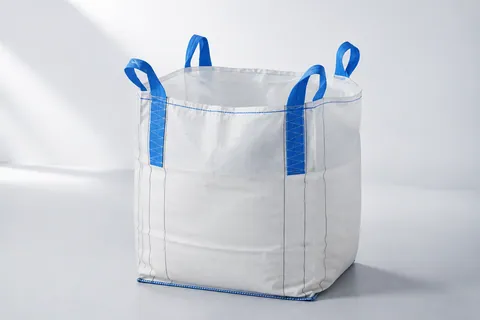
Contents & quantity
Name the material and target fill requirement before comparing bags.
Choose an FIBC by answering five questions: what goes inside, how much is packed, how it is filled, how it is lifted and how it is emptied. Use those answers to compare bag construction, openings and material components.
Name the material and target fill requirement before comparing bags.
Compare the construction and the space available in your process.
Specify the top, bottom and loop arrangement as separate interfaces.
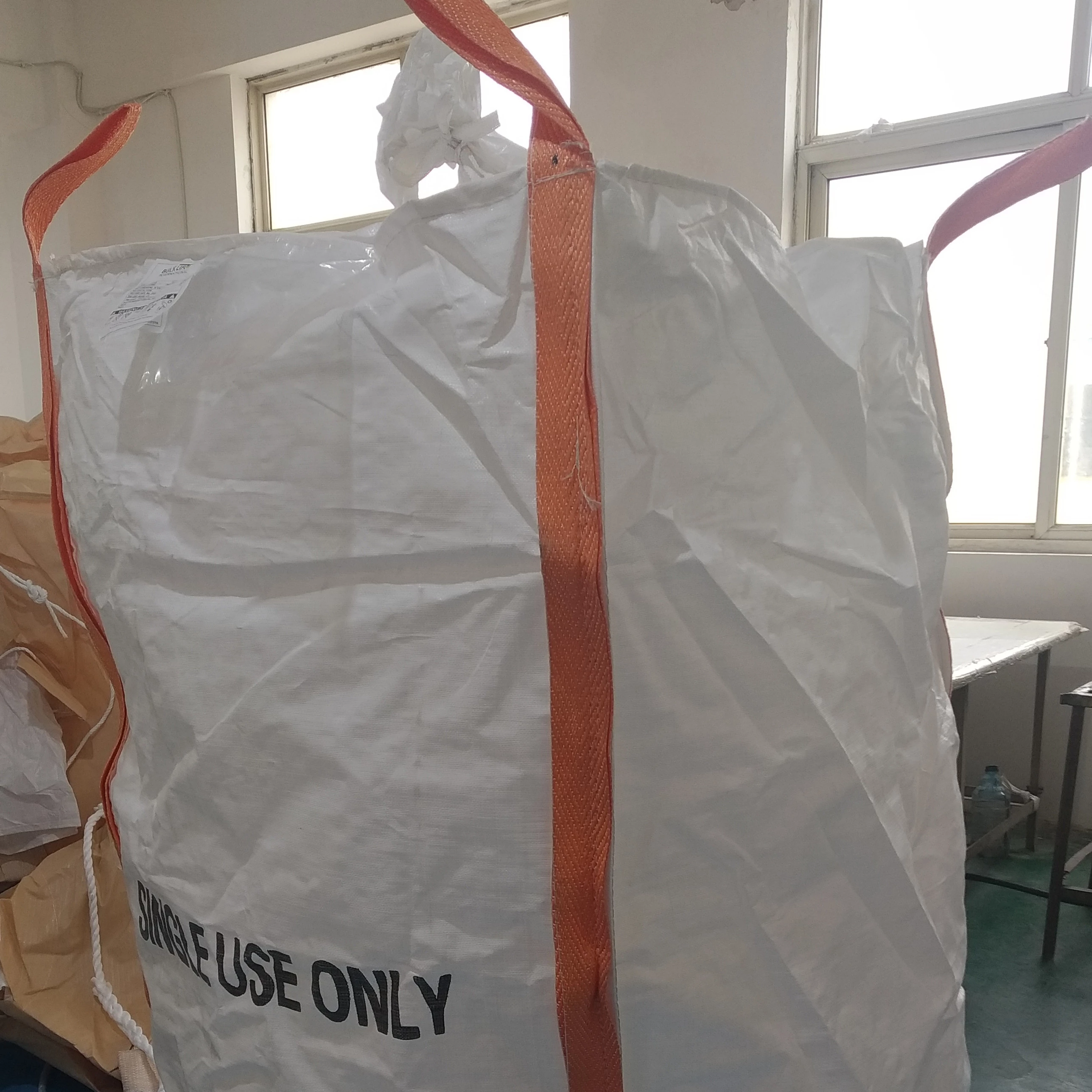
Start with the contents and your target fill requirement, including the units. Record the filling and unloading equipment, storage conditions and any dimensional limits. These inputs are more useful than choosing a bag only because its photograph looks familiar.
A product name such as U-panel, tubular or baffle describes part of the construction. It does not settle the top opening, base, liner or required load evidence. The comparison below shows how those decisions fit together.
| Configuration | What the name describes | What to check next |
|---|---|---|
| U-panel | A bag-body construction format | Finished size, panel details, loop attachment and top/bottom arrangement. |
| Tubular / circular | A tubular woven body format | Body dimensions, loop position, seams and opening details. |
| Baffle | An internal construction feature | Which body construction it uses and the internal arrangement shown on the drawing. |
| Ventilated / breathable | A reference explicitly described with ventilation | Actual ventilation construction, contents and storage conditions. |
| Industrial sling | A support or handling format | Whether the proposal is enclosed; the supported load and strap layout. |
Baffles and liners are additional design decisions. They are not mutually exclusive alternatives to U-panel or tubular construction. Browse FIBC bag types to compare current products.
Name the material and target fill requirement before comparing bags.
Compare the construction and the space available in your process.
Specify the top, bottom and loop arrangement as separate interfaces.
List the liner or finish required and the evidence relevant to the intended use.
After defining the application, distinguish the body format from the other construction choices. U-panel and tubular descriptions identify bag-body arrangements. Baffle wording identifies an internal arrangement that should be specified alongside the body format. A shortlist should record both where relevant instead of treating the three names as a complete set of mutually exclusive specifications.
The white U-panel peanut FIBC illustrates how several choices appear together in one product. Its body description, openings and loop arrangement all belong in a comparison. The peanut application helps explain the enquiry context, but does not establish food-contact approval for another ingredient or another configuration.
Also check whether the requested package is an enclosed bag or a sling arrangement. The catalog has industrial sling references and separate woven filler cord accessories. Neither should be treated as an ordinary closed FIBC merely to keep a comparison table uniform. Start in bag types when the body is your main decision, and retain the actual product reference throughout the enquiry.
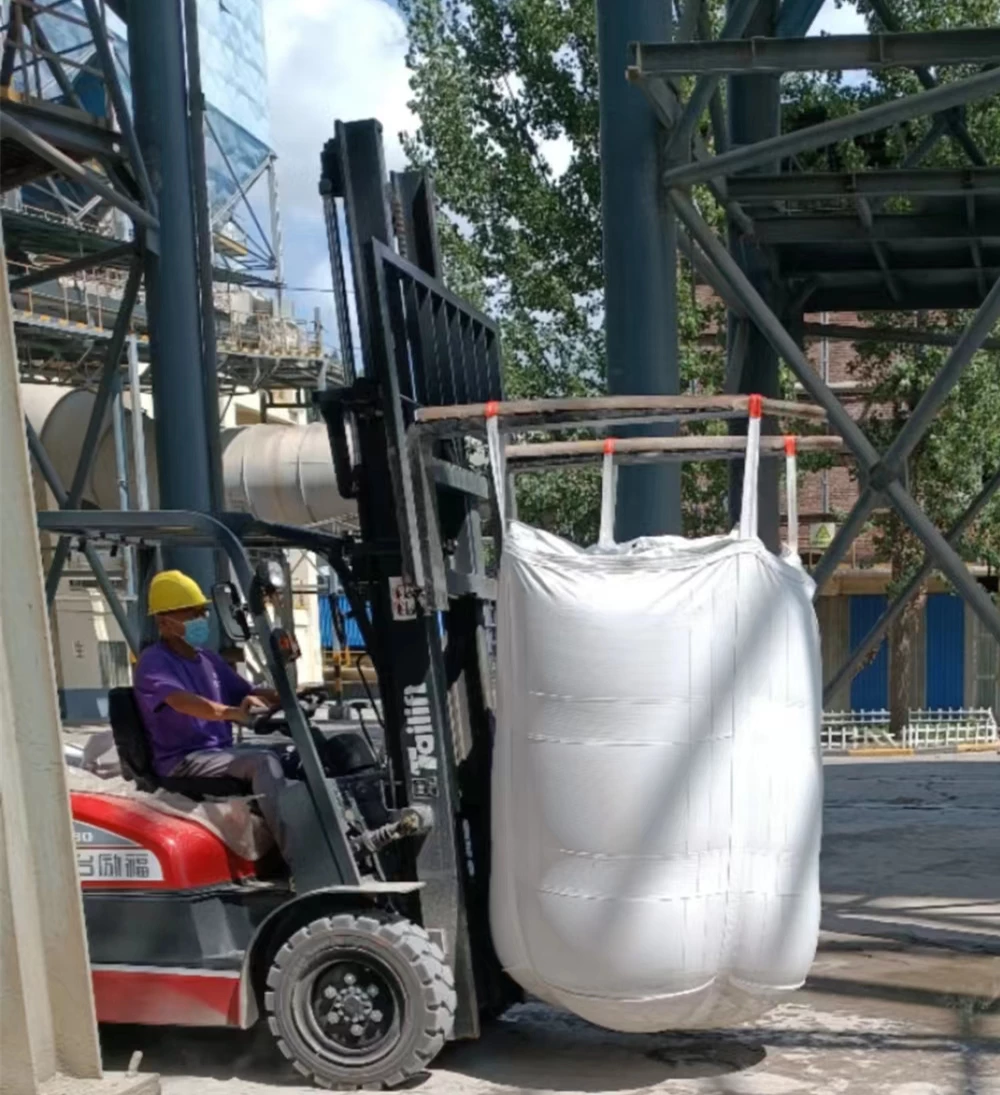
The upper and lower openings answer different questions. A filling spout, open top and skirt top describe access at the top. A discharge spout, flat base or conical bottom describes a separate aspect of the lower end. Selecting one does not determine the other. Explain what equipment receives each connection and how the material will move at that stage.
The coated tubular cement reference provides a defined starting combination. A buyer comparing it with a flat-bottom container needs to describe the intended emptying method before deciding which reference is relevant. The material name cement does not answer that equipment question, nor does coating alone establish a particular containment result.
Write dimensions with units and measurement references. For a spout, identify which figure describes diameter, lay-flat width or length rather than sending several numbers without labels. Include the liner connection if a liner is requested. The filling, discharge and lifting guide connects these interface questions, while the filling-style collections provide product starting points.
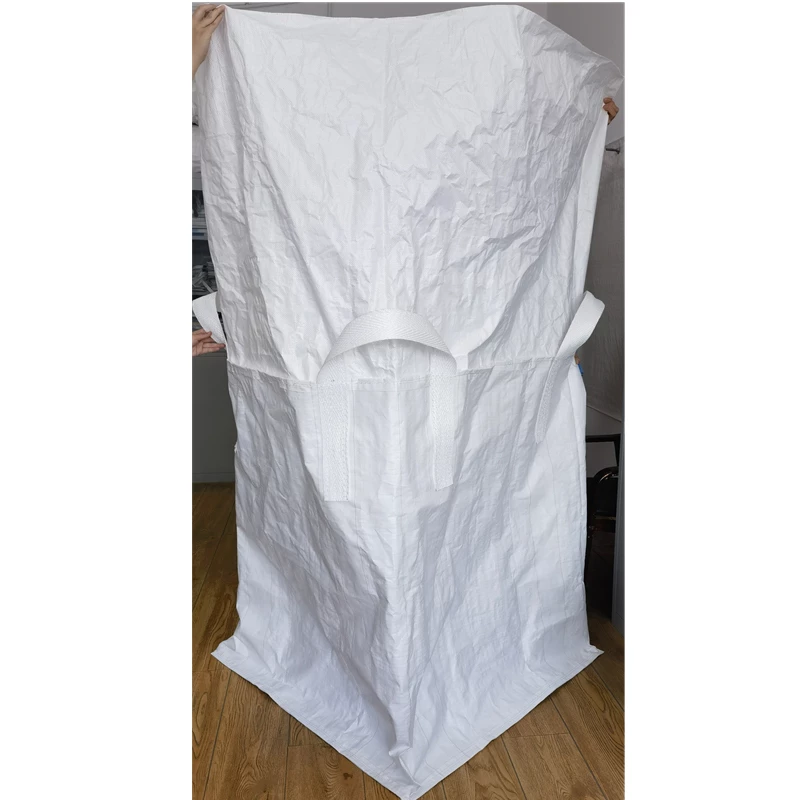
Dimensions must be understood consistently by the people requesting, quoting and reviewing the bag. Some catalog references contain explicit units, while others are unlabelled numeric strings. Keep an unlabelled reference visible as a question to resolve. Do not silently assume centimeters or convert a product option into a confirmed finished measurement.
The 95 × 95 × 110 cm fertilizer baffle reference shows the value of explicit units. Those dimensions are a useful catalog fact. They do not establish the filled footprint in your operation, a guaranteed space saving or suitability for every fertilizer formulation. If those questions affect the purchase, include them in the requested evaluation.
Review material, coating, liner and seams as separate entries. An uncoated body can be discussed with a liner, while a coated description does not by itself identify one. Likewise, lifting-loop position and dimensions should match the proposed equipment review. Do not derive a working load from loop color, loop count or bag size. Use the proposed specification and relevant supporting documents for load-related questions.
A useful shortlist contains a few actual references and a consistent record of what you know. It should expose differences before they become quotation assumptions. The table below is a buying worksheet, not a completed technical specification or a recommendation that any listed bag is suitable for your material.
| Decision | Record from the reference | Confirm for your requirement |
|---|---|---|
| Application | Named contents or packing use | Actual material, conditions and required evidence |
| Body | U-panel, tubular, baffle or sling wording | Complete arrangement and any alternative options |
| Openings | Top and bottom descriptions separately | Dimensions, closures and equipment connections |
| Material | Fabric, coating, liner and seam details | Required components and their relationship |
| Dimensions | Original size reference, including units if supplied | Units, measurement points and agreed drawing |
| Handling | Loop layout and stated dimensions | Equipment requirements and relevant documentation |
| Commercial brief | Selected reference and requested changes | Quantity, destination, quotation scope and sample terms |
Where two attributes disagree, quote the entries you found and ask which describes the proposed product. Removing one from your own comparison without clarification can hide the reason quotations differ. If the supplier proposes an alternative configuration, record it as an alternative and compare it against the same application brief.
The next step is to connect the chosen configuration to appropriate evidence. A company document, a material declaration and a report concerning one bag design address different subjects. Identify the product and intended application before asking which documents are available and how their scope relates to the request.
For food-related enquiries, the ingredient name and a white fabric color are not substitutes for documentation. For chemical or powder enquiries, a broad packing description does not establish dangerous-goods approval or an electrostatic classification. Ask the responsible technical team to define the specific questions. The quality and documentation guide helps organize the resulting review without presuming that a particular certificate covers every bag.
Samples can answer defined questions about the proposed configuration, but their role should be clear. Ask whether a sample represents the requested design or an existing reference, and agree what your team intends to examine. Record changes to drawings, openings or materials before using a sample as the order reference. See the sample and drawing guide for that preparation.
Yes, as a reference. Identify which features you want to retain and provide measurements and photographs of the relevant details where available. A similar outer appearance does not establish the same liner, seams, openings or load evidence. List the differences that need confirmation before comparing quotations.
A space constraint should be included in the application brief, but the baffle label does not establish a guaranteed result. Ask about the actual configuration, intended contents and how the required fit will be evaluated. Keep dimensions and any required performance evidence separate from the family name.
Retain the original reference and state the unit and measurements you require. Ask for a confirmed drawing or a clear explanation of the catalog entry. Do not treat a familiar numeric pattern as proof of centimeters, inches or a particular measurement convention.
Yes. Identify each alternative separately and explain the equipment or process it would serve. Request quotations against clearly labelled options. Combining a skirt top from one reference with a spout from another without explanation can leave the proposed package ambiguous.
Send the actual contents, selected references, required dimensions with units, opening and loop details, material requirements, quantity and destination. Add any requested sample or documentation scope. The RFQ specification guide provides a more complete checklist for that message.
Start with usable volume and bulk density, then confirm target load and safe-use requirements. Check the filling, lifting and discharge interfaces before choosing secondary details such as color or printing. An application label narrows discovery but cannot approve suitability.
Read the size guide, load and safety guide and compliance guide.
Send one or two product links and explain the differences you need. Include your material, filling method and unloading arrangement.