Minerals
Start with the loading access and the way sand, stone or cement will be emptied.
Choose a bulk bag around what you pack and how you handle it. Compare FIBC configurations for minerals, powders, fertilizer, grain and ventilated produce packaging, with product examples from the ReliaBulkBag catalog.
Start with the loading access and the way sand, stone or cement will be emptied.
Identify the powder, containment needs and connections between bag, liner and equipment.
Match grain, fertilizer or ingredients to their handling and contact requirements.
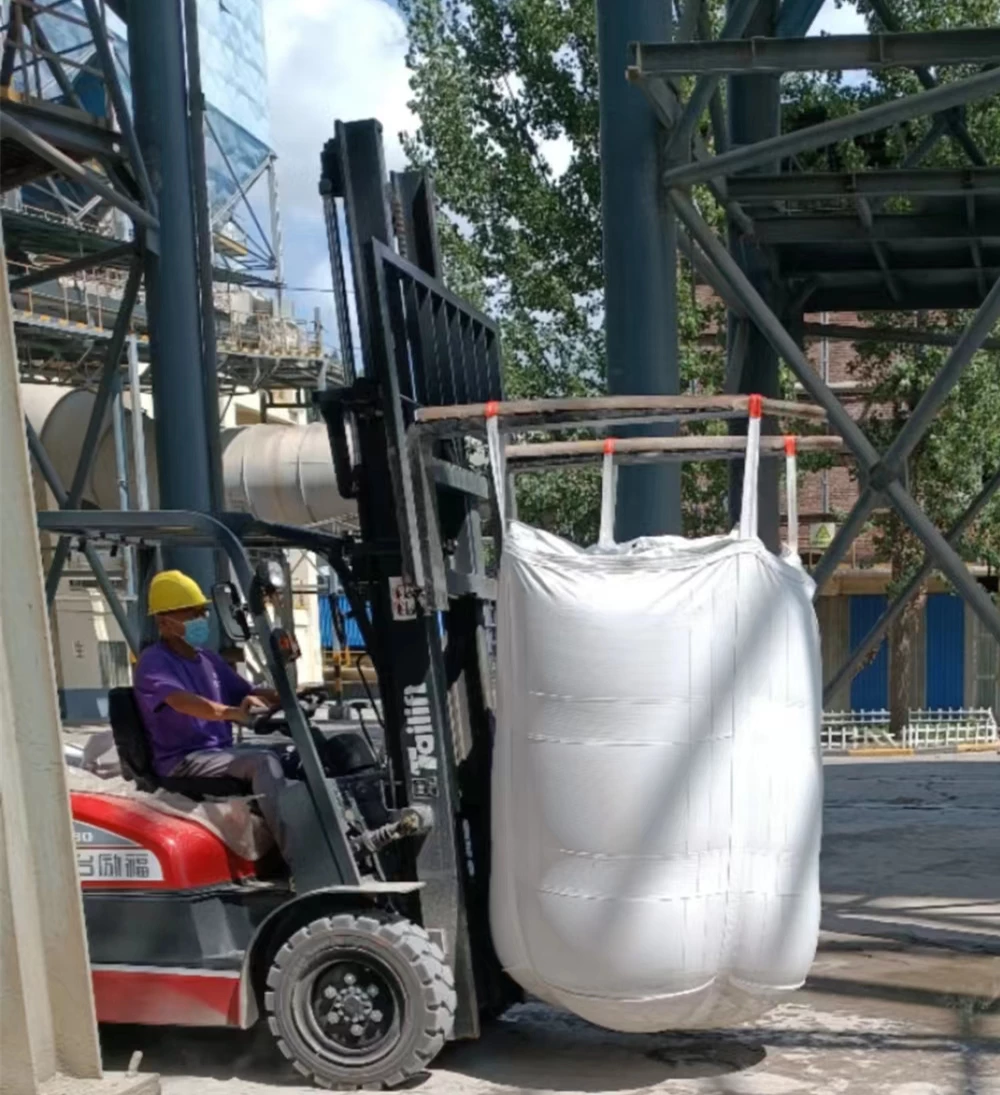
A flexible intermediate bulk container (FIBC), also called a bulk bag or jumbo bag, is a woven packaging format used in bulk material handling. The right configuration connects the contents to the filling equipment, storage conditions and unloading method.
ReliaBulkBag, the website of Qingdao Relia Packing Co., Ltd., groups its China factory catalog by these practical requirements. Use the application comparison below to find relevant bags, then use the linked guides to define the details of your own order.
| What you pack | Where to start | Key question |
|---|---|---|
| Sand, stone & minerals | Construction and mineral bags | Do you need broad top access, a filling spout or a defined bottom discharge? |
| Cement & chemical powders | Chemical and powder bags | What fabric, liner, seam and closure details does the actual powder require? |
| Fertilizer | Fertilizer bulk bags | Which top opening and unloading arrangement fit the filling and receiving equipment? |
| Grain, feed & ingredients | Grain and ingredient bags | Which contact conditions and documents apply to the intended contents? |
| Potatoes & firewood | Potato and firewood bags | Is ventilation explicitly included in the individual product specification? |
| Grouped loads & industrial handling | Industrial sling bags | What load geometry and strap arrangement need to be shown on a drawing? |
Application names organize the catalog; suitability, load rating and any special compliance requirements must match the selected design and intended use.
Start with the loading access and the way sand, stone or cement will be emptied.
Identify the powder, containment needs and connections between bag, liner and equipment.
Match grain, fertilizer or ingredients to their handling and contact requirements.
Compare explicitly ventilated bags and industrial sling formats as separate choices.
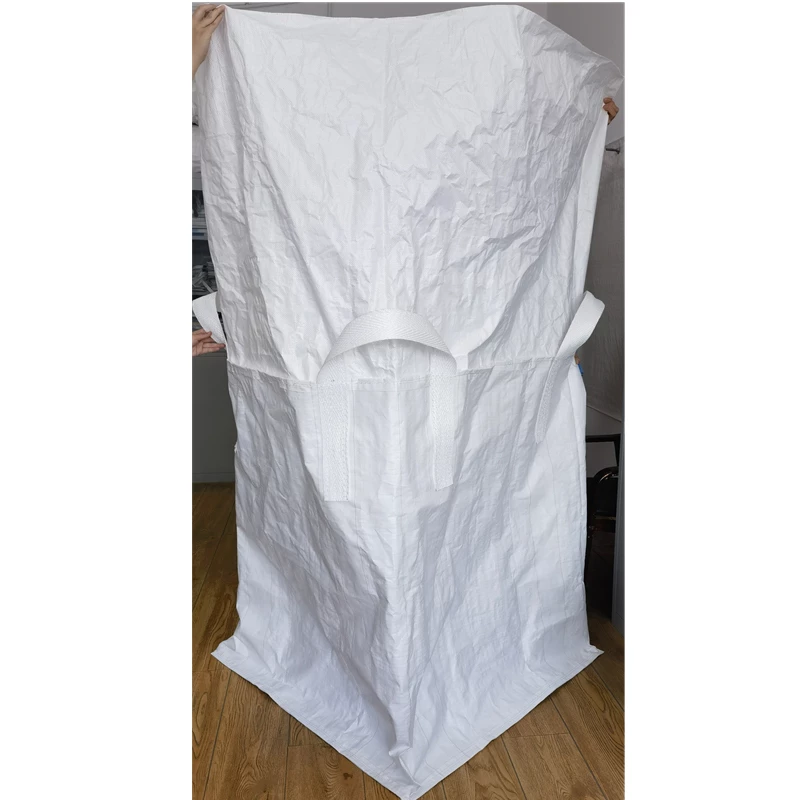
Sand and construction-related packaging appears in U-panel, tubular, circular and baffle configurations. The choice should follow the way the material enters, moves through and leaves your operation. Explain whether you need broad loading access, a defined filling connection or a particular lower opening. Identify the required emptying method before choosing a flat base simply because a similar bag appears familiar.
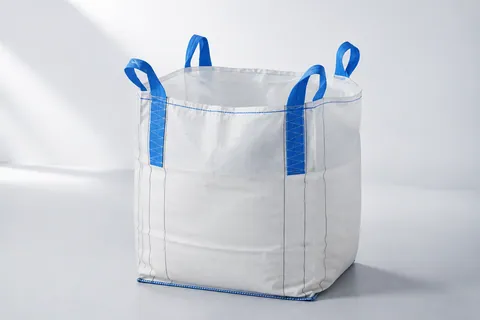
A white tubular sand bag with blue loop details provides one open-top example. Its attributes specify a flat bottom and cross-corner lifting arrangement. Another sand configuration uses a U-panel body and side-seam loops. These differences help a buyer describe the package to a supplier, but they do not independently establish abrasion resistance, a load approval or suitability for every aggregate.
For stone or ore enquiries, describe the actual material rather than relying only on the industry name. Particle form, the intended fill quantity, filling method and handling arrangement belong in the discussion. If your organization needs particular evidence for the selected package, request it with the drawing. Do not transfer an approval from one sand application to an unrelated mineral merely because the bags share a polypropylene body.
Powder packaging calls for a clear description of the contents and the containment requirement. The catalog names cement, fly ash, kaolin, flour and chemical powders in different products. Those applications should not be combined into a single universal powder bag. Ask about the actual body material, seam details, liner arrangement and opening connections needed for the intended powder.
The coated tubular cement FIBC is a useful construction example, with filling and discharge spouts and a DIA127*170CM size reference. Coating is a recorded fabric detail, not a stated dust-retention or moisture-barrier result. A buyer should clarify the required performance evidence separately and identify the equipment connections that must be matched.
The fly ash examples show an important operational distinction. One has a top filling spout and lower discharge spout; another has a filling spout above a flat bottom. Their emptying arrangements are different. Include the intended discharge method in the enquiry and ask for the relevant containment details rather than assuming that a fly ash label guarantees a particular seam treatment.
Some powder-related configurations mention a PE liner or filler cord. Others do not identify those details. Treat absence of information as a question to resolve. A coating, a separate liner and a seam feature are individual choices that should be written into the specification if they matter to the application.
Fertilizer products include circular, tubular, U-panel and baffle descriptions, with different combinations of open tops, skirts and spouts. The white fertilizer baffle bag measuring 95 × 95 × 110 cm, for example, combines skirt filling with bottom discharge and cross-corner loops. It gives the buyer a specific reference for a configuration enquiry without establishing compatibility with every fertilizer formulation.
State the actual fertilizer, its intended packing conditions and any documentation your technical team requires. Agree how the material will be filled, stored, transported and emptied. If the proposed bag will be used in an environment with additional requirements, identify those requirements directly. A fertilizer application name should not stand in for a chemical compatibility assessment.
Grain, seed and feed references also appear in the catalog. A useful request identifies the commodity and the process stage, then connects those facts to the bag's openings and handling arrangement. Ask whether a liner or particular seam detail is required for your operation. A general agricultural label does not establish a universal storage duration, pest barrier or product-preservation result.
Ingredient packaging requires both configuration selection and an assessment of the documents relevant to the intended contact. The catalog includes U-panel and baffle flour bags, a starch-packing configuration with top-opening choices, and a white U-panel peanut FIBC with filling and discharge spouts. These are named applications, not blanket statements of food-contact certification.
For a peanut enquiry, the white U-panel example offers virgin polypropylene material, side-seam loops and separate inlet and outlet spouts. Its 36*36*65 size reference needs measurement units confirmed. A buyer should describe the actual contact conditions, requested liner or material arrangement and required documentation rather than treating a white bag as proof of food suitability.
The coffee product requires a further construction question because its title uses a sling designation while accompanying attributes describe spouts. Clarify the intended enclosed or sling arrangement before comparing it with an ordinary ingredient container. The relevant documents must correspond to the configuration actually ordered.
Buyers seeking general background can consult the association's FIBCA Food Safety Guide. It is an external information resource. The food-related decision for an order still requires evidence appropriate to the product, intended use and destination requirements identified by the buyer.
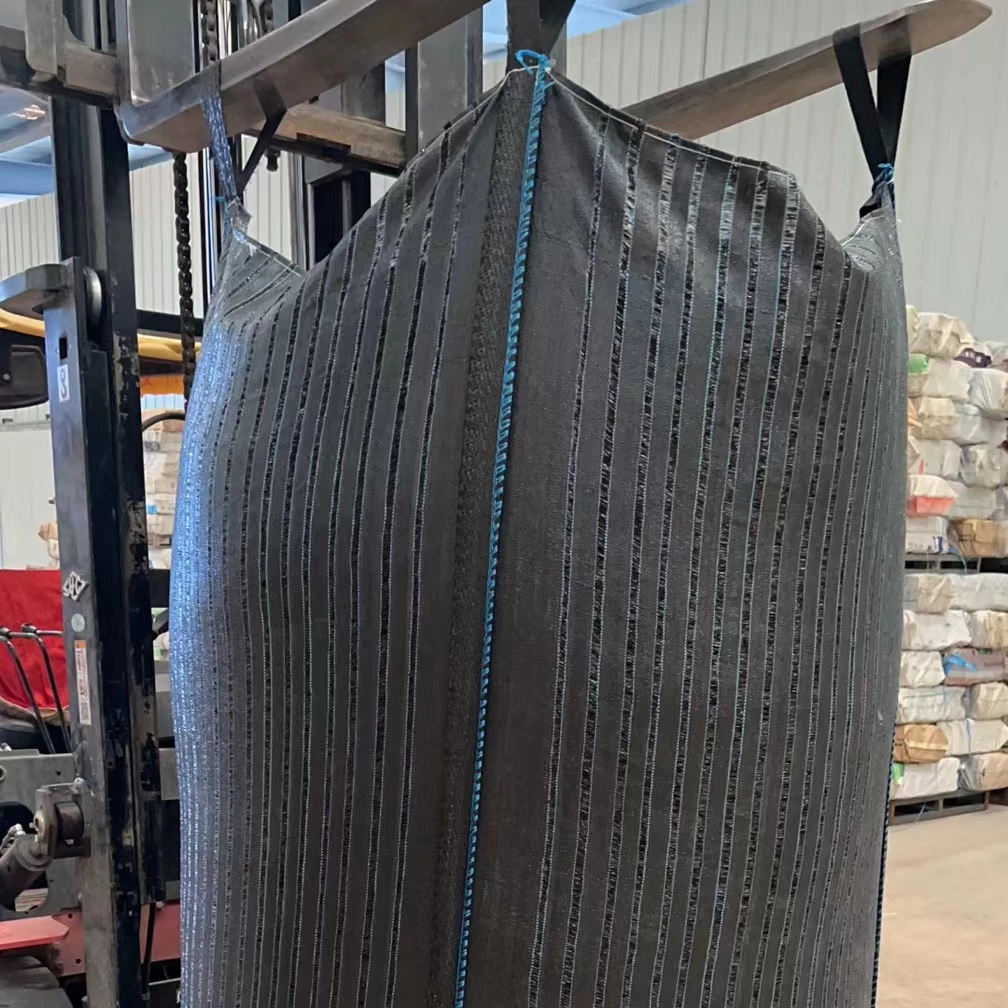
Potato and firewood packaging should be considered separately from the question of ventilation. Only products that explicitly describe breathable or ventilated construction should be shortlisted on that basis. Several other potato and firewood products describe baffles, spouts, skirts or flat bases without establishing an airflow characteristic.
The breathable open-top bag for firewood and potatoes provides one ventilation-related reference. The catalog also contains a duffle-top breathable potato bag, an uncoated mesh FIBC and a breathable U-panel bag measuring 105 × 105 × 150 cm. Each needs its own opening and handling details confirmed. None of these descriptions supplies a measured ventilation rate or a guaranteed storage life.
A conical-bottom tubular potato bag represents a different selection angle: the shape and access arrangement of the package. Its conical-bottom attribute should not be interpreted as proof of ventilation. Similarly, a firewood bag with dual spouts needs the opening dimensions checked against the intended contents. Describe the material form and storage requirements before selecting a configuration.
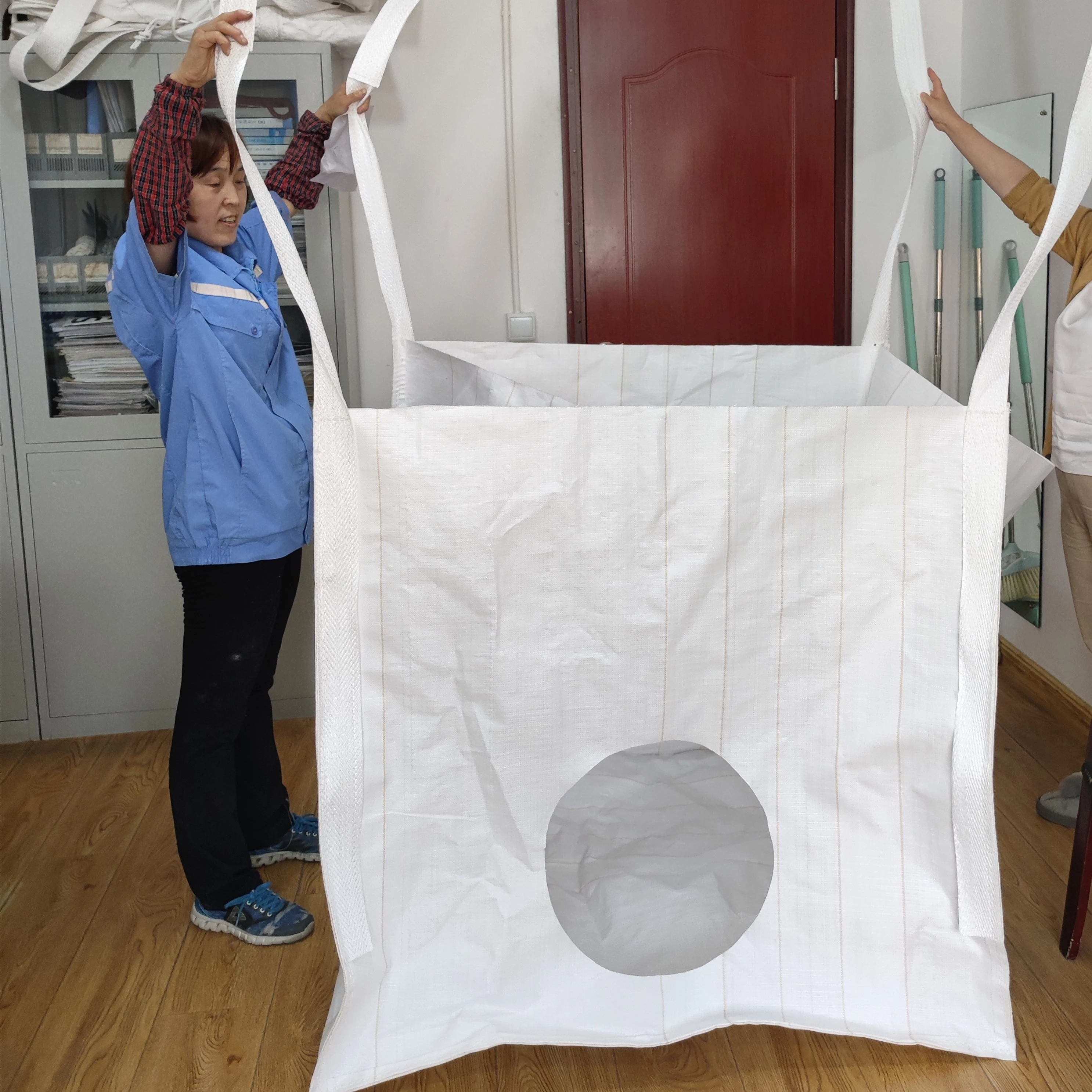
Paper rolls require a package request based on the roll dimensions and the proposed handling method. The catalog includes a U-panel paper-roll bag measuring 114 × 114 × 110 cm with an open top and flat base. Another paper-roll reference presents multiple body options. If you use the latter as a starting point, specify which construction is required instead of counting every option as part of one finished bag.
Industrial waste references identify an application context, but they do not establish suitability for hazardous waste. Describe the actual waste material, its form and the handling arrangement. Request any necessary documentation through the responsible technical review process. Avoid selecting a bag only because its title includes the word waste.
Sling enquiries should focus on the supported base, straps and attachment layout. The industrial sling example with stated dimensions of 1.6 × 1.4 × 1.75 m can help identify the intended format. Confirm the structure with a drawing and establish how it relates to the goods being handled. Do not assume an enclosed body or a particular supporting arrangement from the family name alone.
The material name is a useful first filter, but it is not a complete specification. Include the form of the contents, intended fill quantity, openings, dimensions and lifting requirements. Two sand operations can use different emptying methods, and two powder operations can require different containment details. The selected bag should be assessed against the complete application brief.
No. Some current products explicitly identify breathable construction, while other potato or firewood products only identify their intended contents and bag format. Ask for the ventilation details when airflow is part of your requirement. Do not infer that characteristic from the application or from a photograph showing a familiar body color.
No. Flour, grain, peanuts and similar names describe the packing context. Food-contact or hygiene evidence must be requested and assessed separately for the relevant components and intended use. A liner, white fabric or familiar ingredient title cannot replace that documentation. Ask your purchasing or quality team to define the evidence required for the order.
That suitability cannot be concluded from a general chemical or powder description. Identify the exact substance and the requirements applicable to your operation, then request product-specific supporting documents. This catalog guide does not assign dangerous-goods approval or an electrostatic safety class. The responsible technical assessment must address the actual material and handling environment.
Send a description of the contents and the required handling configuration, together with a drawing if available. A similar body style may provide a useful reference, but clearly identify the differences. Ask whether a suitable configuration can be quoted and what information is needed to assess it. Avoid assuming that an unrelated product is appropriate without that discussion.
An application collection helps discovery, but it does not prove that every listed bag is suitable. Define the contents, bulk density, target fill, moisture or dust concern, equipment, storage, destination and required evidence. Food, chemical, electrostatic and dangerous-goods questions need separate approval.
Continue with the compliance requirements guide, size and bulk density guide and load rating guide.
Tell us what you pack, your target fill weight and how the package moves through your process.