
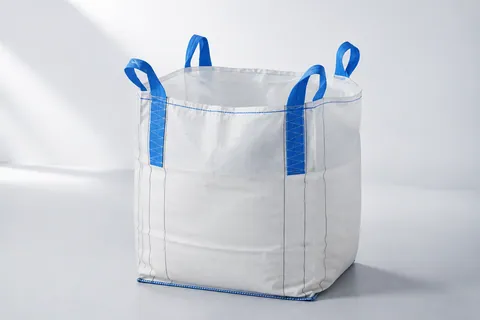
Measure
State internal or external dimensions, units and reference points.
Choose FIBC dimensions from usable volume, product bulk density, fill height, handling clearances and the equipment interface. Bag dimensions alone do not establish a safe load rating.
State internal or external dimensions, units and reference points.
Use volume and bulk density only as a planning calculation.
Approve final dimensions and load requirements on the quoted drawing.
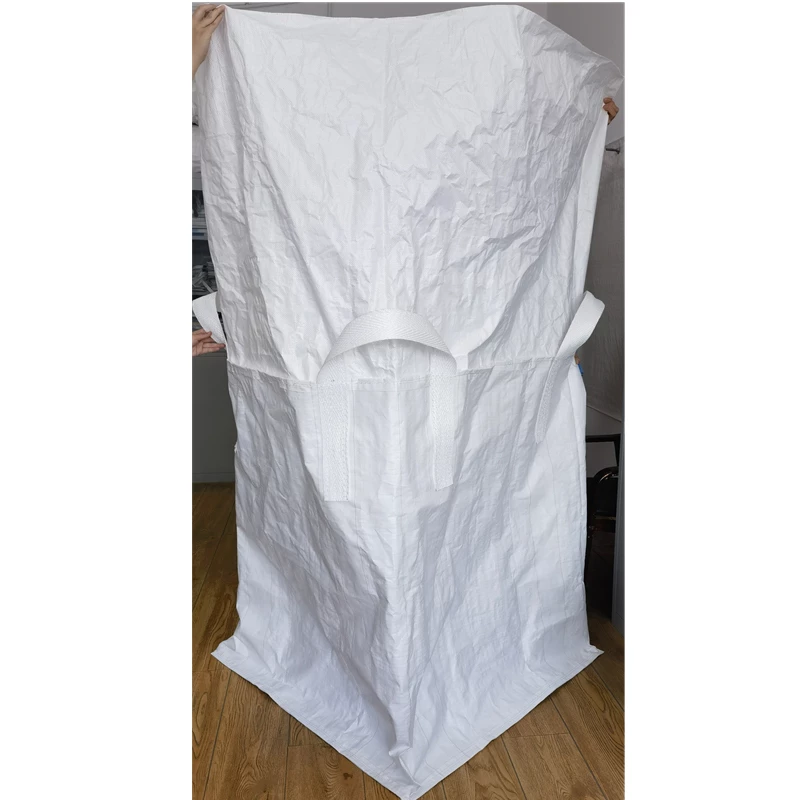
For a first estimate, calculate the gross rectangular volume from length × width × filled height using one unit system. Estimate product mass from usable volume × bulk density. Then allow for headspace, the way the bag changes shape when filled, product settlement, inlet and outlet space, and the clearances required by filling, lifting and discharge equipment.
This calculation is for planning only. It does not approve safe working load, safety factor, stacking, lifting or transport suitability. Those items require a product-specific design and evidence review.
| Input | Why it matters | What to confirm |
|---|---|---|
| Contents and bulk density | The same volume can contain very different masses. | Typical and maximum settled density, units and test basis |
| Target net fill | Defines the intended product mass per bag. | Normal target and allowed variation |
| Bag dimensions | Connect volume to equipment and storage space. | Internal or external, empty or filled, units and tolerance |
| Headspace and fill shape | A bag is not a rigid box and may not use all gross volume. | Usable fill height and closure clearance |
| Filling and discharge equipment | Spout and frame dimensions can control the bag geometry. | Connection diameter, height, support and outlet clearance |
| Pallet or container footprint | Filled dimensions affect storage and transport planning. | Allowed footprint, height and restraint method |
If a catalog dimension is shown without units or measurement reference, use it only to identify the listing and request clarification before comparison.
A rectangular calculation provides a starting volume, but a flexible bag bulges and settles according to the contents and construction. Baffles can influence filled shape, while the top closure and required headspace can reduce usable height. Record assumptions beside every estimate.
For powders and granules, ask for the bulk density range under the condition that matters to your process. A loose-fill value and a settled value can produce different mass estimates. Use the conservative value selected by your technical team when defining the target load request.
State whether body dimensions exclude or include seams, coatings, liners and attachment points. Put top spout diameter and length, discharge spout dimensions, loop free height, loop position and total bag height on the same drawing. Identify all units rather than relying on a familiar number format.
When replacing an existing bag, measure several used and unused samples if possible and record how the product was measured. A photograph with a tape measure can support discussion, but the approved drawing should remain the controlling record.
Confirm filling-frame height, support points, lifting-hook or fork spacing, discharge clearance, dust-control connection and any pallet or rack limits. The bag may fit by nominal body size but still fail to connect correctly at the top, bottom or loops.
Review the filling, discharge and loop guide for interface measurements and the load rating guide before approving a size for use.
No. Mass and volume are different. Provide target fill mass and bulk density, then add process clearances and confirm the proposed design.
Do not assume. Ask the quotation and drawing to state the measurement convention, units and tolerance.
A baffle can influence filled shape, but usable capacity still depends on the full construction, contents and fill conditions. Confirm the proposed volume rather than inferring it from the label.
No. Volume is a capacity estimate. SWL and safety factor are performance requirements that must be confirmed separately for the proposed bag.
Send contents, bulk density range, target net fill, existing bag dimensions or drawing, equipment clearances, top and bottom interface measurements and destination packing limits.
Send the target fill, bulk-density range, current drawing or dimensions, and filling/discharge equipment clearances.