
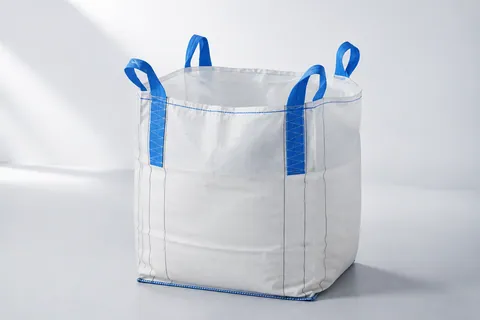
Construction
Choose the body format and specify any internal baffle arrangement separately.
Specify custom FIBC bulk bags around your material, equipment and purchasing requirements. Start with U-panel, tubular or baffle construction, then define the dimensions, openings, liner and printing you need.
Choose the body format and specify any internal baffle arrangement separately.
Give the fabric, coating, liner and seam requirements their own entries.
Dimension the filling opening, outlet and lifting loops on the same drawing.
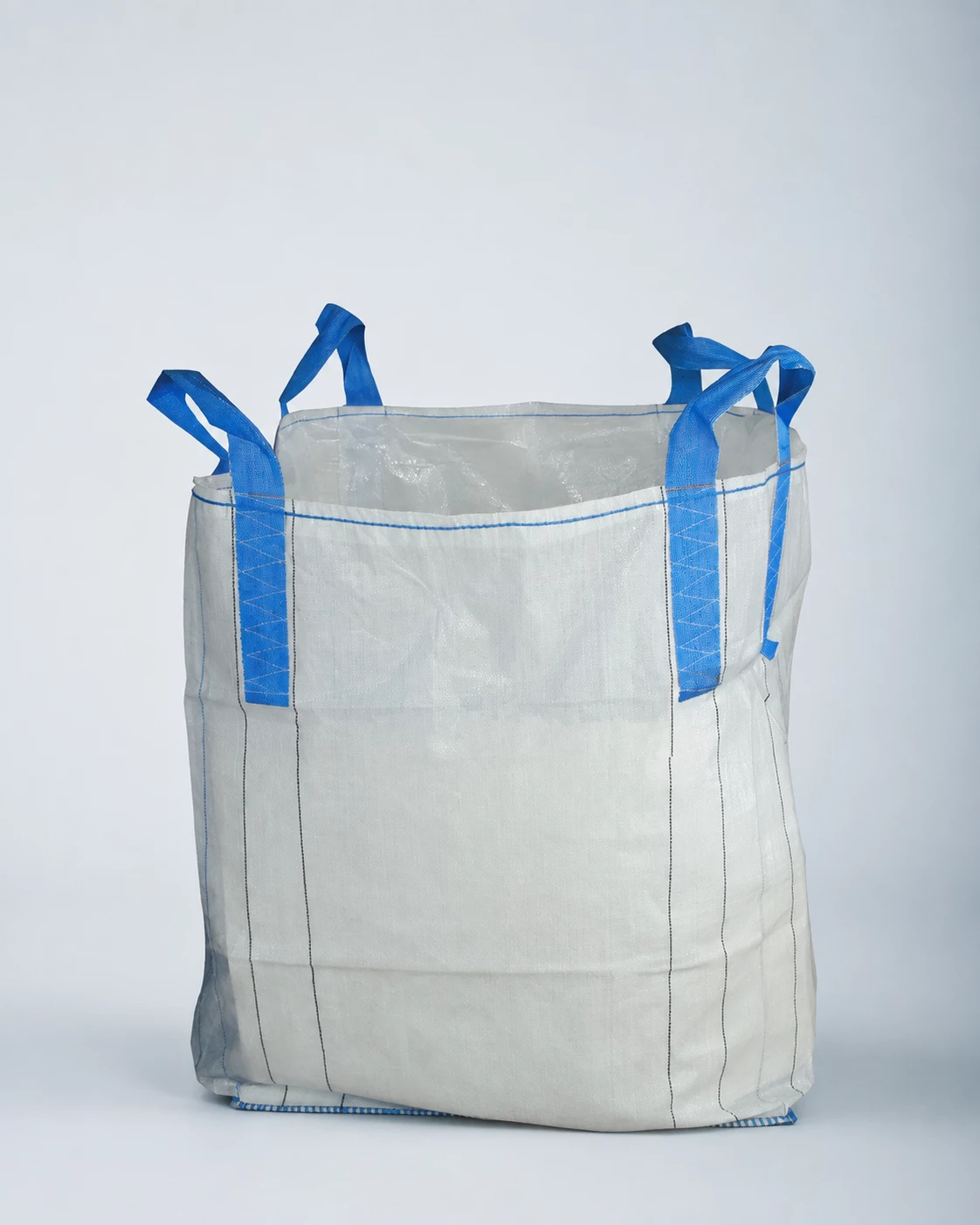
A useful custom bulk bag enquiry separates the woven body, fabric finish, internal liner, filling opening, discharge arrangement and lifting loops. Printing and packing details complete the brief. This makes it easier to compare proposals against the same requirement.
Qingdao Relia Packing Co., Ltd. serves overseas business buyers through ReliaBulkBag. Share a current bag, drawing or catalog link and mark the changes you need. The factory quotation should identify the proposed combination, sample scope, quantity and delivery assumptions.
| Option | Specify | Why it matters |
|---|---|---|
| Body & size | U-panel or tubular reference; baffles if required; finished dimensions with units | Keeps the requested construction and space requirement clear. |
| Top & bottom | Open top, skirt or filling spout; flat base or specified discharge arrangement | Connects filling and unloading to the actual equipment. |
| Fabric & liner | Outer material, finish, separate liner shape and opening connections | Distinguishes a coated body from a lined bag. |
| Lifting loops | Location, clear height and width; drawing of attachment points | Makes the equipment interface review specific. |
| Print & identification | Artwork, colors, print faces, orientation, labels or document pouch | Defines the markings included in the quotation. |
| Sample & quantity | Reference or requested-design sample; quantity and destination | Aligns the technical review with the commercial request. |
Options shown across the catalog are discussion starting points. The available combination is confirmed for each proposed design.
Choose the body format and specify any internal baffle arrangement separately.
Give the fabric, coating, liner and seam requirements their own entries.
Dimension the filling opening, outlet and lifting loops on the same drawing.
Add artwork, quantity, destination and the documents your team needs.
A useful enquiry identifies what will be packed and how that material arrives at the filling point. Sand, fertilizer, flour and paper rolls create different questions even when the outer package has a similar appearance. State whether the contents are a powder, granule, irregular solid or individually formed item. Include the intended fill quantity, relevant material information and the equipment used to load and empty the package.
Explain the environment as well as the contents. An indoor transfer between two processing stages is a different requirement from storage followed by transport to another facility. If your operation requires particular food-contact, chemical compatibility or electrostatic documentation, identify that requirement at the beginning. The exact material and application must determine the requested evidence; a general industry label cannot answer those questions.
For a broader specification worksheet, the industry association provides an FIBCA Design Guide intended to help buyers identify their application questions. It is a useful external starting resource. Your actual order still needs a product-specific drawing and written agreement with the supplier.
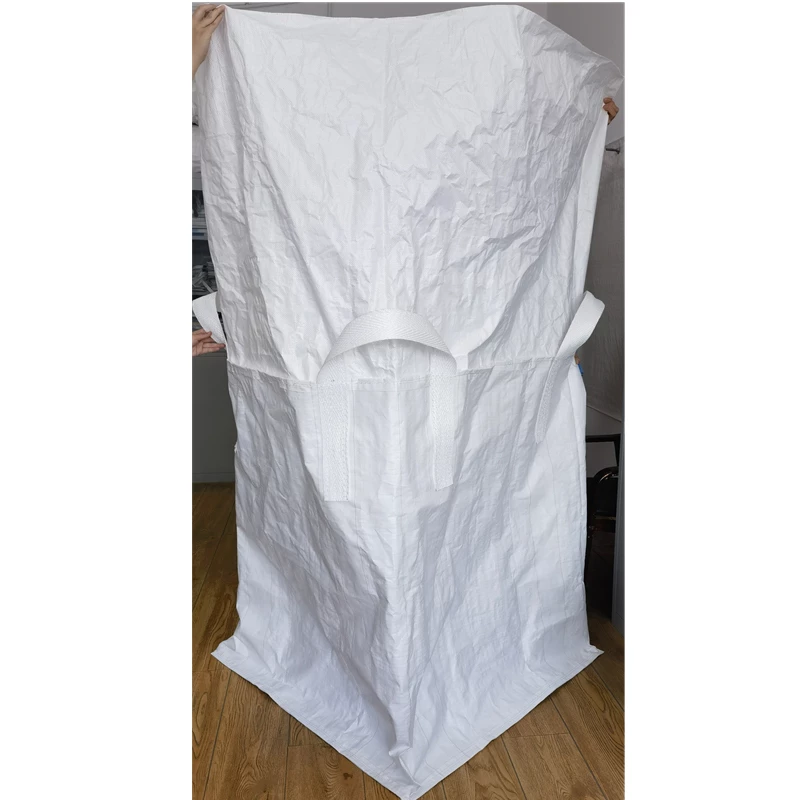
U-panel and tubular descriptions identify bag-body formats. Baffle descriptions identify an internal construction feature that needs its own specification. Some products combine U-panel or tubular wording with a baffle arrangement, so those choices should not be treated as mutually exclusive labels. Ask which panel construction, internal arrangement and finished dimensions the quotation includes.
For example, the catalog includes a white U-panel peanut FIBC with side-seam loops and separate filling and discharge spouts. It also includes a coated tubular cement FIBC and a fertilizer baffle bag measuring 95 × 95 × 110 cm. These are useful reference configurations because they show different construction and application combinations. They are not interchangeable approvals for the same material.
A sling description requires additional attention to the supported base and strap arrangement. The industrial sling example with a 1.6 × 1.4 × 1.75 m size reference should be discussed through its configuration drawing. Do not assume that a sling is an enclosed woven container simply because some accompanying attributes use common bulk-bag terminology.
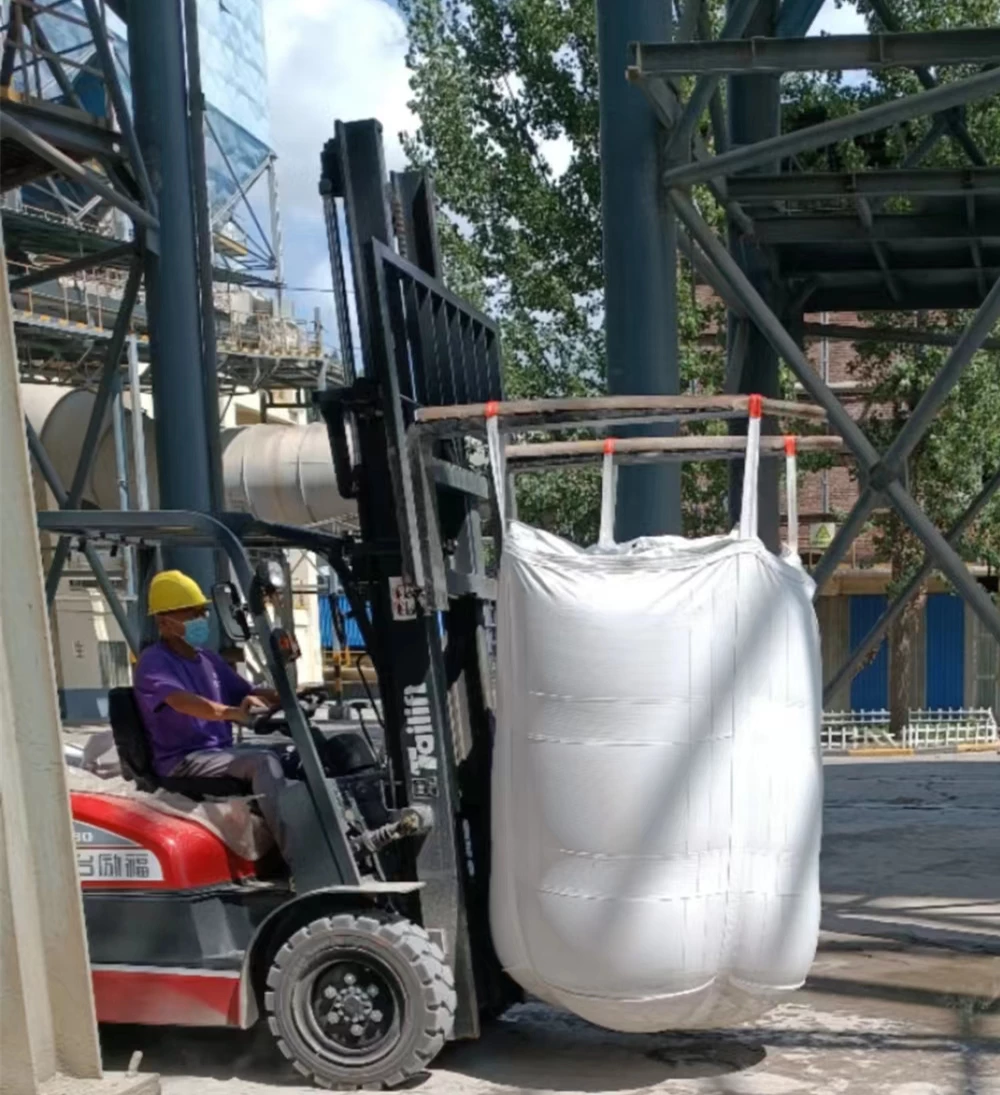
The upper and lower ends of the bag should be specified as separate connections. A fully open top, filling spout and skirt or duffle top provide different access arrangements. At the bottom, the catalog records flat bases, discharge spouts and conical-bottom options. Describe how the contents will enter and leave the bag instead of selecting a top style and assuming the lower end will match automatically.
A flat-bottom sand bag illustrates why the emptying method belongs in the enquiry. Its lower end does not provide the same connection as a discharge-spout container. Likewise, the conical-bottom potato configuration identifies a bottom shape to confirm on a drawing; the word conical alone does not supply the outlet dimensions or define an unloading procedure.
Record the lifting attachment layout, including whether side-seam or cross-corner loops are required. Where your equipment depends on a particular loop length, width or position, add those dimensions to the drawing. The beige baffle example with 7 cm wide loops shows that loop dimensions can be a meaningful purchasing detail. Loop color can help describe a reference product, but color is not evidence of a load rating.
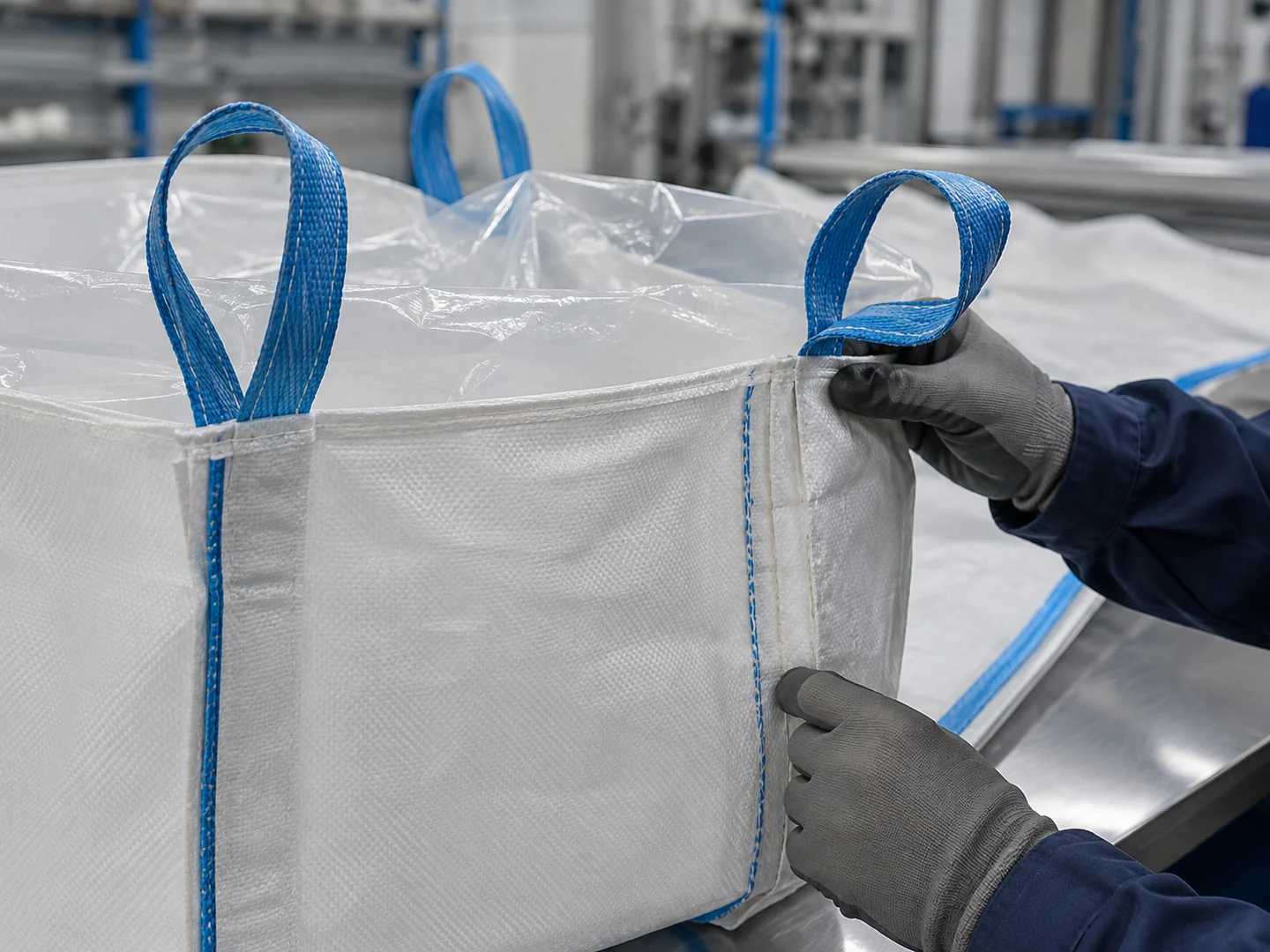
Polypropylene material, coating, a separate liner and seam construction should be discussed individually. An uncoated outer body can still be paired with a liner. Conversely, a coated body should not be described as containing a liner unless that component is actually specified. Ask for the required components and their relationship to the filling and discharge openings.
The form-fit PE-lined U-panel configuration provides a detailed starting example. Its attributes identify a form-fit PE liner, a fill-spout reference of 16 × 19 inches and a C-style discharge-spout reference of 14 × 19 inches. An enquiry should establish the liner arrangement and connections for the requested design rather than assuming that a generic PE liner will duplicate those details.
Some bags identify filler cord or particular stitching, while another product explicitly states that siftproof treatment is not included. The catalog also has two separate filler cord accessories, which should not be confused with complete bags containing cord at their seams. When seam containment matters, request the actual seam construction and relevant evidence for the intended contents. A siftproof name by itself does not define a leakage limit.
Write the measurement units beside every dimension. Some catalog references expressly use centimeters or meters; many other references are bare numbers. A code such as 95*95*120 should remain a reference until the unit and measurement convention are agreed. Also state whether the dimensions in your drawing refer to the intended finished bag and how your team will check them.
Color and printing are separate decisions. White, beige and black bodies occur in the catalog, alongside products with specified loop colors. Some records allow customer-requested color or artwork, while other printing entries need clarification. Send readable artwork with the required location and orientation, then ask what the proposed configuration and quotation include.
Include your required quantity, destination and packing preferences in the same request. If you need a particular bundle arrangement, pallet arrangement, identification label or document pouch, describe it expressly. These details should be confirmed for the order rather than borrowed from an unrelated product. A complete comparison includes the same package configuration, documentation and delivery assumptions for every quotation.
Sample availability appears in many catalog records. A useful sample request names the configuration and explains what you intend to evaluate: opening fit, loop position, artwork, dimensions, liner arrangement or another agreed characteristic. Ask whether the sample represents the requested design or is an existing reference. That distinction helps both sides interpret the result correctly.
Keep a dated drawing, the relevant correspondence and a record of requested changes together. If a sample leads to a different opening size or material choice, update the written specification before treating it as the order reference. A photograph can support that record, but it should not replace measurements or leave the accepted revision unclear.
Yes. Identify the product and list which features you want to retain and which you want to change. A request that says retain the U-panel body and side-seam loops but confirm a different filling opening is easier to assess than a general request for a similar bag. Availability of the proposed combination, required documentation and commercial terms must then be confirmed for the actual enquiry.
No particular space saving is established by the baffle label alone. Specify the required dimensions and internal arrangement, and describe the space available in your process. Ask how the proposed configuration will be evaluated for the intended contents. The purchasing decision should be supported by the agreed design and any relevant evaluation, rather than by an assumed performance percentage.
A similar appearance does not establish that the same configuration is appropriate for both uses. Identify the exact contents, contact conditions and documents required by your purchasing team. Food-contact assessment and chemical compatibility are separate questions. ReliaBulkBag product names that mention flour, peanuts or chemicals identify enquiry contexts; they do not provide a universal approval for those materials.
Send the reference you found, your required measurements with units, and any equipment dimensions that constrain the bag. Mark which number needs clarification instead of silently converting it. If two references disagree, ask for one confirmed drawing. This preserves the original information while ensuring that the quotation addresses the size your operation actually needs.
Request a quotation against a defined configuration, quantity and destination, with any sample or documentation requirements included. Ask for the validity of the quotation and the assumptions behind its delivery information. This page does not promise a standard production time or fixed minimum order for every custom design. Those details belong in the written response for your particular request.
Every custom change should appear on one dated drawing or component schedule. Define the reason for the change, the acceptance check and whether it affects sample scope, MOQ, timing or documents. A color or photo approval should not replace dimensional and material approval.
Use the MOQ, price and lead time guide and factory process guide before approving production.
Qingdao Relia Packing Co., Ltd. is a long-established, large-scale FIBC manufacturer with decades of manufacturing experience. For custom design decisions, the useful answer is the one that links the buyer's stated material and process to a current quotation, approved drawing, sample or pre-production approval, production controls, final inspection and batch records.
Qingdao Relia Packing Co., Ltd.’s current facility evidence includes ISO 9001:2015 certification issued by Alcumus ISOQAR and valid through May 2028; BRCGS Packaging Materials Issue 6 certification issued by Lloyd’s Register and valid through June 2027; and an AIB International food-contact packaging facility inspection score of 860/1000 (Excellent), dated 22 April 2026. SGS reports, BSCI audit documentation, applicable CE documentation and the business license remain available for buyer review. Product-specific applicability is confirmed against the quoted design and destination requirement.
Match the legal company, manufacturing site, business license and current certificate holder before relying on a supplier claim.
Connect material, dimensions, load basis, loops, inlet, outlet, liner, printing and acceptance checks on one revision-controlled record.
Send the product link, intended contents, bulk density, quantity, destination and required evidence. WhatsApp 14042030971.
Send a product link or drawing, the changes you need, order quantity and destination. You can start even if some details are undecided.