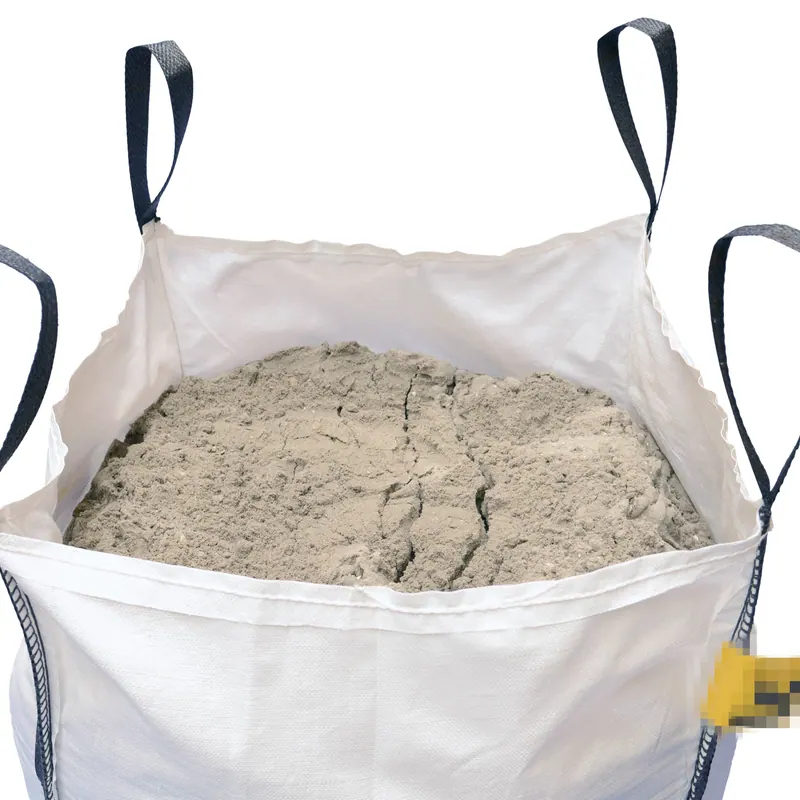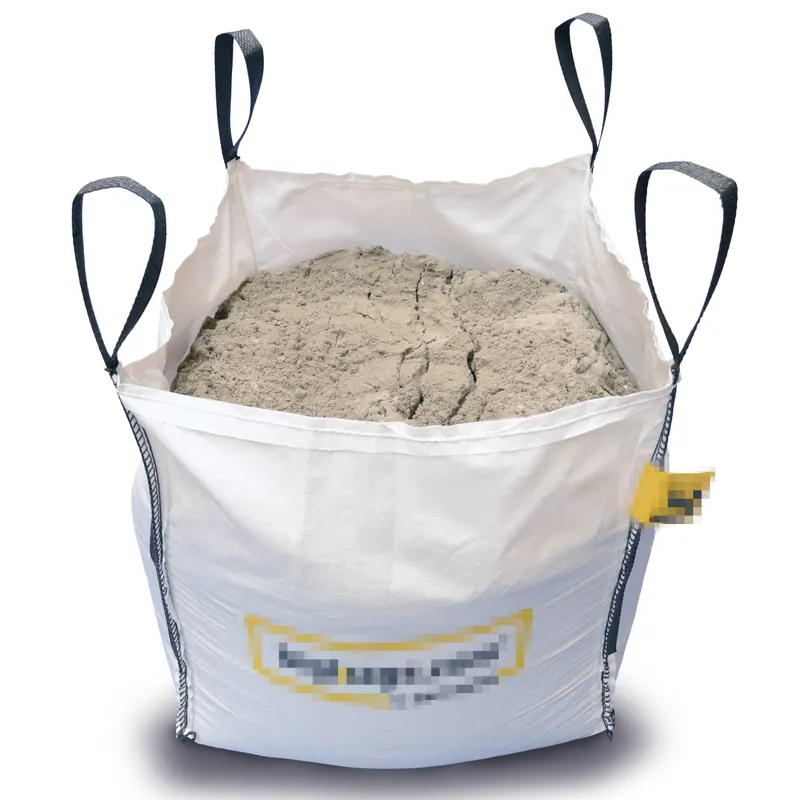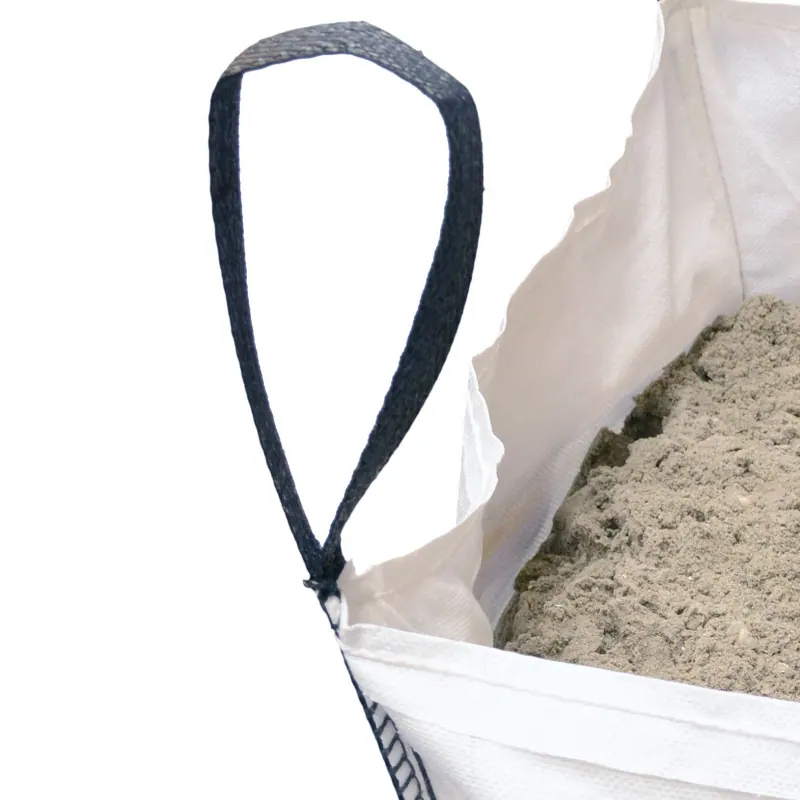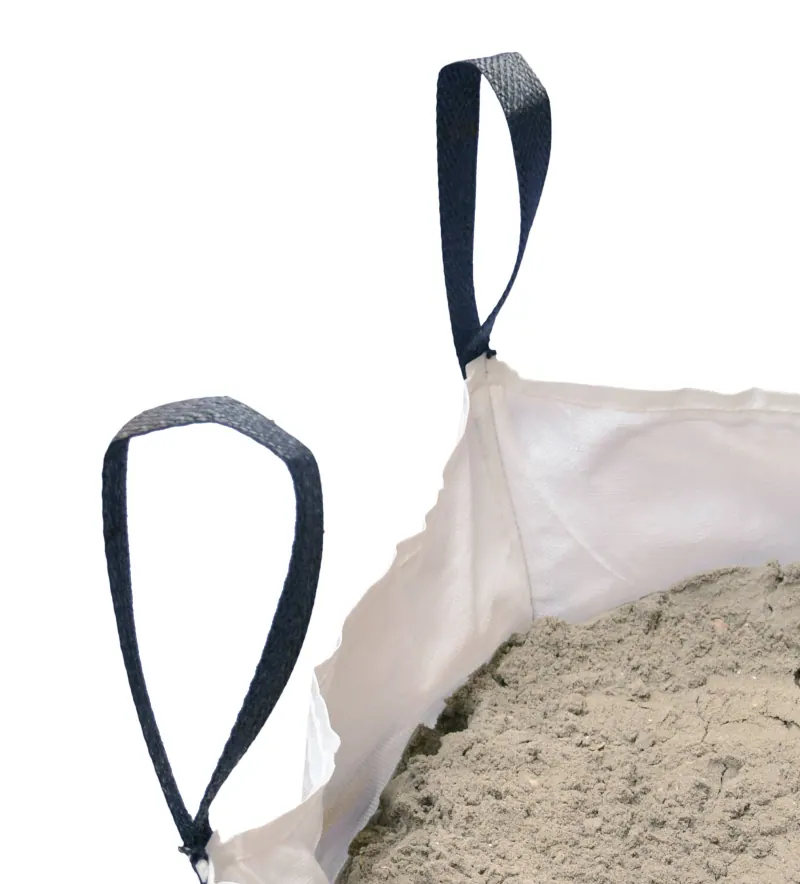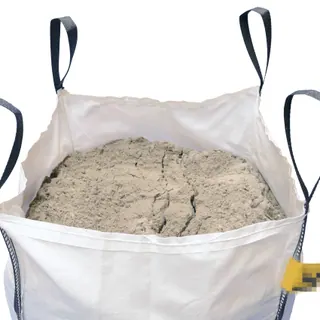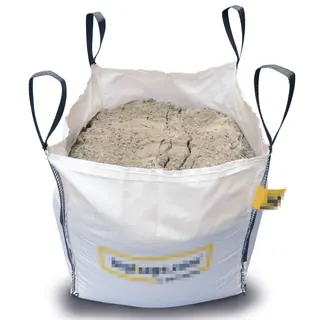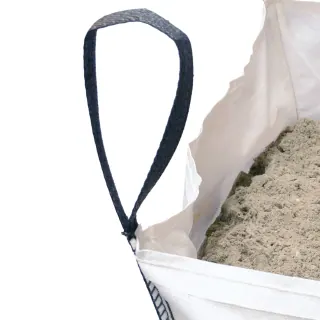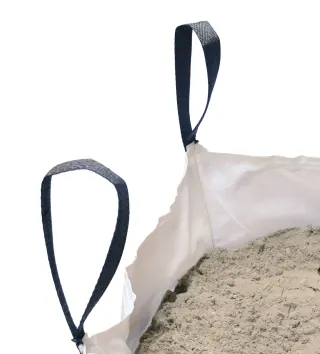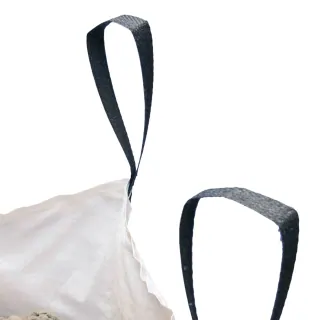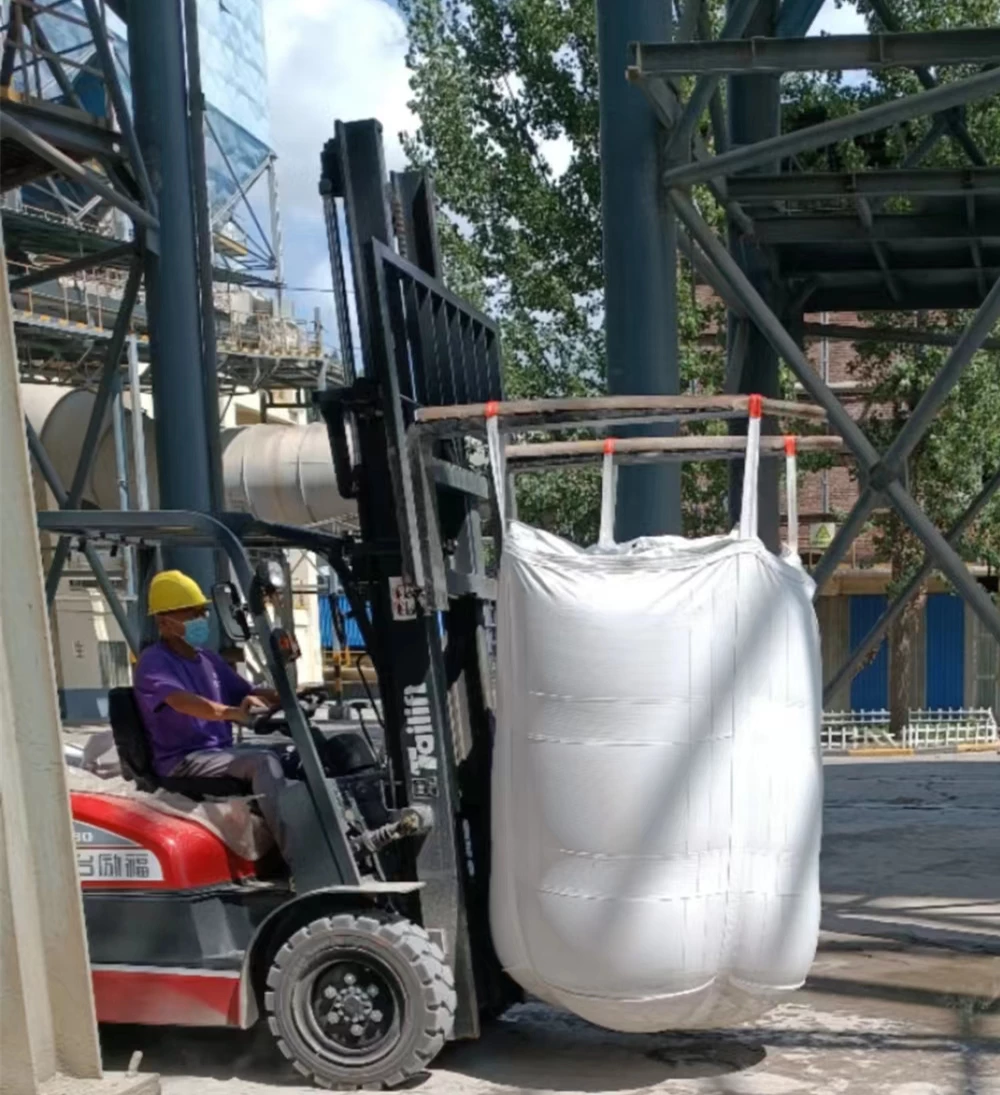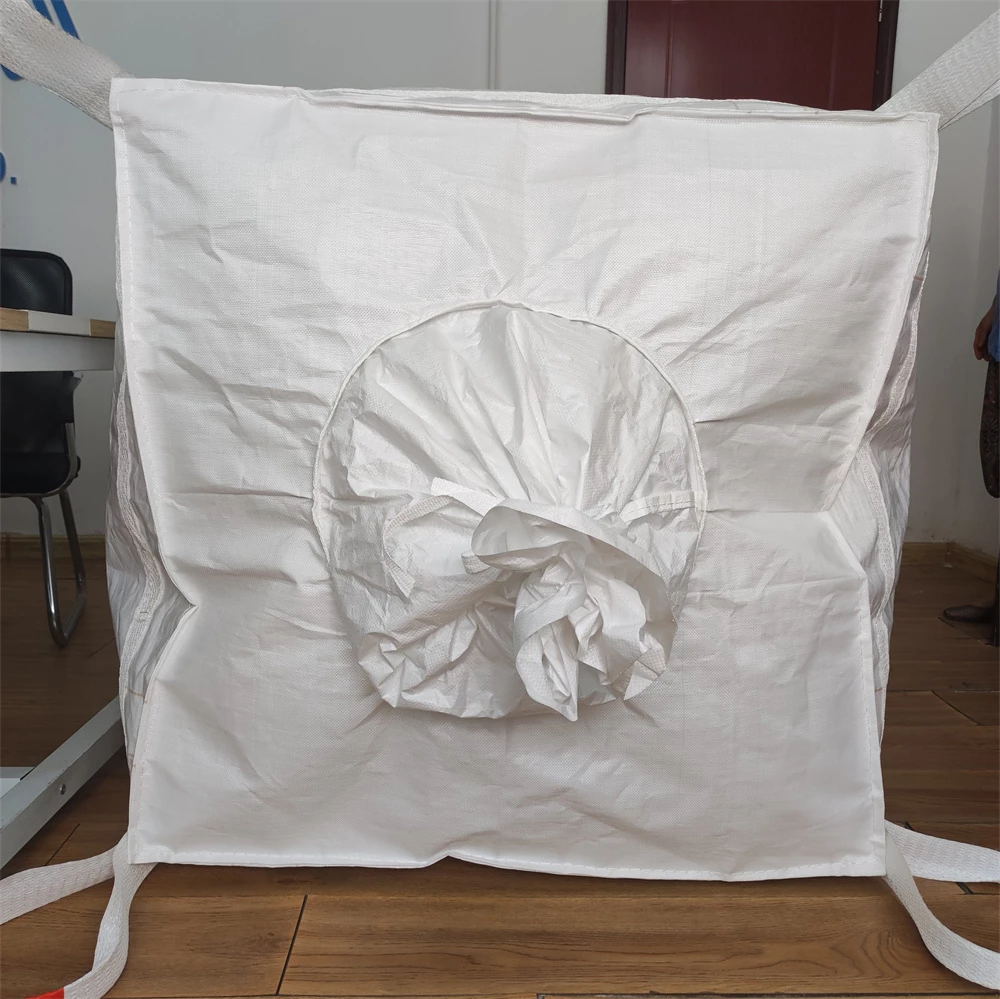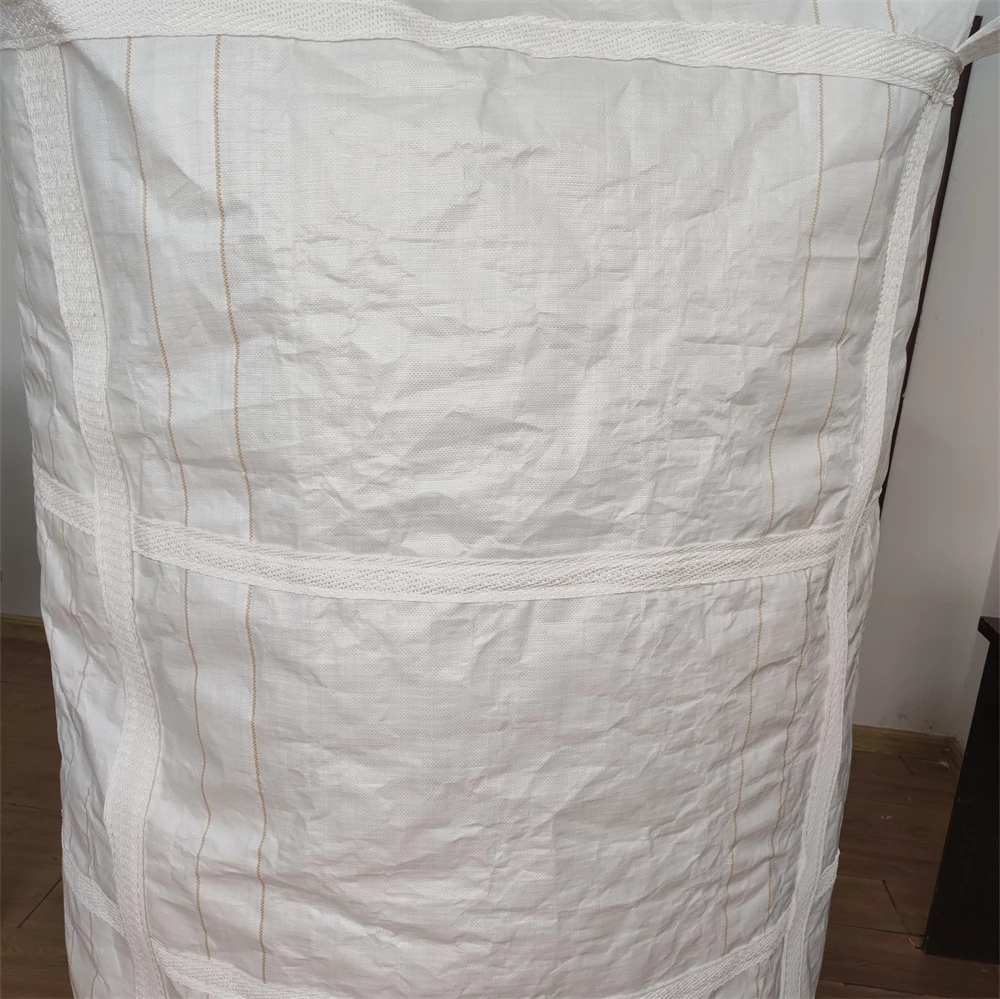
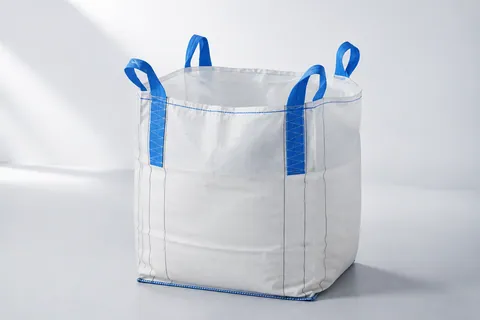
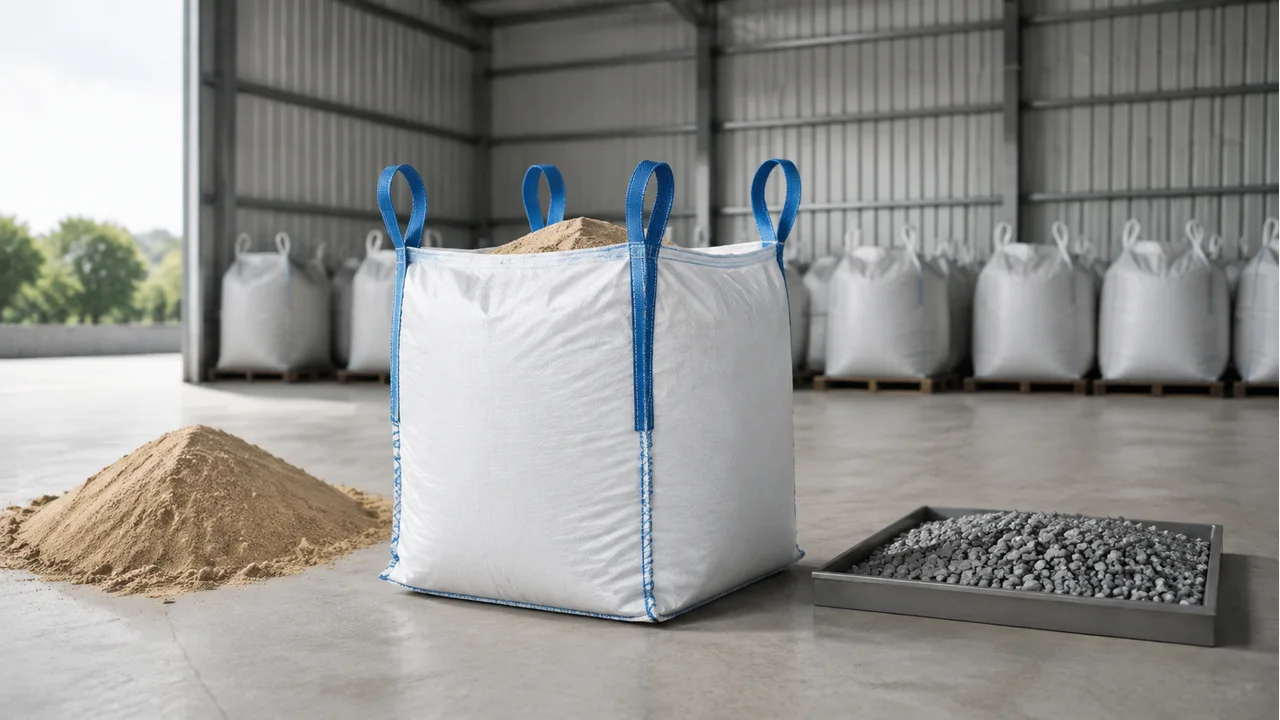
The cover image provides a visual reference for the topic. Product photographs in this guide are from the ReliaBulkBag catalog.
A sand bulk bag needs both a volume specification and a load specification
Choosing an FIBC for sand or minerals starts with two different questions: how much space the material occupies and how much it weighs. A bag that appears large enough is not automatically suitable for the intended load. Equally, a load rating does not tell a buyer whether the bag's dimensions, top opening and emptying arrangement fit the operation.
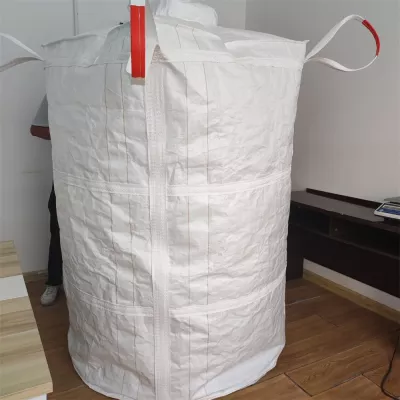
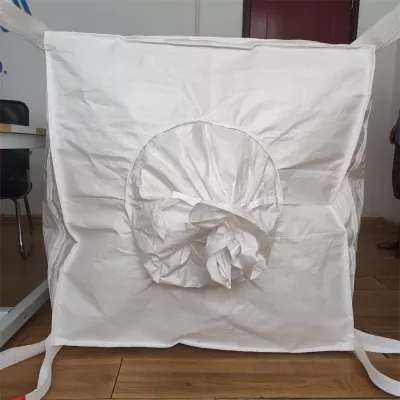
The ReliaBulkBag catalog includes open-top sand bags with flat bases, spouted tubular bags and other construction-material packaging references. This guide focuses on the decisions that help a buyer compare those options: density, dimensions, filling access, discharge method and a clear specification for the quotation.
Start with the material in the condition in which it will be packed
Send the supplier a precise material description rather than only the word sand. Identify the grade or product designation and describe the condition at filling. Where available, provide the measured bulk density used by your technical team, including the measurement basis. Different packing conditions should not be treated as identical simply because the material has the same commercial name.
For minerals and aggregates, include the particle-size range and any relevant observations about sharp or irregular pieces. Explain whether fine material is also present. These details give the manufacturer context for reviewing containment and construction. They do not replace any application-specific assessment the material or working environment requires.
State the target net fill weight separately from the external dimensions you would prefer. That allows the supplier to identify a potential mismatch early. It is much easier to discuss the required package before ordering than to discover during filling that a familiar-looking bag does not match the material.
Use a simple volume calculation as a planning check
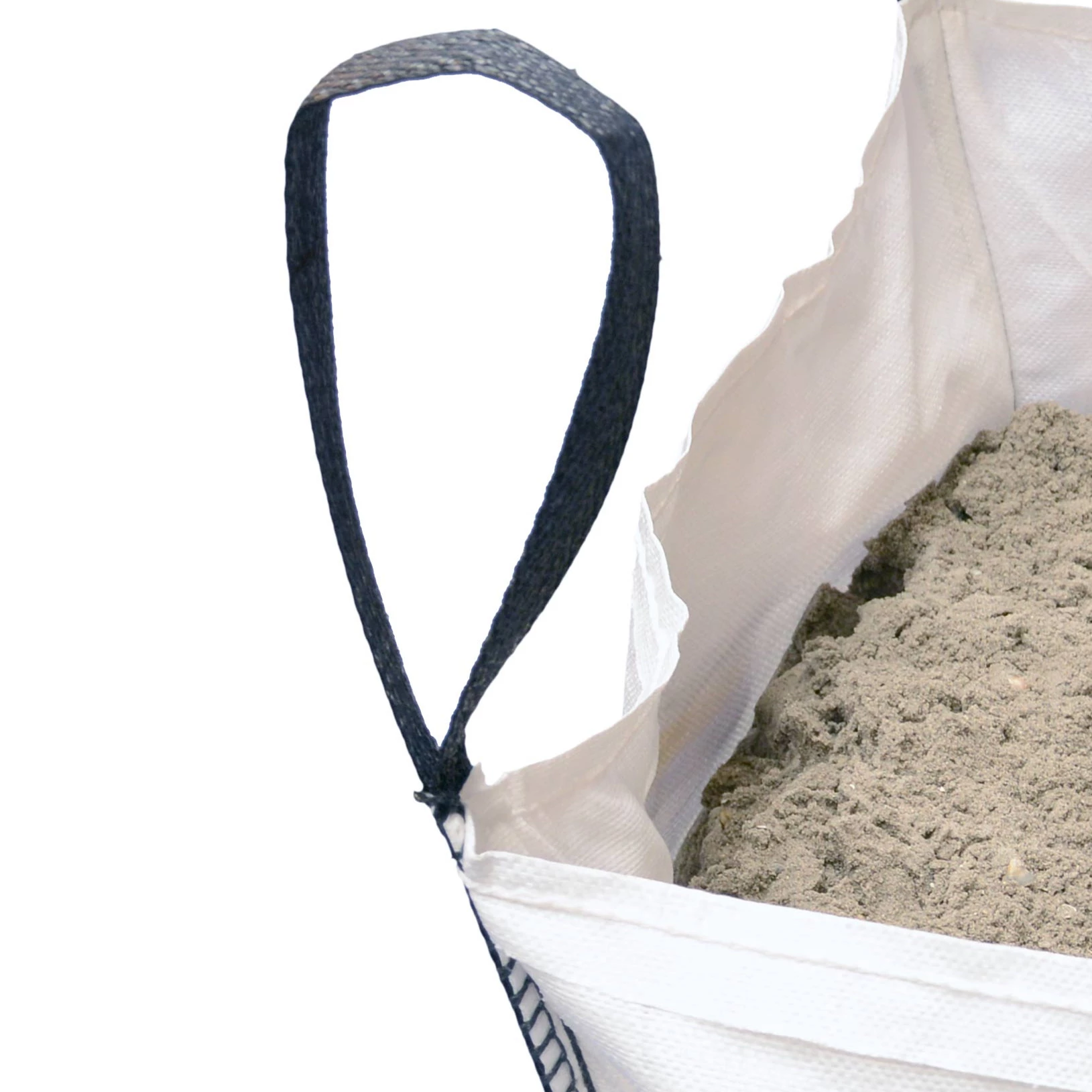
The basic relationship is occupied volume equals material mass divided by bulk density. Use consistent units. If mass is expressed in kilograms and density in kilograms per cubic meter, the result is in cubic meters. This arithmetic helps explain an enquiry; it is not a load test or approval of a specific bag design.
For a hypothetical example, suppose a buyer plans a 1,000 kg fill and the technical team supplies a bulk density of 1,600 kg/m³ for that material under its stated measurement conditions. The calculated material volume is 1,000 ÷ 1,600 = 0.625 m³. Both numbers in this example are illustrative inputs, not declared properties of every sand product or a recommendation for a particular FIBC.
The manufacturer still needs to evaluate the bag's usable dimensions, intended fill level, closure and handling arrangement. Flexible bags do not behave like rigid rectangular boxes, so multiplying nominal dimensions should not be treated as a guaranteed usable filling volume. Ask how the proposed size relates to the actual filling requirement.
Do not confuse safe working load with bag size
Safe working load is a separate specification from volume and dimensions. The finished bag and its intended use need the appropriate manufacturer confirmation. A catalog label such as one-ton bag does not explain the full construction, the intended material, the handling conditions or the documents that accompany the offered item.
Similarly, a safety-factor entry is not permission to exceed the stated working load. For practical handling requirements, use the manufacturer's instructions and the FIBCA handling guidance. Purchasing should obtain the relevant instructions and identification for the exact construction being supplied.
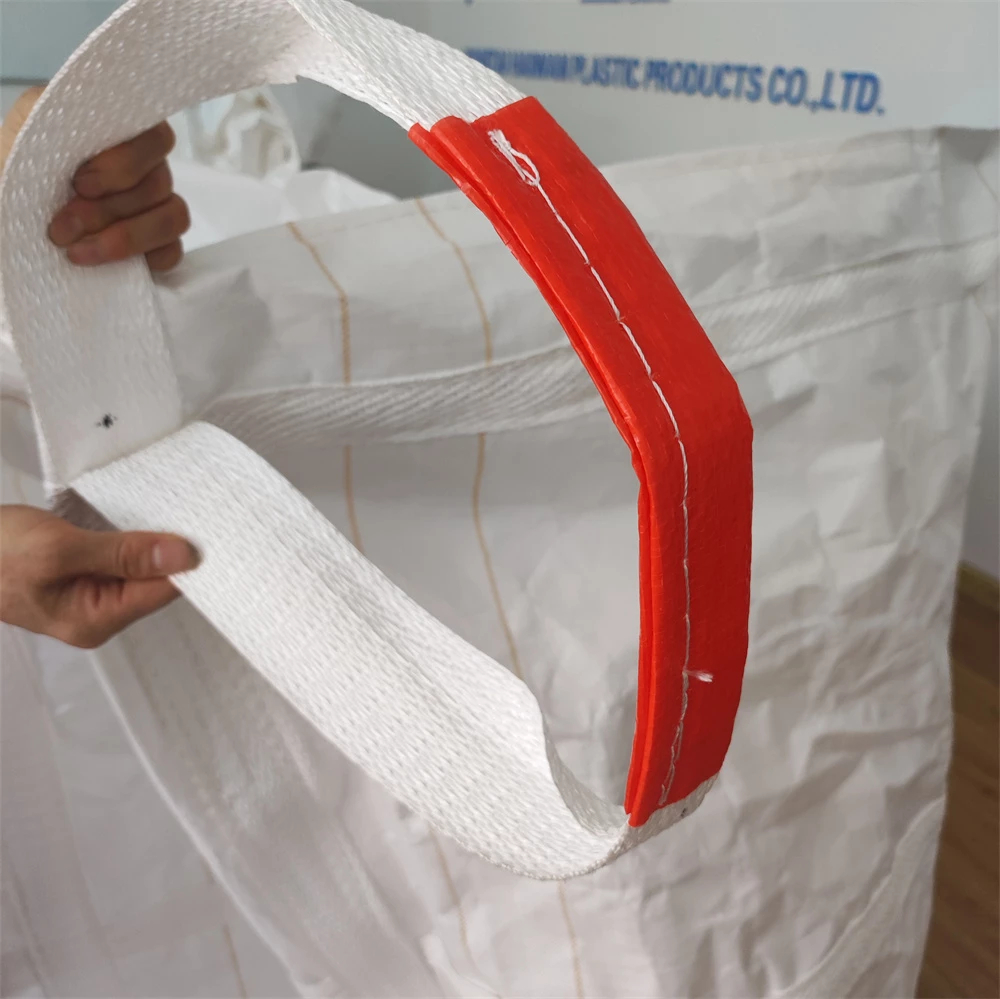
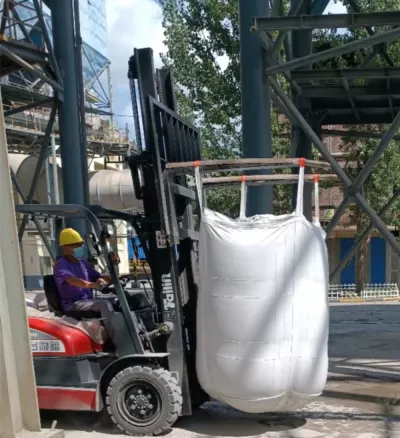
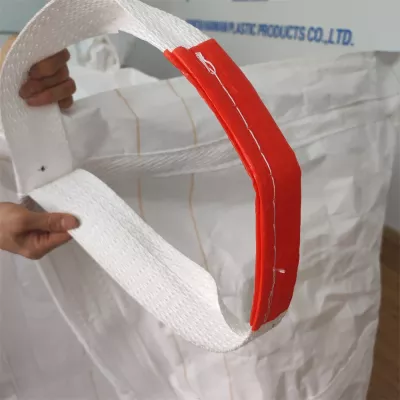
Keep the product's label and documentation connected to the order specification. If a supplier proposes a different fabric, loop arrangement or bag size, ask whether the offer and its supporting information refer to the revised construction. An unchanged marketing title is not sufficient evidence that every technical detail remains the same.
Check dimension units and the measuring convention
Three numbers in a catalog are not always a complete dimensional specification. Confirm the units, the order of length, width and height, and whether the measurements describe the bag body or include an upper extension. Where dimensions are critical to equipment fit, put the convention on the approved drawing.
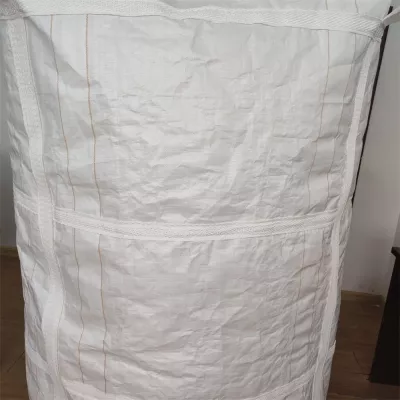
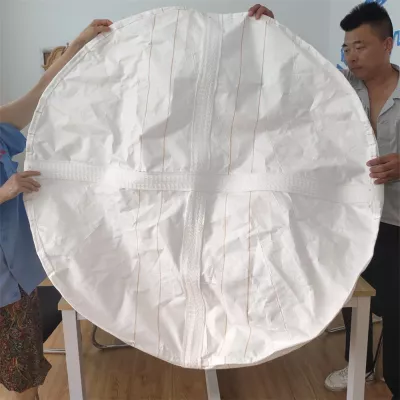
For example, the white U-panel sand FIBC lists a 90 × 90 × 115 size reference, an open top and a flat base. The size entry does not itself state units in the attribute value, so the enquiry should request confirmation rather than silently assume them. The useful starting facts are the named construction and opening arrangement.
Also identify whether the receiving facility has restrictions on the filled footprint or height. Send the relevant equipment clearances instead of requiring the supplier to infer them from a photograph. A drawing that works for purchasing should also be understandable to the team responsible for filling and receiving.
Open top or filling spout: follow the loading operation
An open top provides broad access to the bag interior. A filling spout introduces a defined inlet that must be matched to the filling arrangement. The right comparison depends on the actual loading process and the control requirements identified by the operator. Neither opening name alone establishes dust containment or compatibility with a particular filling machine.
If the facility uses a spout connection, provide the necessary equipment interface details and ask for the proposed spout dimensions and closure method. If the facility fills through an open top, describe the available access and how the filled package will be managed. The supplier can then distinguish a confirmed requirement from an option still under discussion.
When comparing prices, hold the material and target fill requirement constant. A different top, different base and different fabric treatment can all change the offer. Ask each supplier to list deviations so that a lower price can be understood in terms of the actual configuration.
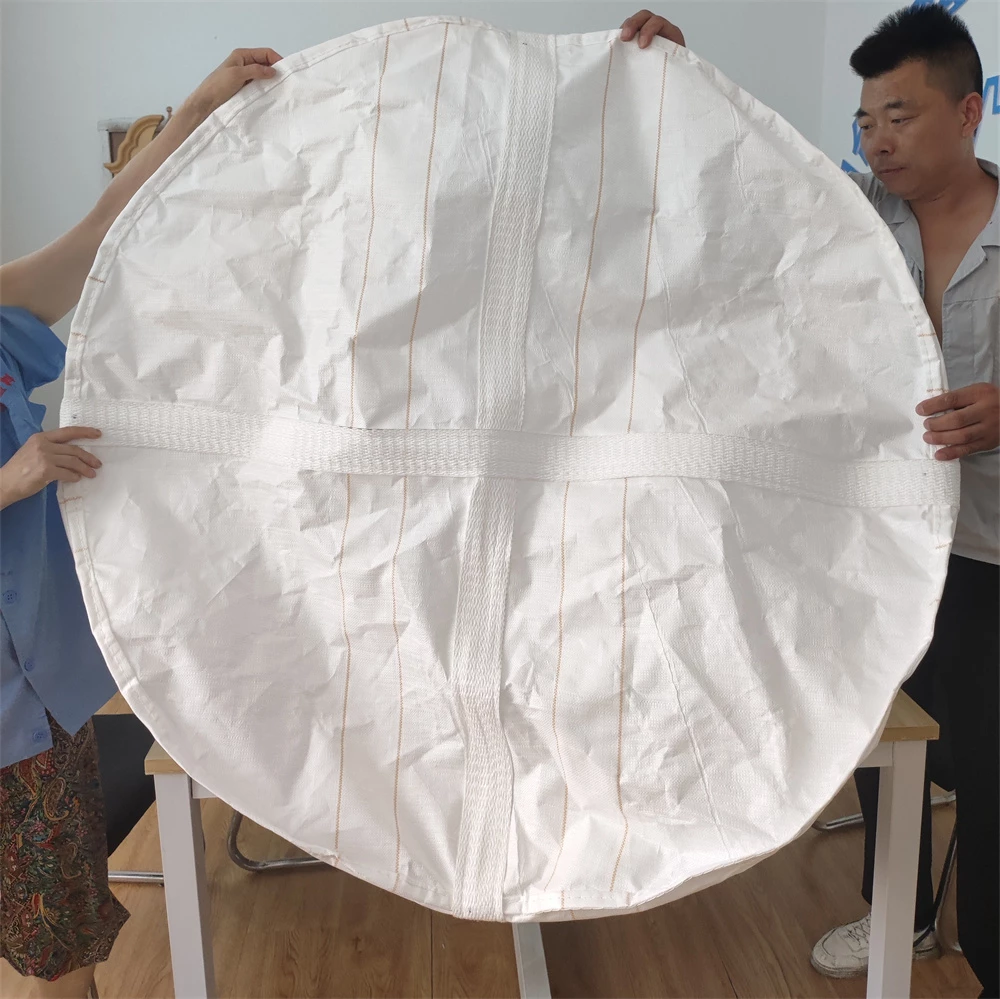
Flat base or discharge spout: involve the receiving customer
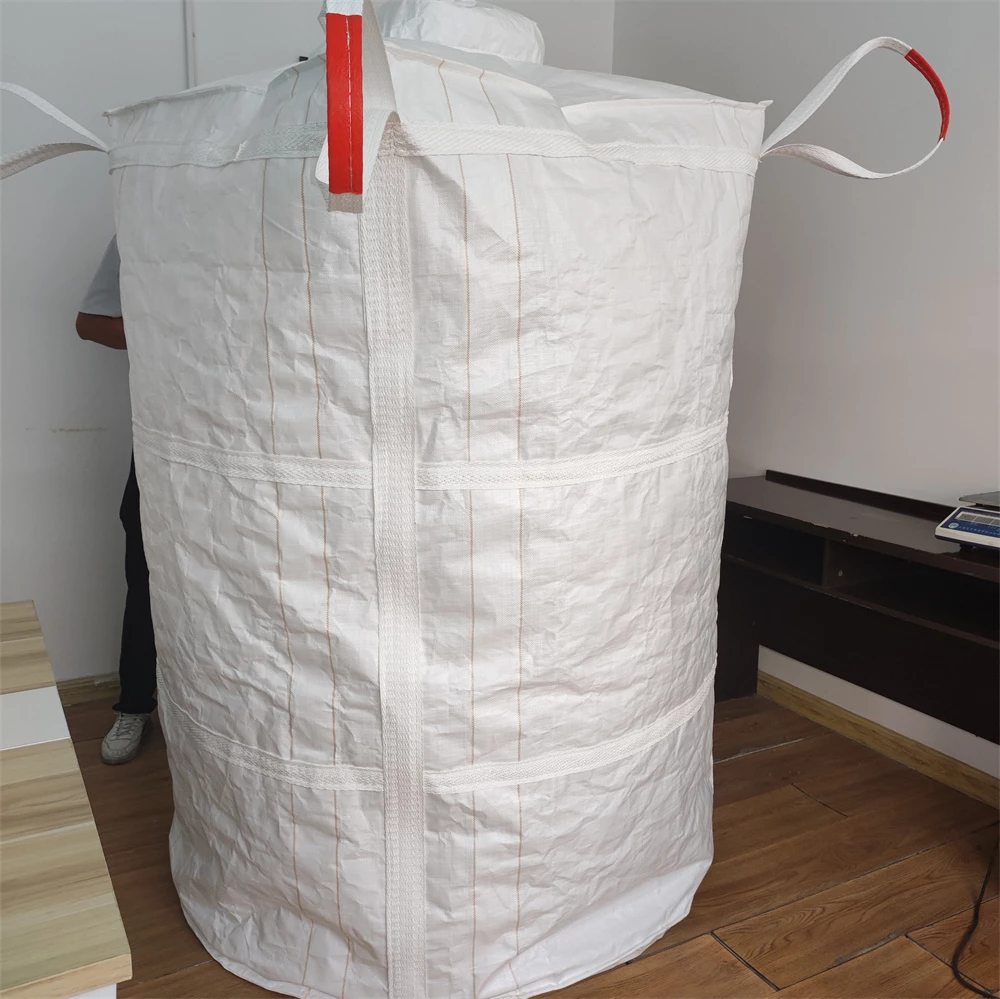
A flat-bottom bag and a bag with a discharge spout imply different emptying arrangements. Before ordering, ask the receiving facility which configuration its equipment and approved procedures require. Purchasing should not choose the base solely from the packing site's preference if another team will empty the bag.
The coated tubular cement FIBC provides a catalog reference with separate filling and discharge spouts. It is useful for discussing interfaces, but its coating and body construction mean it is not a like-for-like alternative to every open-top sand bag.
For fine minerals, identify any material-containment concerns and the location where they arise. Ask the supplier to explain the proposed fabric, seam and closure details. Do not infer that a spout, coating or accessory automatically resolves every dust or moisture requirement in the complete package.
Compare quotations with one shared specification sheet
| Decision | Buyer input | Supplier response to request |
|---|---|---|
| Material volume | Target mass and relevant bulk density | Proposed usable bag size and assumptions |
| Load requirement | Intended fill and handling context | Applicable bag identification and documentation |
| Filling | Equipment access or inlet interface | Top configuration and dimensions |
| Emptying | Receiving equipment and procedure | Base configuration and closure details |
| Containment | Actual material and identified concerns | Fabric, seams and any proposed liner |
| Commercial scope | Quantity, destination and required packing | Itemized offer with deviations and validity |
A good comparison sheet separates technical equivalence from commercial preference. First establish what each supplier is offering. Then compare the prices, packing and delivery terms for the confirmed scope. This prevents a missing component or a different size from being mistaken for a straightforward price saving.
Plan sample evaluation before committing to production
Use a sample to resolve the questions that cannot be answered adequately from the drawing alone. Record the sample identifier, dimensions under the agreed measuring method, opening details and visible construction. The responsible technical team should define any filling or handling evaluation and its acceptance criteria.
Keep the operating conditions in the record. State what material was used, the amount packed and the equipment involved. If the result leads to a design change, retain both the earlier and revised drawing identifiers. A photograph of a filled bag is useful context but does not replace a record of what was actually evaluated.
For repeat supply, refer to the approved construction and disclose changes in material grade, filling target or destination. A previously acceptable bag should not be assumed suitable for a new material merely because both products are sold as minerals. Clear change information gives the manufacturer a chance to review the difference.
Prepare the enquiry your supplier can act on
A concise but complete enquiry can include the product reference, material designation, target fill weight, density information, proposed dimensions, top and base preferences, lifting interface, quantity and destination. Attach an existing drawing if available and mark which dimensions or features are mandatory.
If some inputs are unavailable, say so directly. Ask which information is needed to progress from a preliminary proposal to a confirmed quotation. This keeps the discussion moving without hiding uncertainty behind a generic request for the strongest or cheapest bulk bag.
Questions often asked about sand FIBCs
Can dimensions tell me how many kilograms a bag will hold?
Dimensions alone cannot determine an approved fill weight. Material density helps estimate occupied volume, while the bag's working-load specification and intended-use review address the load. Both are needed, together with the actual construction and filling conditions.
Is an open-top sand bag suitable for every mineral powder?
No general conclusion follows from the category. Review the material, filling and emptying arrangements, containment requirements and any special hazards. A sand reference can begin a discussion without establishing suitability for a different powder.
Where should I begin when sourcing from China?
Browse the construction and mineral bulk bag collection, select the closest reference and send your specification to Qingdao Relia Packing Co., Ltd. Clear technical inputs help ReliaBulkBag discuss an offer that can be compared with your actual packing requirements.