

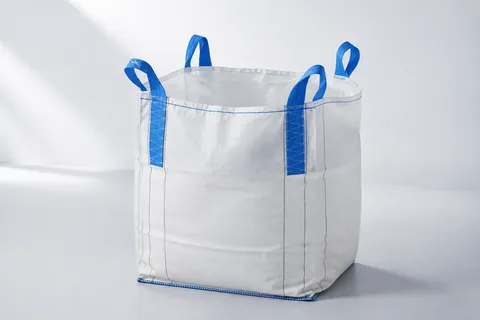
Low-Clearance Conical-Bottom FIBC Trials
If a conical-bottom bulk bag does not fit above your hopper, compare the usable height of the whole assembly before ordering a shorter cone. Relia’s 1,500 kg conical potato bag illustrates a published shape. A powder trial still needs your own cone depth, outlet, connector and support dimensions, with discharge performance measured under the same conditions.
- Height budget
- Matched samples
- Discharge results
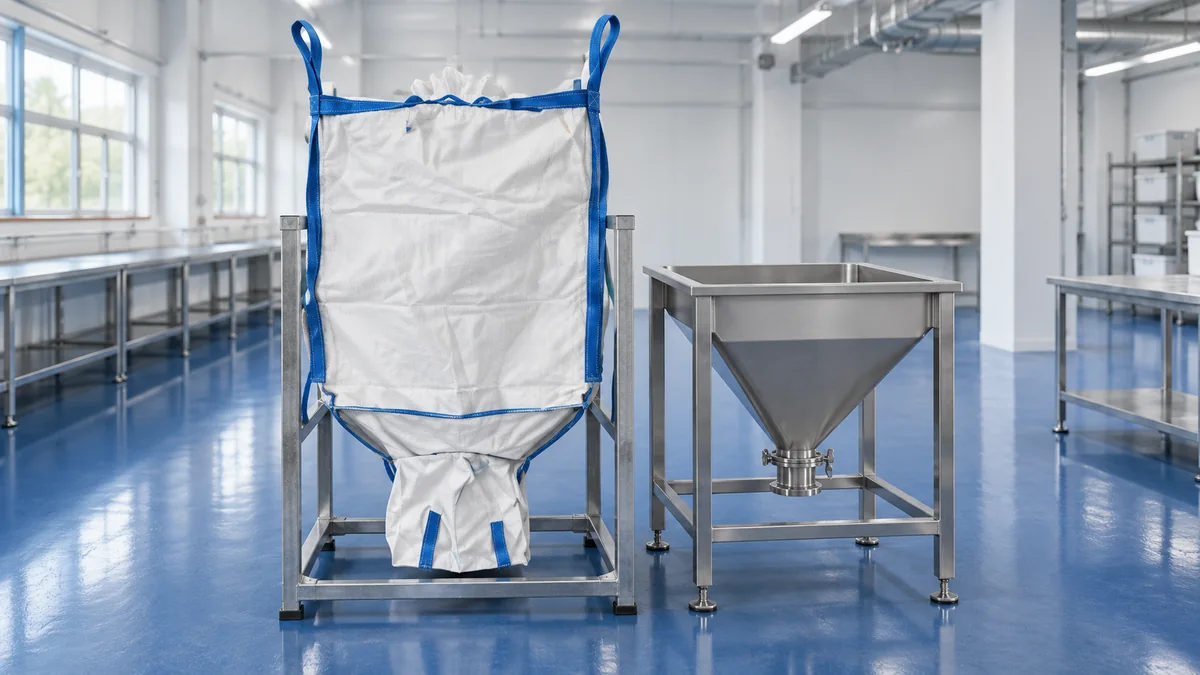
The Usable Vertical Clearance
Measure between the intended upper support position and the hopper interface. Account for the fitting, the outlet and space needed for access.
Manufacturing checks for this specification
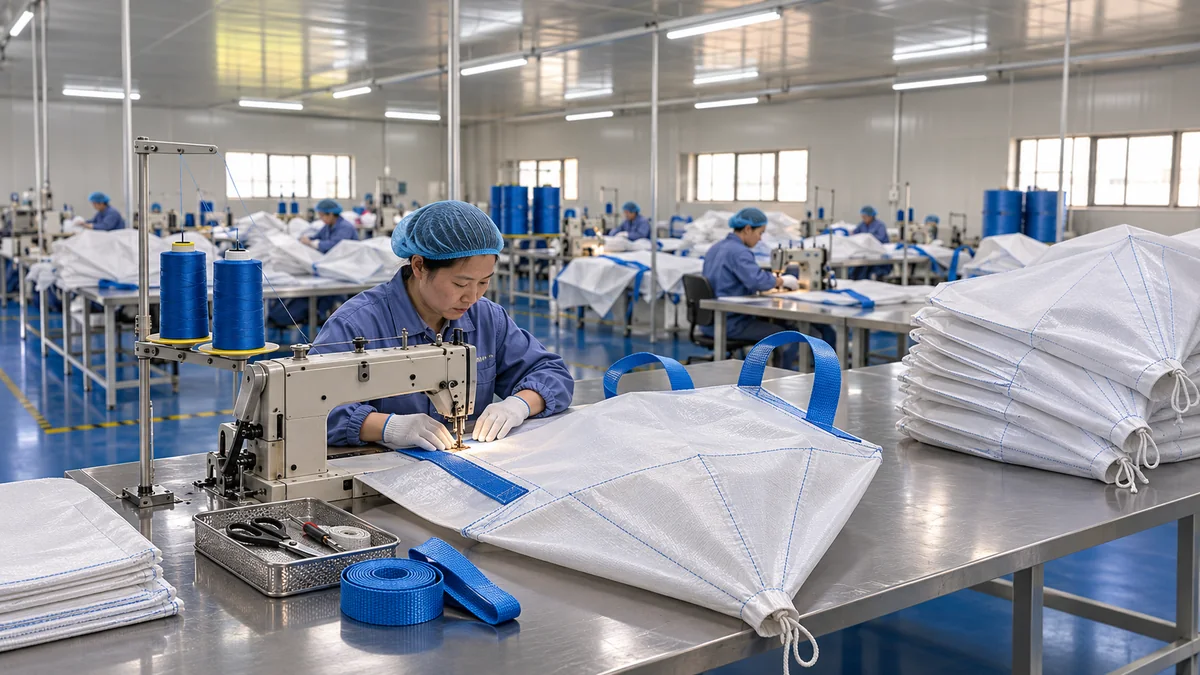
Relia’s catalog lists conical-bottom bags, with coated or uncoated fabrics and tubular or shaped liners. For the quote, call out cone depth, bottom opening, spout length and whether the dimensions are measured supported or relaxed. Pattern cutting and sewn assembly determine where the outlet and cone seam land.
- 01Dimension the cone
- 02Match the existing hopper
- 03Compare residue and flow
Subtract the connector stack and necessary access from the supported vertical envelope. Compare the two samples using the same material, fill mass and endpoint. Record emptying time and residual mass separately. For example, 4 kg remaining from a 1,000 kg trial is 0.4% residual by initial mass.
Cone Geometry and Connection
Put cone depth, outlet dimensions and fit allowance on the drawing. Show the proposed bag beside your existing configuration at the same scale.
Quantify the available cone and connection height
Use the supported vertical envelope minus the connector stack, access allowance and any required clearance for the handling sequence. A conical potato reference lists 1,500 kg and 5:1. It illustrates the shape, while the powder line needs its own outlet fit and discharge review.
Compare the same powder mass and operating settings. Report residual mass and discharge time separately. For example, 4 kg left from a 1,000 kg trial is 0.4% residual by mass. Record bridging and pauses so elapsed time is interpretable.
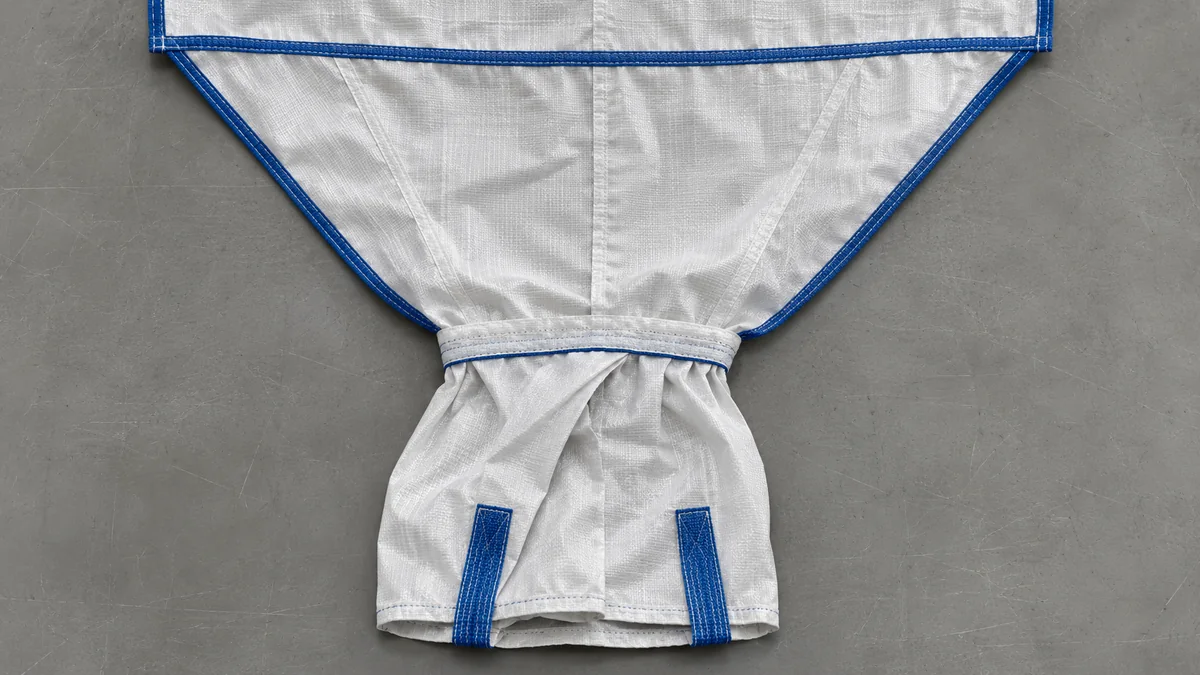
Two Samples for One Discharge Line
Use the same powder and starting mass with both configurations. Keep the flow measurement and the start and end points consistent.
Residue and Time as Separate Measures
Track product remaining at the end and the time to your agreed discharge endpoint. Record interruptions and interface observations during the review.
One end point for both discharge runs
Define when the timed run stops and how residual material will be measured. Run both cone depths with comparable material and the same support, fill mass and outlet hardware where possible. If the shallower design clears the hopper but leaves more powder, document the trade-off against your agreed acceptance limits rather than choosing only by overall height.
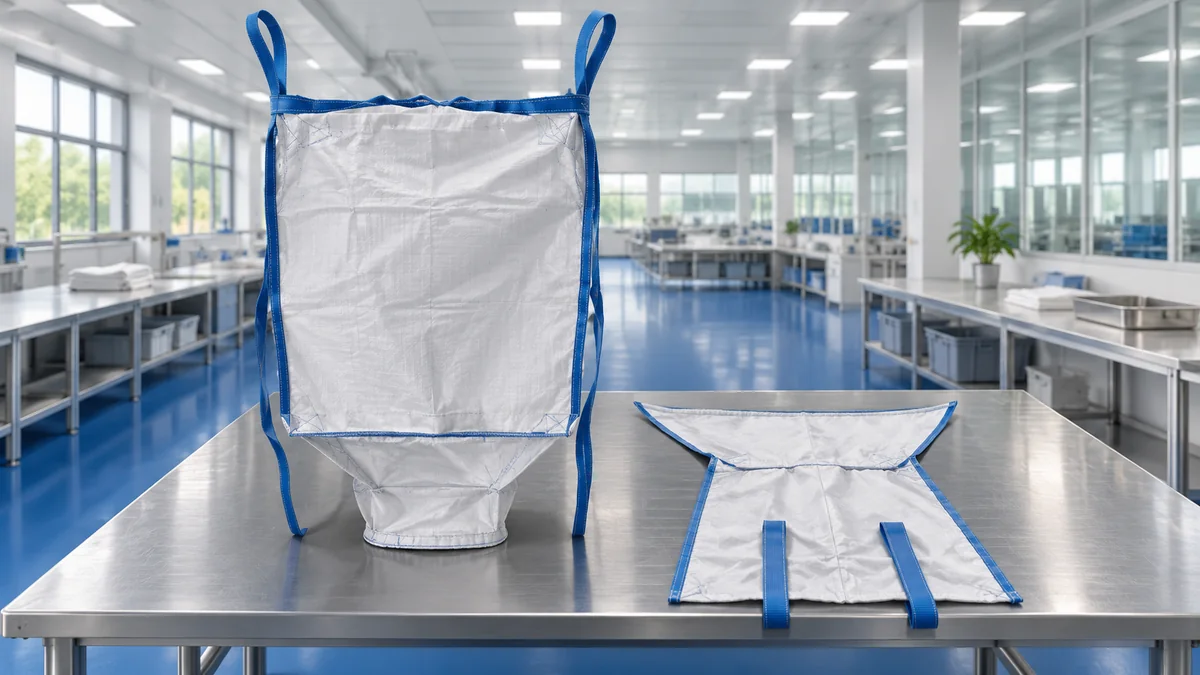
Changeover in Limited Space
Check closure access and removal when space is tight. Document the agreed trial sequence with the line owner before taking the sample to the station.
A Sample with the Intended Fabric Geometry
Keep the cone and outlet stitching on the approved drawing so the trial can be repeated. Use visual and dimensional checks before assessing flow.
Related Shape References
Our conical potato bag illustrates a conical shape, and our beige baffle bag illustrates a different body layout. The powder application requires its own fit and flow evidence.
Approval for the Existing Line
Keep the accepted drawing, hopper dimensions, powder and trial result together. Revisit the approval if material or equipment changes.
Evidence to keep with the order
Keep a side-by-side record of the two cone drawings, measurement state, available headroom, discharge time and residue. Choose the shorter cone only if it clears the site and the run meets the agreed emptying and access criteria.
Request a Low-Clearance Sample
Measure time, residual mass and access during changeover.
Contact the Relia Team
Send the actual supported height, hopper and connector drawings, powder details and the maximum acceptable residue or discharge time.
Qingdao, Shandong, China